

 1.866.572.1107
  20.3991.3890
  1.800.846.451
Alive, loud, and hiring.
A century after the first radio announcer leaned into a microphone, more things need a human voice than ever: courses, games, podcasts, phone systems, films, ads. Here is the state of the craft, and why the person behind the words still matters most.
- More formats than ever
- Recorded from home, heard everywhere
- Human by choice, not habit
A synthetic voice reads the words. A human voice means them. Listeners can tell in about a second, which is why the industry keeps growing.
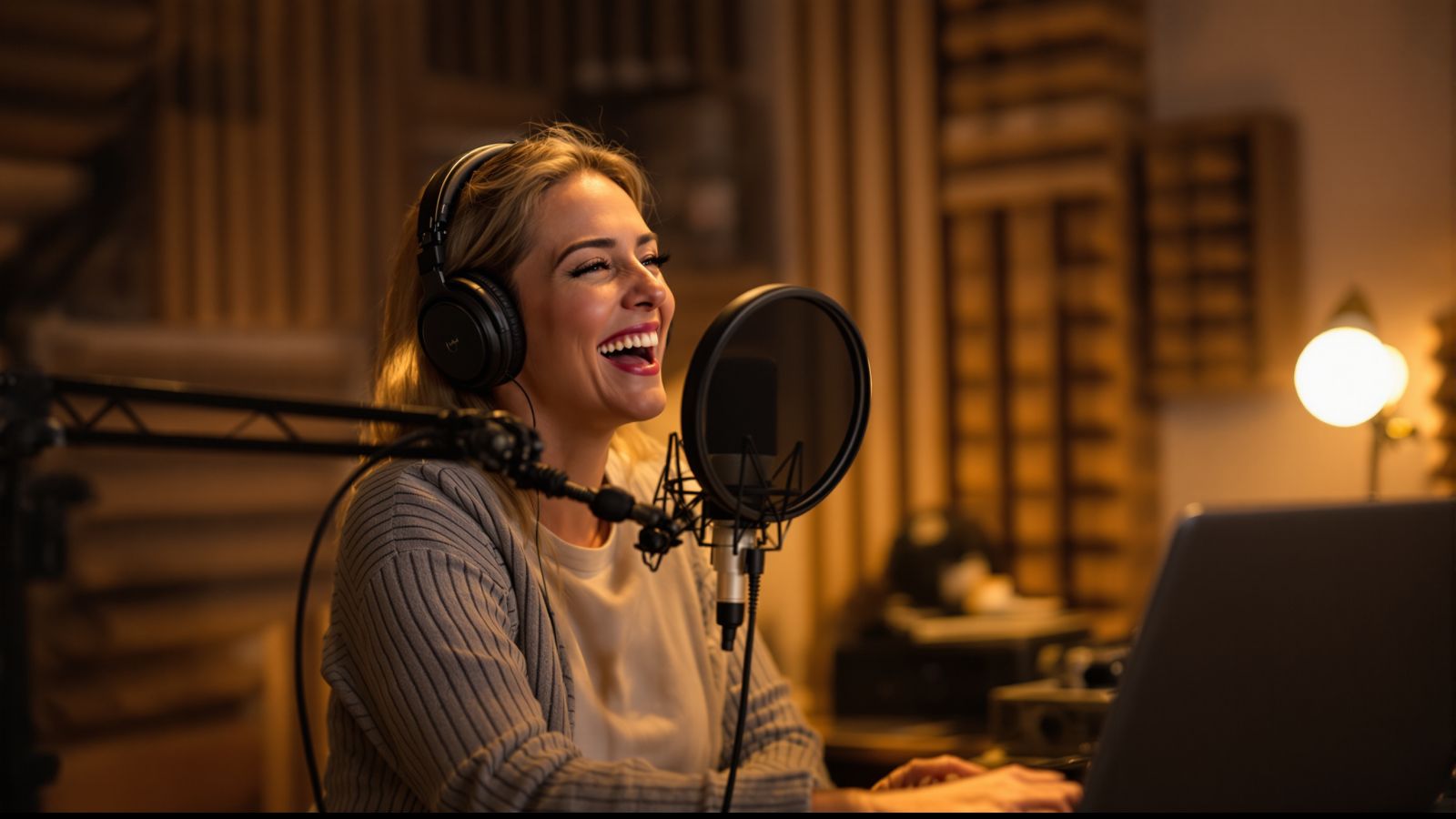
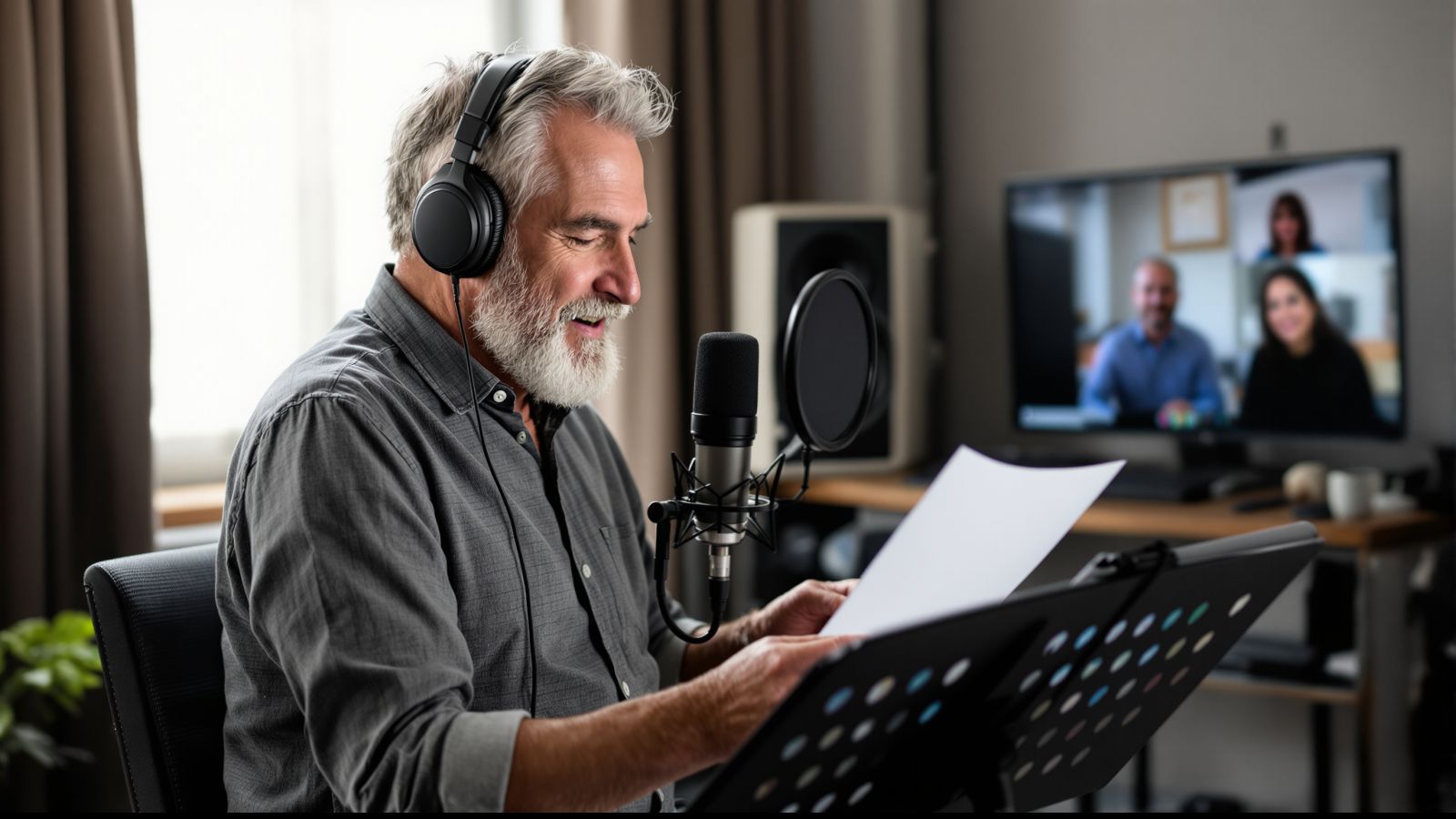

Every new medium needed a voice.
Radio, television, cinema, games, the internet, the phone in your pocket. Each one was supposed to replace the last. Each one hired more voice actors than the one before.
- 1920s
The announcer is born
Radio turns a voice into a national presence for the first time. Dramas, news, live commercials: every one of them needs someone who can read cold and sound like they mean it.
- 1950s
Television, and the cartoon voice
Pictures arrive and the voice moves behind them: commercials, promos and a whole new craft, the character voice, as animation becomes a business.
- 1970s
The movie trailer voice
Cinema learns that a deep voice and a long pause can sell a film. Trailers, documentaries and the corporate film become steady work.
- 1990s
Games start talking
Consoles get discs, discs hold dialogue, and video games become one of the largest employers of voice actors in the world. Audiobooks move from cassette to the mainstream.
- 2000s
The home studio
Affordable condenser microphones, treated spare rooms and file delivery over the internet. For the first time a voice actor does not need to live near a studio.
- 2010s
Everything gets a voice
Podcasts, explainer videos, e-learning, phone systems, apps, streaming localisation. The number of things that need a human voice explodes, and most of them are recorded at home.
- 2020s
Synthetic voices arrive
Software can now read text aloud passably. It takes the work nobody was ever going to cast an actor for, and makes the human read the premium product.
- Now
The human premium
More formats, more languages, more brands that have learned the hard way what a flat read costs them. The craft has never been in more places, and it has never been more clearly worth paying for.
Eight rooms, all busy.
The commercial was once most of the work. Now it is one door among many, and most of the others did not exist twenty years ago.
Commercials
Radio, TV and online spots. Still the glamour end, still growing online.
Hear commercial voicesE-learning
Every company trains online now, and a course is only as good as its narrator.
Training narratorsAudiobooks
A format that has grown every year for more than a decade, one narrator at a time.
Audiobook narratorsGames
The biggest entertainment medium there is, with thousands of lines per title.
Game voicesExplainers
Ninety seconds that decide whether a product makes sense. The voice does the deciding.
Explainer voicesPodcasts and promos
Intros, ads, imaging and hosts for a medium that grew from hobby to industry.
Podcast voicesPhone systems
Every business phone in the world says something before a person picks up.
Phone system voicesDocumentary and narration
The storyteller's seat, from streaming series to museum guides.
Documentary narratorsMore of it, every year.
Audiobooks have grown for more than a decade running. Games out-earn cinema and music combined. Every company trains online, every product has an explainer, every business phone says something before a person answers. None of those existed as voice work when the craft began, and none of them are shrinking.
Software reads. People mean it.
Synthetic voices are real, and they are fine at what they are for: a bus timetable, a smart speaker, a prototype nobody outside the building will hear. That work was never going to hire an actor, and the industry lost nothing when it went to software.
Everything else got more valuable. A course people finish, a commercial that sells, a character a player remembers, a documentary that makes you care about a fishing village: those need a person who understands the words, hears the note behind the note, and can take direction at ten past four on a Friday. Brands have learned, some of them the expensive way, that listeners can hear the difference and judge them on it.
So the human voice did not become a nostalgia product. It became the premium one. If you want the longer argument, it is over on why a real voice beats AI.
- They understand the scriptWhere the joke lands, which word carries the offer, when to slow down. A model reads; an actor interprets.
- They take direction"Warmer, but less sales-y." Take three is better than take one because a person heard the note.
- They can be trusted with a brandA real person and a real agreement behind the voice, not a file anyone can copy into a competitor's ad next week.
We're glad you're here.
read one: the airline, warm and unhurriedWhat the job looks like in 2026.
Not a booth in Hollywood and an agent on the phone. A treated room, a respected microphone, a casting inbox, and clients in four time zones.
Auditions before coffee
Castings that came in overnight: a hospital explainer, a truck ad, a game villain. Read the ones that fit, skip the ones that don't.
A directed session
An agency in another country on a call, the actor in their own studio, forty lines in an hour, notes taken live.
The long read
Chapter nine of an audiobook, or module six of a compliance course. Same voice as module one, because the client rebooked.
Repeat clients
The phone system from last year needs two new prompts. The station wants next month's sweepers. Small jobs, steady income.
Paid, not chased
The client paid before the session; the platform pays the actor when the job closes. Nobody writes an awkward email about an invoice.
How the money and the work move on this site: voice acting jobs online. How to get to the first Monday: breaking into voice overs.
Need a voice this week?
Post a few lines of your script, hear professional voices read them free, book the one that fits at a published rate.
Want in on all this?
If you have the craft and a demo that proves it, the roster is where clients are buying. Free auditions of real scripts, paid to PayPal when the job closes.
The industry, answered.
Is voice acting still a good career in 2026?
Are there still voice over jobs, or has AI taken them?
Will humans always be needed in voice over?
How do voice actors find work today?
Do I need to live in Los Angeles or London to work in voice over?
How much does the voice over industry pay?
A hundred years in, still warming up.
Hire a voice for the thing you are making, or become the voice someone is looking for. Either way, the industry has a chair for you.