Blog
Think of the last busy restaurant scene you watched. The clatter, the laughter two tables over, the waiter calling an order. Almost none of it was recorded on the day. It was performed weeks later, in a padded room, by a handful of voice actors watching the scene on a screen.
That’s loop group work, and the sound it makes is called walla. This guide is for voice actors who’d like to know what the job involves, what skills it rewards, how a session runs and how people find their way in. It’s one of the least talked about corners of the business, and one of the most fun.
Every crowd you’ve heard was added later
On a film or TV set, the sound crew wants clean recordings of the principal actors. So everybody else stays silent. The podcast Twenty Thousand Hertz explains it in an episode on loop groups: background actors are told “to appear like they’re talking, laughing, and yelling, but not to actually make any noise while doing it.”
Carl Gottlieb, who co-wrote Jaws, remembers the instruction from the 1970s: “Whenever there is a crowd scene being filmed, the extras were always instructed, ‘Don’t say anything. Just move your lips, and we’ll put in the sound later.'”
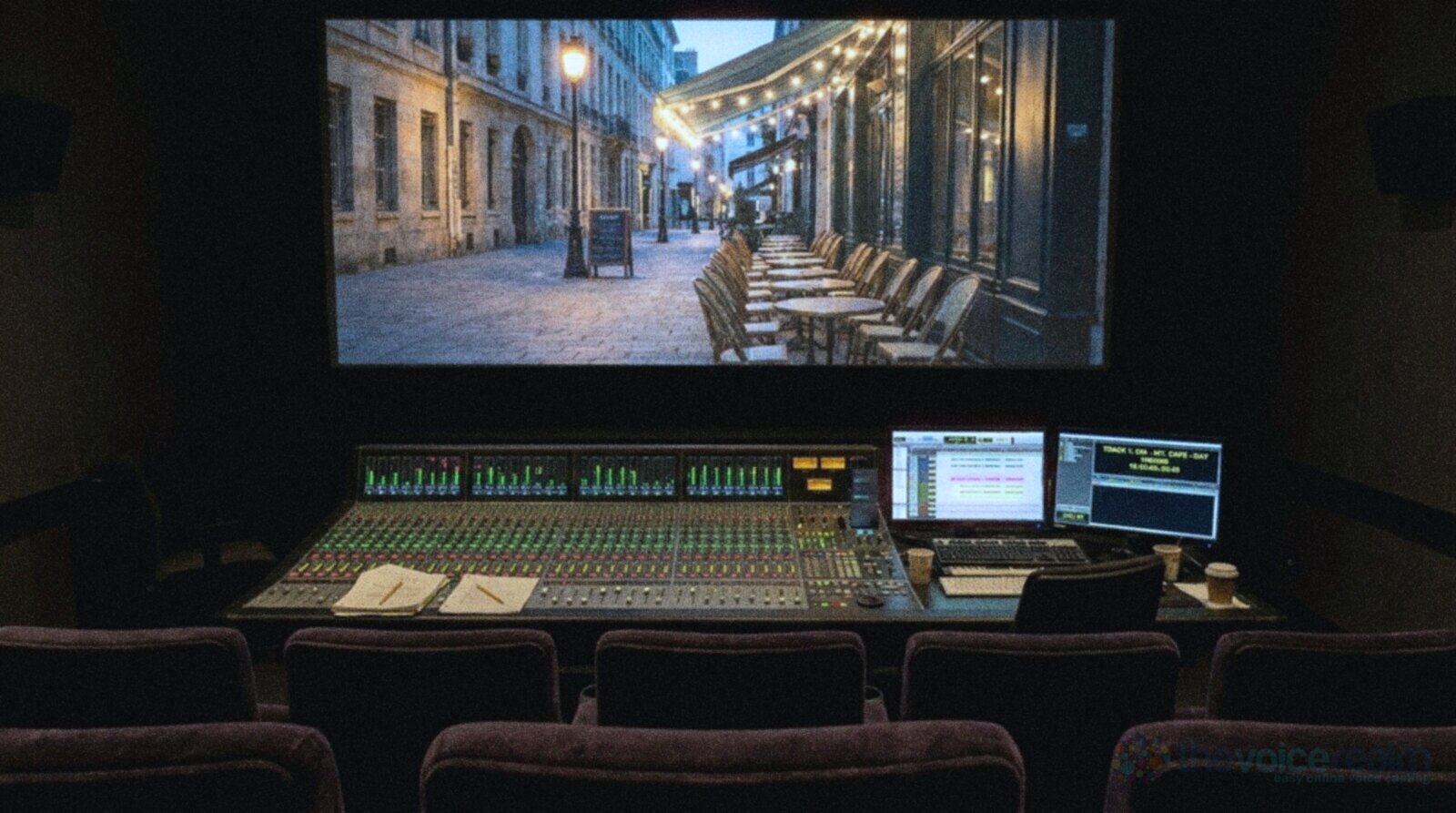
Later means post-production. Once the picture is cut, a loop group comes in to give voices to every mouth that moved without a sound: the diners, the commuters, the nurses in the corridor, the police officers holding back a crowd. Dee Bradley Baker describes ADR, the wider family this work belongs to, as “the process of replacing or adding vocal performance to already produced video picture”.
© The Voice Realm
Rhubarb, walla and where the words came from
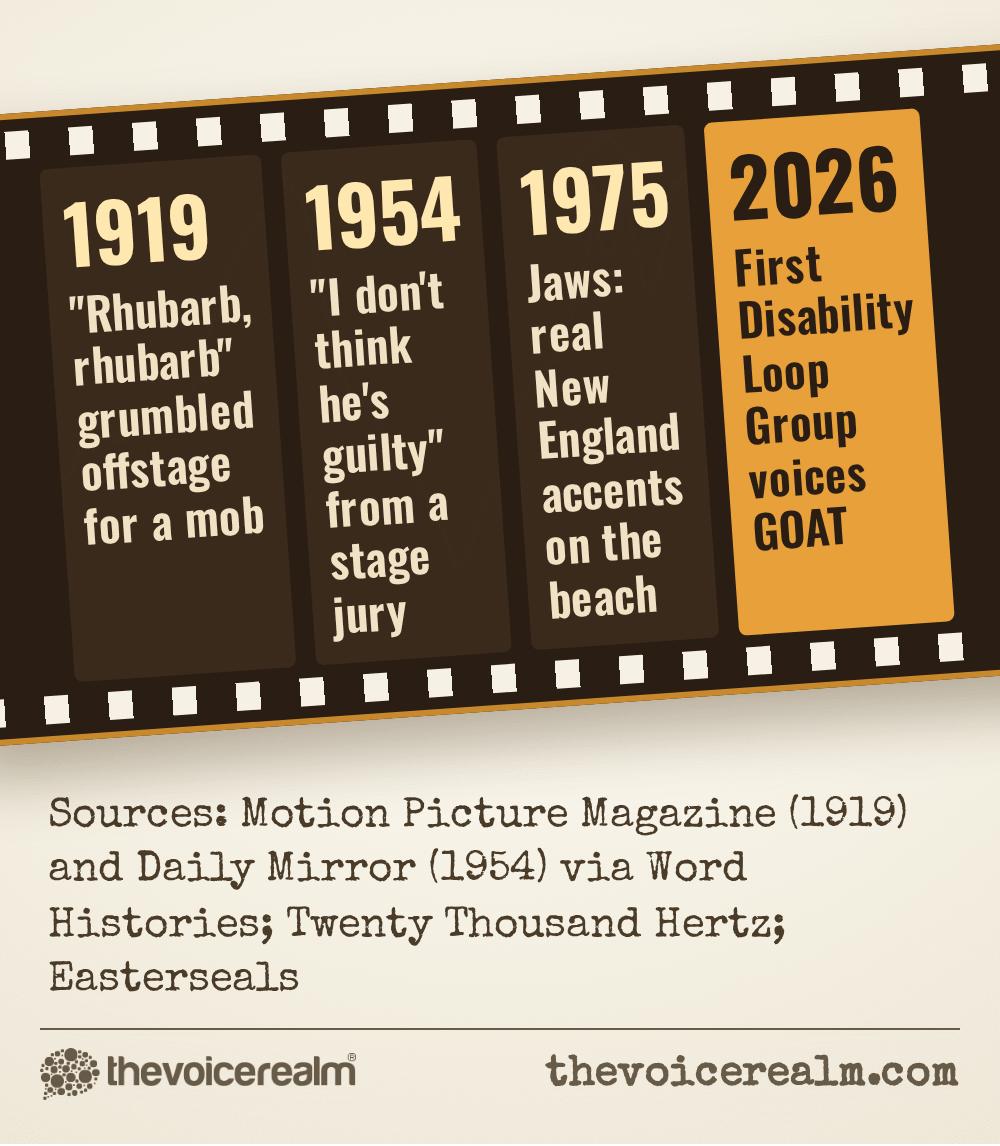
Before anyone thought of recording real conversation for crowds, actors made crowd noise by repeating one word. In Britain it was “rhubarb”. In America it was “walla”, which is where today’s name comes from.
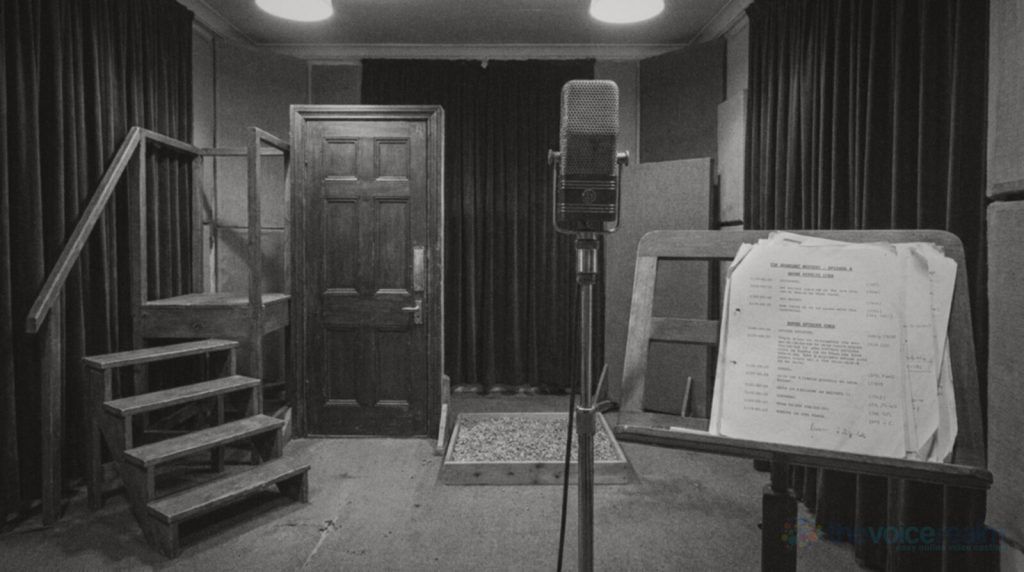
The actress Hermione Gingold described the trick from the early days of BBC radio at Savoy Hill. In a 1952 Radio Times profile she recalled: “We’d huddle together in a corner and repeat ‘Rhubarb, rhubarb, rhubarb’ or ‘My fiddle, my fiddle, my fiddle'”. The result, she said, “sounded like a big scene from some mammoth production.”
The idea was that no single word would stand out. Gottlieb put it this way on Twenty Thousand Hertz: “If you get a room full of people and tell them to say, ‘Rhubarb, sassafras, sassafras, rhubarb,’ there are no specific words that emerge from the crowd. It becomes noise, rather than discernible dialogue”.
Jaws changed that. Gottlieb and his then-partner Allison Caine hired improv actors who could do New England accents, so that when the beach crowd reacts to the shark you hear real people from a real place. Twenty Thousand Hertz credits that session with starting the job as we know it. These days the crowd isn’t gibberish at all. It’s dozens of tiny improvised scenes, layered under the main one.
© The Voice Realm
What a loop group actually records
A loop group is small. Some sessions are a few actors, some a dozen, and the same people play many characters over a day. The work comes in a few flavours.
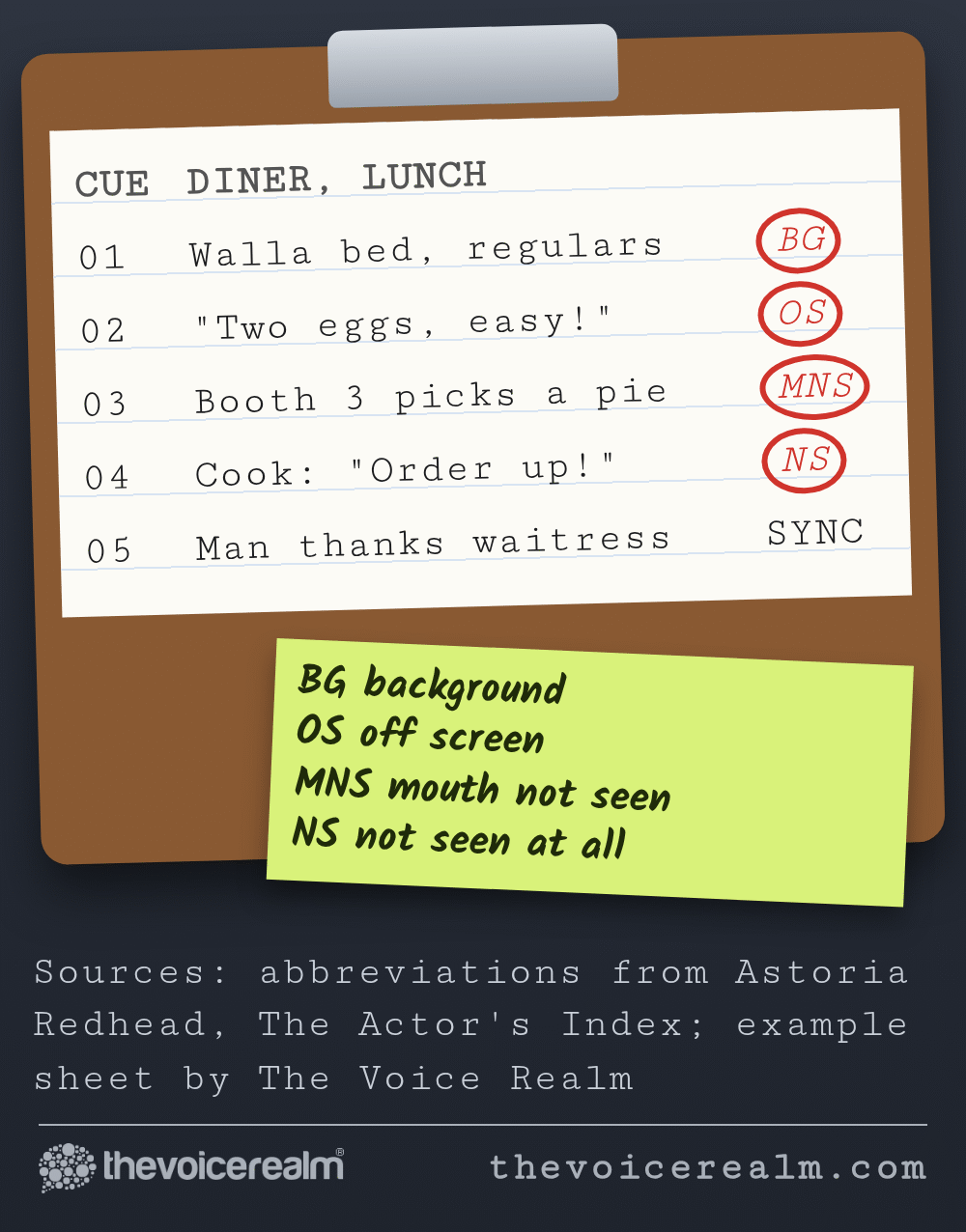
The bed. General murmur for a room or a street. It sits low in the mix and gives the scene its size.
Call outs, specifics and pick-ups. Lines that need to be heard. MovieMaker magazine explains the shorthand with a restaurant: a call out is a line like “I’ll meet you at the car!”, a specific is “asking a waiter what’s on the menu”, and a pick-up is “the waiter walks by”.
Efforts and reactions. Gasps, grunts, laughs, a crowd’s “oh!” when something goes wrong. One looper on Twenty Thousand Hertz said “We do sighs. We do simple breaths sometimes”, and was amazed how much a single breath could change a scene.
Lip-matched lines. When a background character is close enough that you can see their mouth, the line has to fit the lips exactly. Actor Astoria Redhead calls this “match flap”: ADR “for when a looper is replacing dialogue for a specific actor who was shown to say something on screen.”
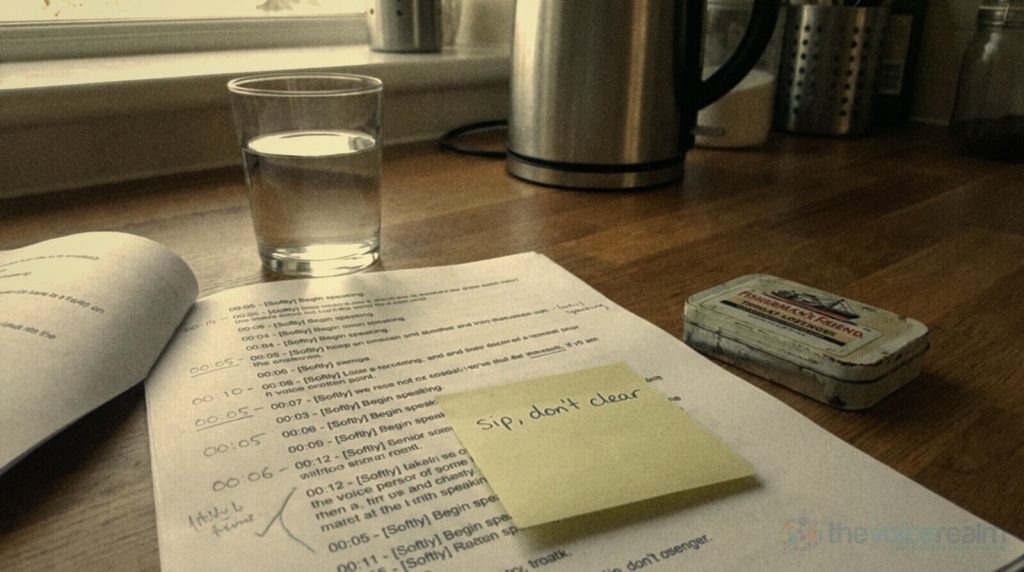
Every one of those is listed on a cue sheet before the session, in the sound team’s own shorthand. Learn to read it and you’ll know in seconds which lines need perfect sync and which give you room to play.
© The Voice Realm
How a session runs: three beeps and you’re on
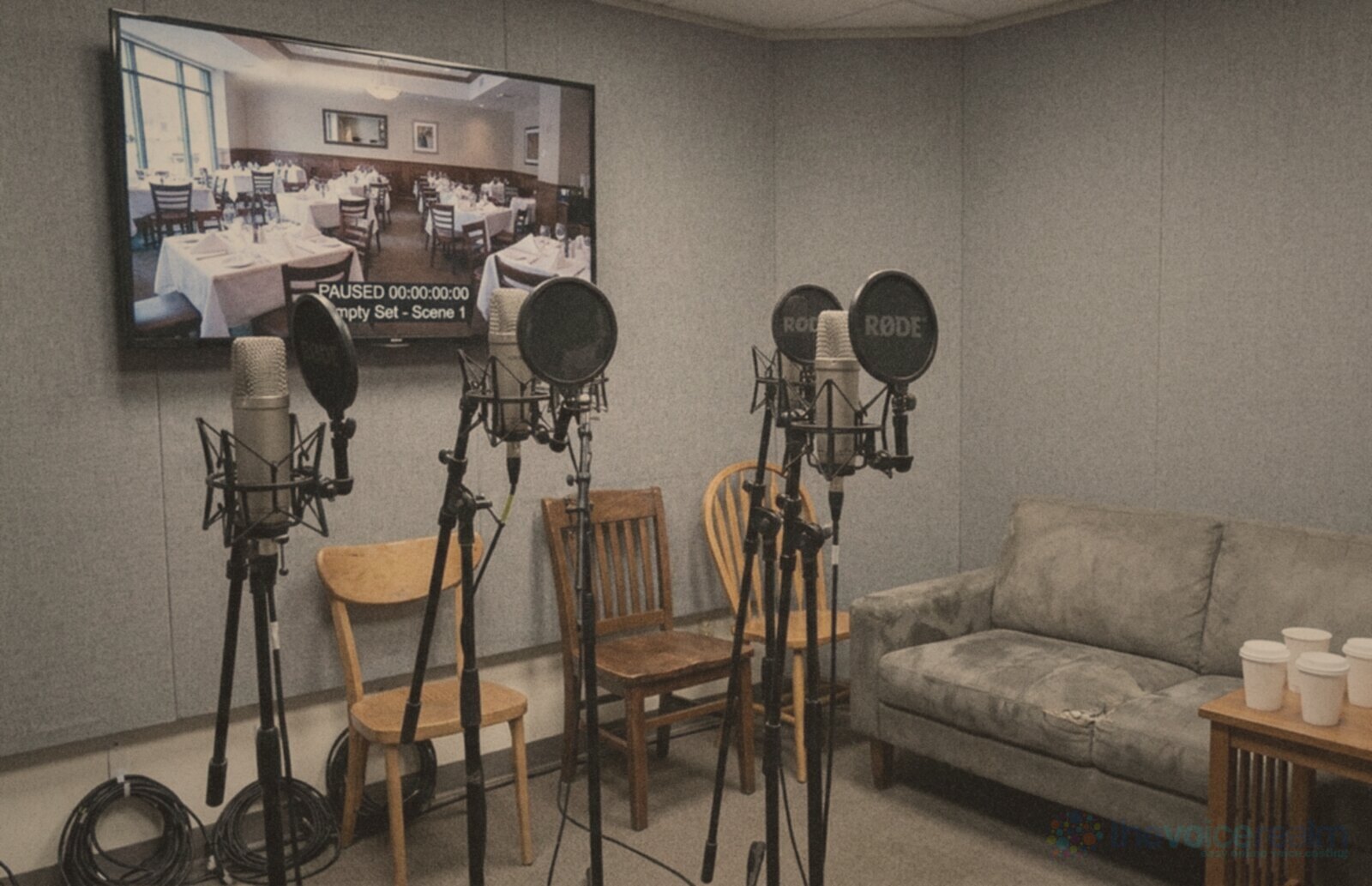
The room is usually a sound stage or a big booth with a screen, a few microphones and somewhere for the group to sit between cues. The supervisor plays the scene, points out the mouths and moments that need voices, and the group’s coordinator casts people from the room for each cue.
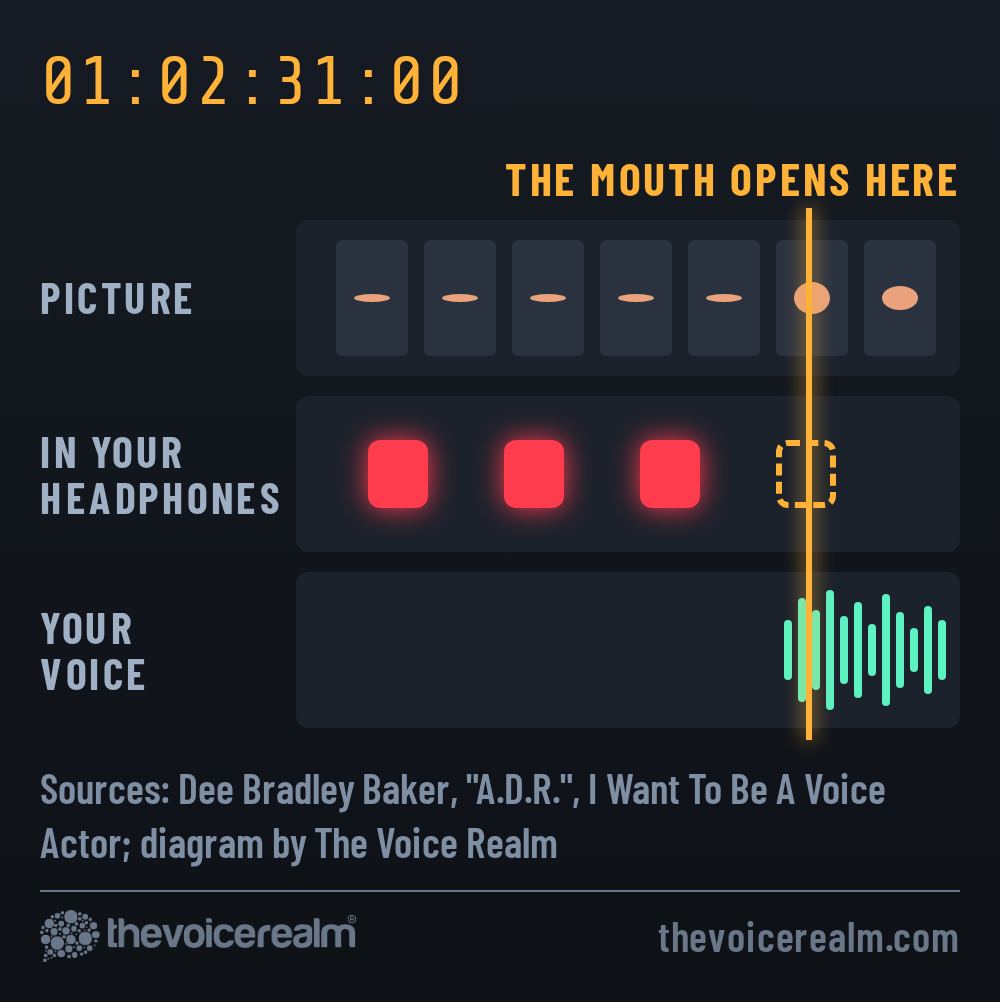
You’ll wear headphones to hear the lead-in and the countdown. Baker, who has done years of this work, explains the cue: three beeps count you in, and “You begin speaking where the fourth ‘beep’ would have been”. He adds a practical note about levels: the sound in your headphones “needs to be loud enough that you can hear the lead up to your performance, but quiet enough that it doesn’t bleed into the microphone”.
Expect lots of takes, fast. Baker describes a session where “There is lots of switch up and variation in a loop session and improvisational skills are a must.” Different combinations of actors take a run at the same cue until the supervisor has what they need. Sometimes they’ll ask for a few extra takes after the picture stops, so they have options to pick from.
Speak up when you spot something. Baker’s advice is to flag lip movement that wasn’t marked for a voice, because the team would rather fix it today than book another session. “If you see something that appears to need fixing, speak up!”
© The Voice Realm
Be interesting, but not too interesting
Here’s the part that trips up good actors. Everything in your training says find the conflict, raise the stakes, make a choice. In a loop group, a choice that’s too strong pulls focus from the actors the audience is meant to watch.
 VOICEMASTERACADEMYLearn the craft in order.Module one is freeStart module oneTwenty modules, start to finish.
Axel Avenjuliar, a looper on the Twenty Thousand Hertz episode, put it perfectly: “Actors look for drama or conflict. But in this, we have to be nondescript. Interesting, but not interesting enough.”
The loopers also warned against dark improvised topics. If someone at a background table starts telling a grim story and a word cuts through, the audience will wonder what’s going on over there. Keep your scene ordinary, warm and on topic. A couple deciding what to order. Two colleagues complaining about a printer. A parent calling a child back from the road.
Done well, those little scenes shape how a moment feels without anyone noticing. Will Ralston, supervising sound editor on The Wire, gave an example: “if you want that person to feel lonely, put some people in the background somewhere off camera having a good time.” Background voices are a storytelling tool, and good loopers think like storytellers.
Homework: the research binder
Loop groups get told the scenes ahead of time, and they’re expected to arrive ready. A police drama needs police talk. A hospital show needs real medical shorthand. A period piece needs the slang of the period.
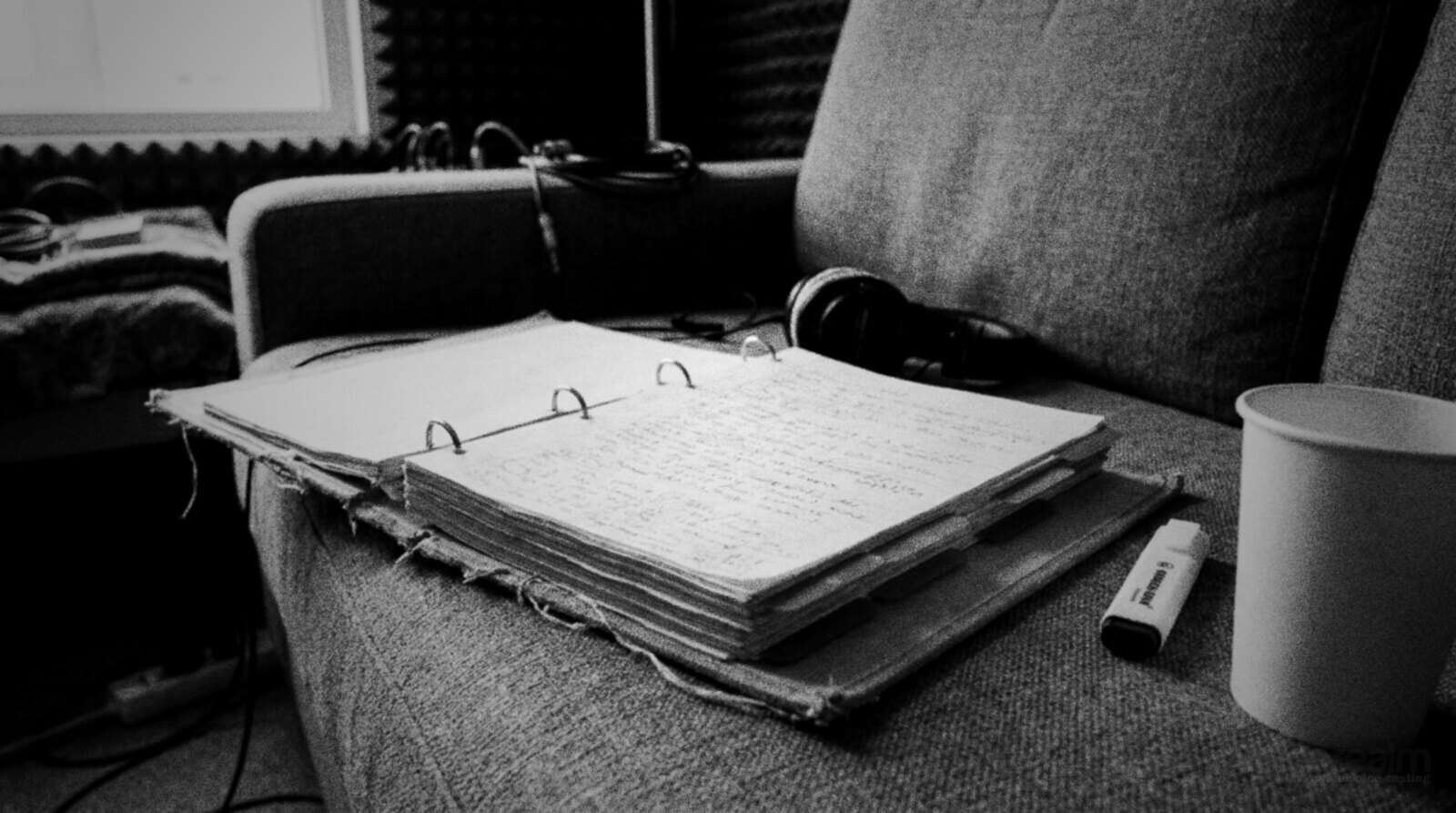
Daphne Gaines, a looper on the same episode, explained why: “when you go up there, and those beeps go off, you have to have the information and you have to have it at the tip of your tongue.” She described keeping a book of research for every kind of scene, “a couple inches thick”, covering hospitals, forensics and more.
Accents matter just as much. The Jaws beach only worked because the voices sounded like the place. If you’ve got a regional accent you can hold under pressure, that’s a real asset here, and it’s worth working on a second accent you can actually deliver. Languages are prized too, because crowds in films are rarely all one language.
© The Voice Realm
The money, the union and the catch
In the United States, film and TV looping is mostly union work. Baker says it “generally pays a scale session fee (the minimum the union contract allows) that pays residuals as well”. Residuals arrive later, once a show reaches home viewing and streaming, so the first cheque is only the start.
The catch is that agents rarely get involved. In Baker’s words, “Agents generally have no interest in facilitating or booking ADR”, because the commission on a scale session is small. Loop groups are booked directly by their coordinators, who call people they trust. He also notes that anime dubbing is often where people first learn to loop, and it’s demanding work for the fee. If you enjoy matching an existing performance, our guide to lip sync in dubbing covers that side of the craft.
Outside the US, crowd voice work is often booked the same way, through the sound team’s own trusted list, though the deals differ from country to country.
How to get your foot in the door
There’s no open casting call to answer. Loop groups grow by recommendation, and their coordinators hire people they’ve seen work. That sounds closed, but it also means the route in is clear: become someone a coordinator has seen work.
When a reader on his site asked how to get into a loop group, Baker replied: “If you are interested in looping, I’d take an ADR class by someone who currently casts the kind of projects you like and that are a good fit for your abilities.” He’s careful to add that a class never guarantees work, but it puts you in the room with the right people.
Workshops can open doors in other ways too. Early in 2026, a group of disabled actors formed what Easterseals calls the “first-ever Disability Loop Group”, which grew out of a workshop on the Sony Pictures studio lot and went on to voice background for the animated film GOAT.
- Train your improv. Short-form improv classes build the instant, low-key chatter the job runs on.
- Practise with the sound off. Mute a busy scene on TV and voice the background with a friend. Record it and listen back for anything that pulls focus.
- Build your binder. Police, hospital, airport, courtroom, office and sports lingo, plus slang from a few decades.
- Be the reliable one. On time, prepared, quick to take a note. Coordinators book people who make their day easier.
Take direction well, too. Loop supervisors give quick notes and expect the next take to change. If that’s something you want to sharpen, here’s how to turn a note into a better take without losing what was working.
And once you’ve done a session, you’ll never watch a crowd scene the same way again. As Carl Gottlieb said: “You shouldn’t know that we’re there. But once you do, you will always hear us.”
Sources: Twenty Thousand Hertz, “Loop Groups: The art of movie background chatter” (report by Flora Lichtman for Every Little Thing). Dee Bradley Baker, “A.D.R.”, I Want To Be A Voice Actor. Astoria Redhead, “ADR is not Dubbing is not Looping”, The Actor’s Index. Aaron Hillis, “Dialogue Looping and Walla 101”, MovieMaker. Radio Times, 17 October 1952, quoted in “sense evolution of ‘rhubarb’: from theatre to nonsense”, Word Histories. Easterseals, “First Disability Loop Group Makes History”.
Ready to get booked?
See the jobs open right nowAbout Sarah Robbins
Sarah Robbins writes for The Voice Realm about finding voice over work, home studios, casting and the business side of voice acting.