Blog
Find Voice Over Jobs
Your Phone Can Record a Voice Over. Here’s How to Make It Sound Good
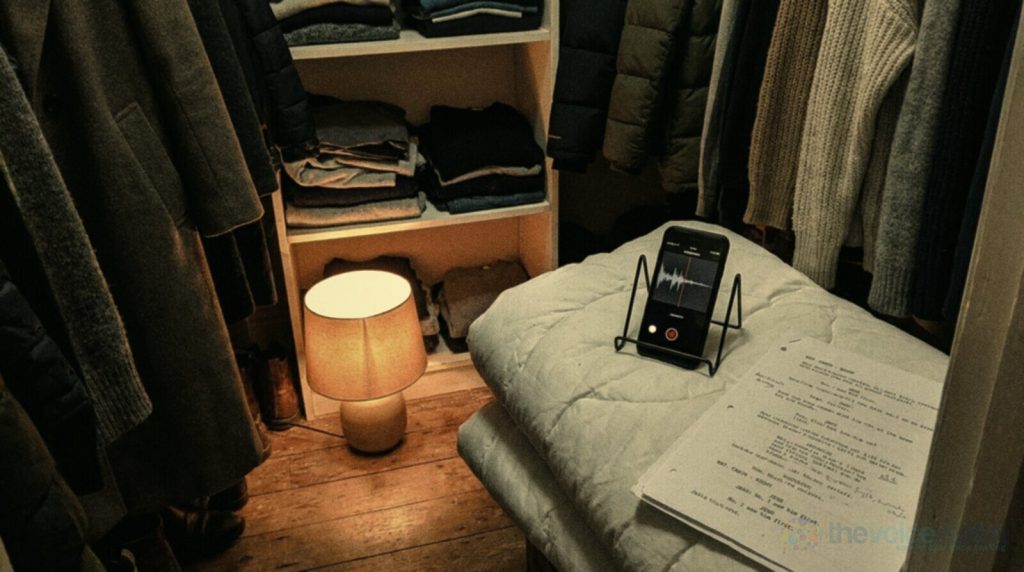
What a phone does well, the settings to change before you press record, where to put it, and the point where it stops being good enough for paid work.
What a phone does well, the settings to change before you press record, where to put it, and the point where it stops being good enough for paid work.
Why a vocal booth gets hot and stuffy so fast, what stale air does to your reads, and quiet ways to bring fresh air in without letting noise in too.

What a reflection filter catches, what it misses, where the mic should sit, and how to test one in your own room before you buy one.
Where to cut, what to boost and how hard to squeeze: EQ and compression for voice actors, with starting settings that still sound like you.
Safe headphone levels, where a voice actor's day gets loud, free habits that protect your ears, and what ringing ears and a hearing test can tell you.
How to record audiobook and voice over pickups that match the original: setup notes, mic position, time of day, listening first and checking the join.
Standing gives your lungs more room, but your head position matters more. What the research says about posture and how to set up your booth.
Find the hum, hiss and rumble in your home recordings, measure your noise floor, and fix the leaks, appliances and settings that cause them.
What an audio interface does for your voice, the gain figure that matters most, phantom power, direct monitoring, and the features you can skip.
Audacity, REAPER, Audition, GarageBand and more, compared for voice work: what each costs, why punch and roll matters, and which one suits you.