Blog
Blog
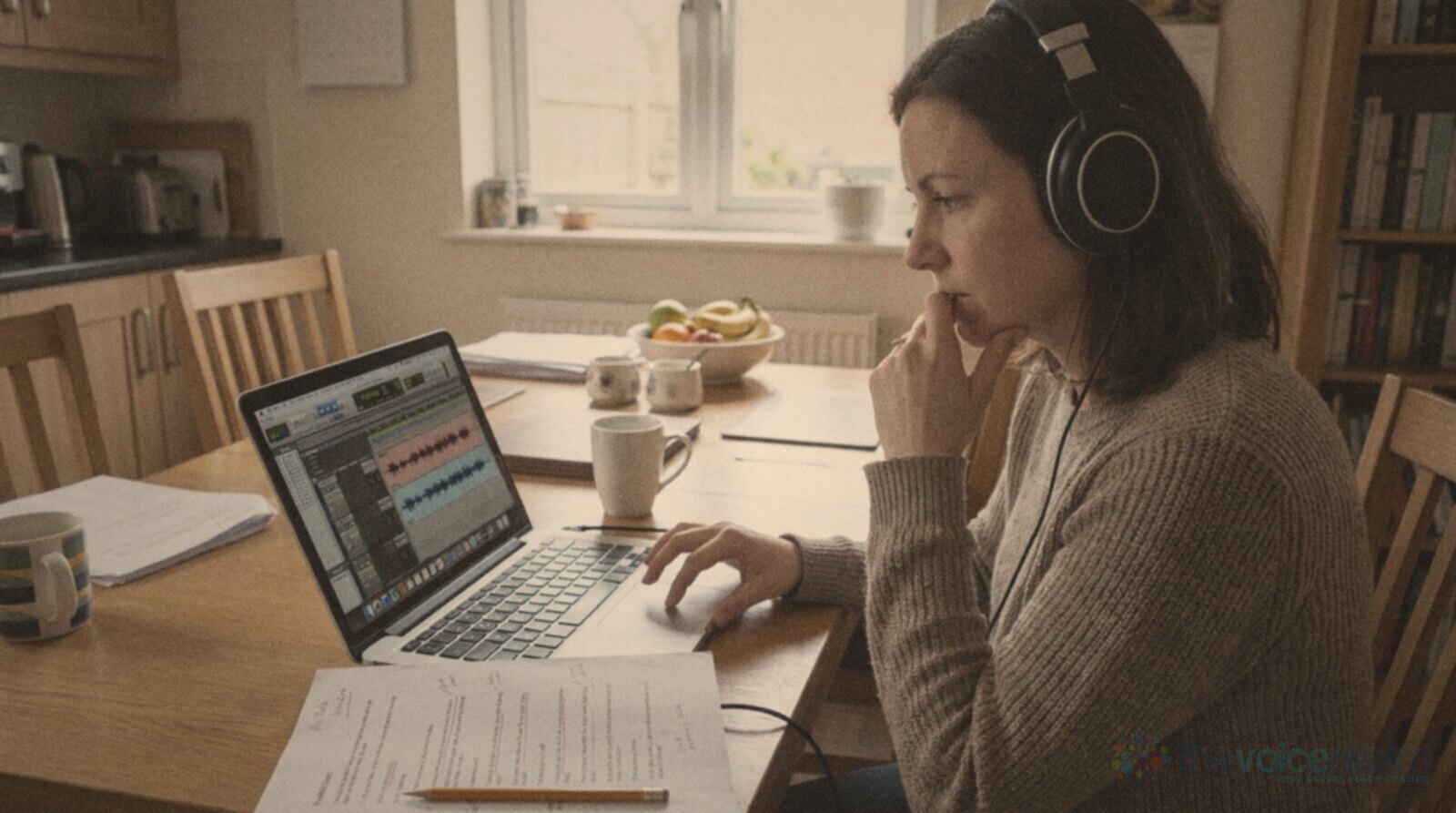
Before the first word of your audition script, there’s usually a moment where you say your name. That’s the slate, and it trips up more beginners than the read itself. Do you say it? What goes in it? Should it sound like you, or like the character? This guide is for voice actors who are starting to send auditions and want a slate that helps instead of getting in the way. If you’re brand new, the free lessons at Voice Master Academy cover the basics of a first audition, and this piece picks up from there.
What a slate is, and why anyone cares
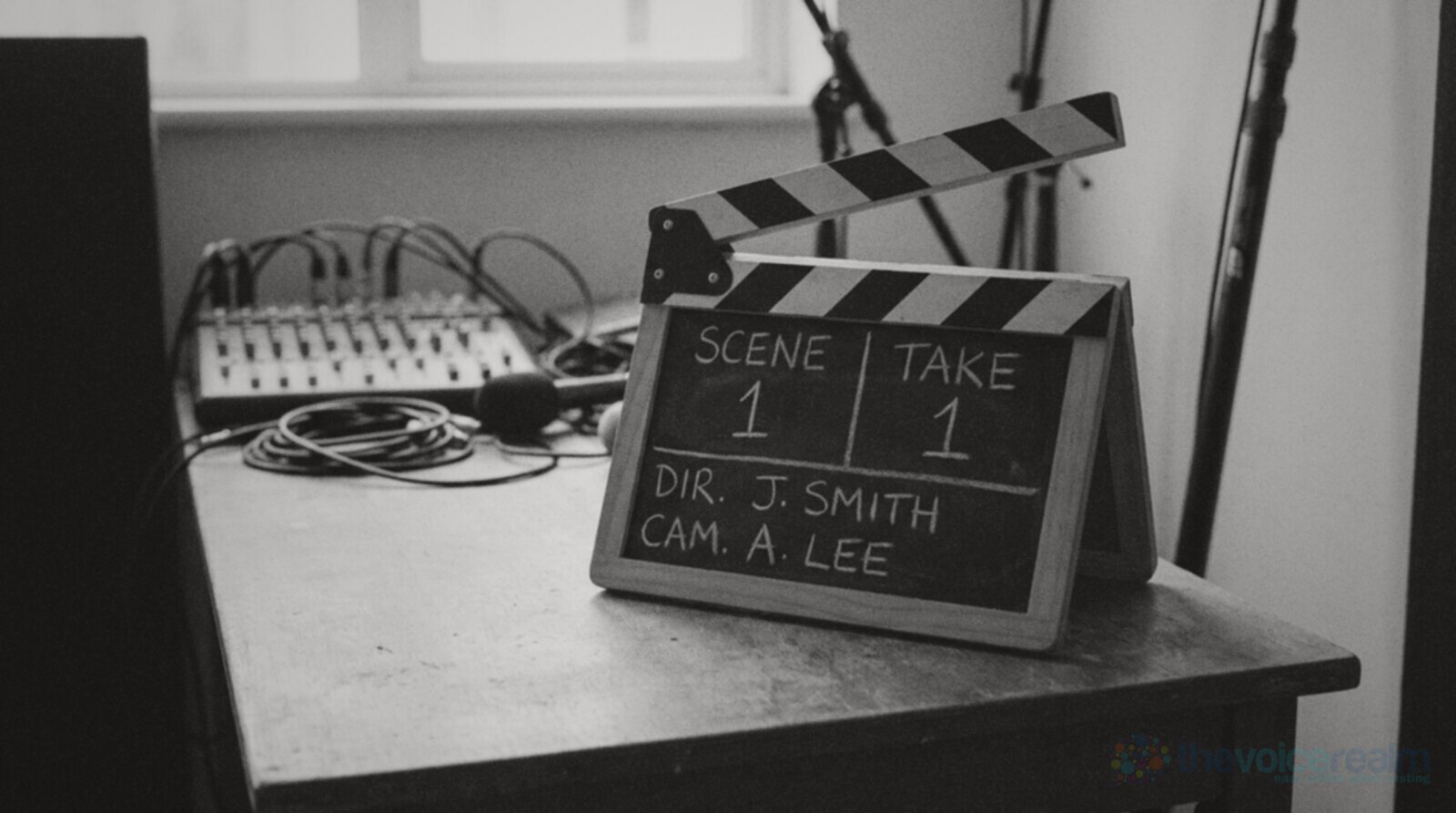
Caroline Cole, writing for Such A Voice in 2021, defines it as “a short introduction spoken at the beginning of an audition or a demo.” It might be your name. It might be the role you’re reading for. In voice over it’s usually a few words of audio at the front of the file, before the script begins.
It matters because it comes first. Whoever’s listening has a stack of files to get through, and your slate is the first thing they hear from you. John Kovacevich, writing on the VoiceOne site in 2017 from the listener’s side of the desk, says: “Your slate is the first thing we hear so if your slate voice is very different from what we’re looking for, I have to immediately overcome my first impression.” A few lines later he adds: “Your audition can be over before you read the first word of the script.”
That’s the stakes, and they’re real, but they’re small. A slate won’t win you a job. A bad one just makes the listener work harder before they’ve heard what you can do. The goal is to be fast, friendly and out of the way.
© The Voice Realm
The brief decides, not the habit
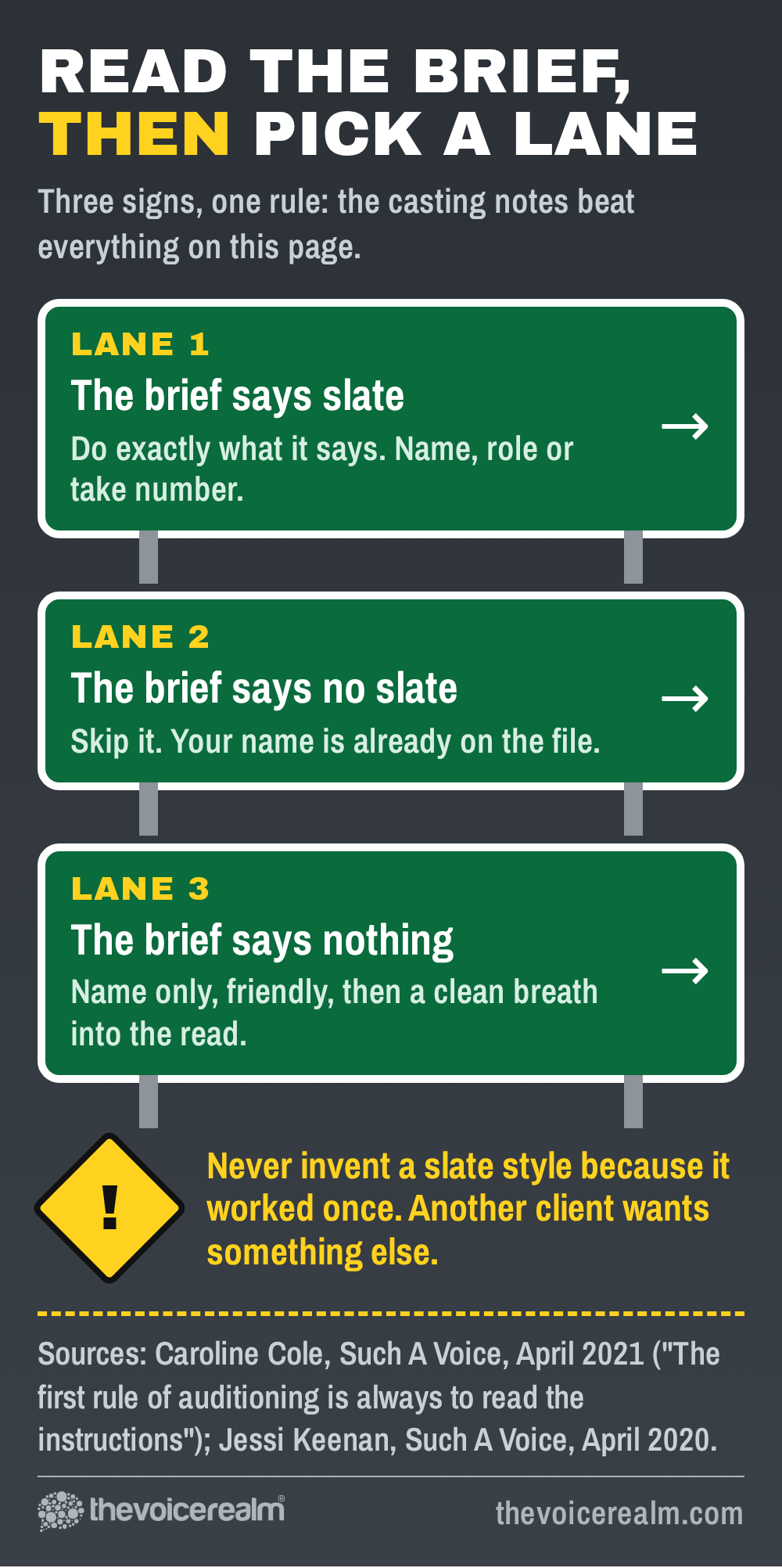
Here’s the rule that overrides everything else, and Cole puts it first: “The first rule of auditioning is always to read the instructions.” Some casting notes ask for a name at the start. Some ask for a name at the end. Some ask for no slate at all. Some say nothing, and then you’re guessing.
Preferences genuinely differ, and they’ve moved over the years. Jessi Keenan, in a 2020 piece for Such A Voice, notes: “Slating your name and number of takes was the standard for many years.” She also points out that for emailed MP3 files, practice varies, and that some people now want the slate at the end or none at all, partly because names are already in the file details. Some audition platforms ask you not to slate on their site, where the client sees your profile name next to the player.
So where do you look? Read the whole job post, not just the script. Look at the notes in the email, the line under the script, the file naming instructions and the “how to submit” page. If you can’t find anything and the casting director is reachable, ask. A one line question is fine, and it shows you read the brief. And don’t carry your habit from one client to the next. A slate that was right last week can be wrong today.
© The Voice Realm
What to say, and what to leave out
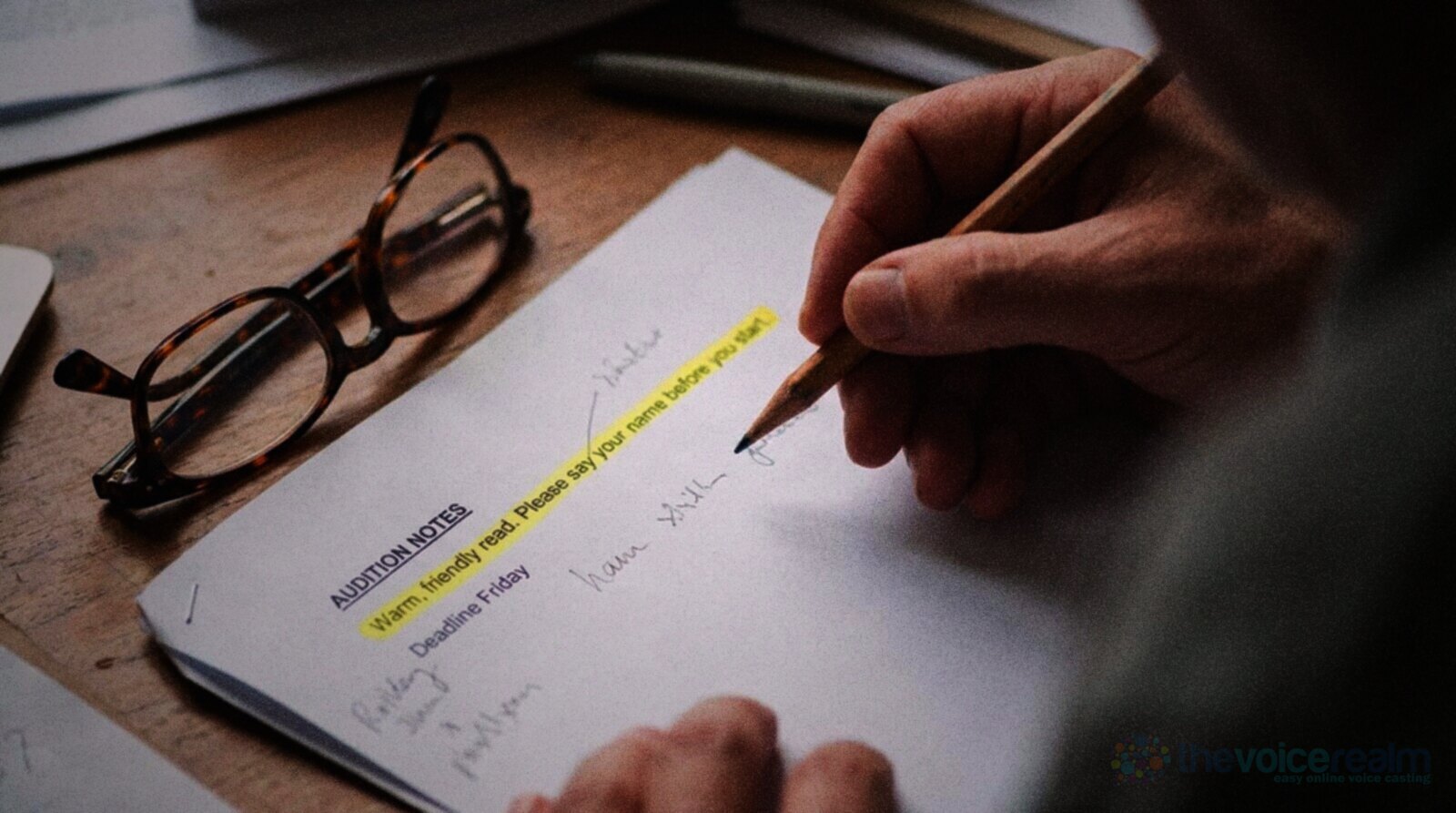
When you do slate, keep it short. Keenan’s advice for an in-person audition is to “state JUST YOUR FIRST AND LAST NAME.” That’s the safe default for files, too, unless the brief asks for more. A line like “Maria Lopez” is plenty.
Add something only if you’re asked. A few examples of what a brief might ask for: the role or character you’re reading, the agency that represents you, the take number, or the project name. Give exactly that, in the order they’ve asked for it, and nothing extra.
Leave out the rest. Skip “Hi, my name is” and the cheerful “and this is my audition for.” Skip jokes, skip a plug for your website, skip a long list of the things you can do. Skip the take number if nobody asked for it, because a lone “take one” in a file with only one take just adds clutter. A slate is a label, not a performance.
If you’ve sent a lot of auditions and not heard back, the slate is rarely the reason. Our guide to why you’re auditioning but not booking goes through the more likely causes.
Here’s how that plays out. Say a brief reads, “Please slate your name and the character.” You’d say something like “Maria Lopez, the shopkeeper,” in the same friendly tone you’re about to use for the read, and then breathe and begin. If it only says “slate your name,” you say two words and you’re done. If it says nothing about slating but asks you to name the file with your name, the file already does the job, and you can start straight on the script.
© The Voice Realm
Slate in the voice of the job
The next question is tone, and Keenan has a plain answer: “The tone of your slate should be positive, friendly, and confident as this may be the first impression they have of you.” She also cautions against over-performing it. It should sound natural and relaxed, not “put on” or “overly projected.”

 VoiceEditSuiteAuto Clean Up now learns how you breathe.A 30-second setup teaches it your breath, and you can teach it any breath it misses.See how it worksLearns from numbers, never your audio. Never used to train AI.
Then there’s the matter of what voice to use. For most commercial, narration and e-learning work, your slate and your read should sound like the same person. If you slate in your flat, tired, early morning speaking voice and then jump into a bright, warm read, the listener hears two different people. Matching the energy of the job makes the whole file sound planned.
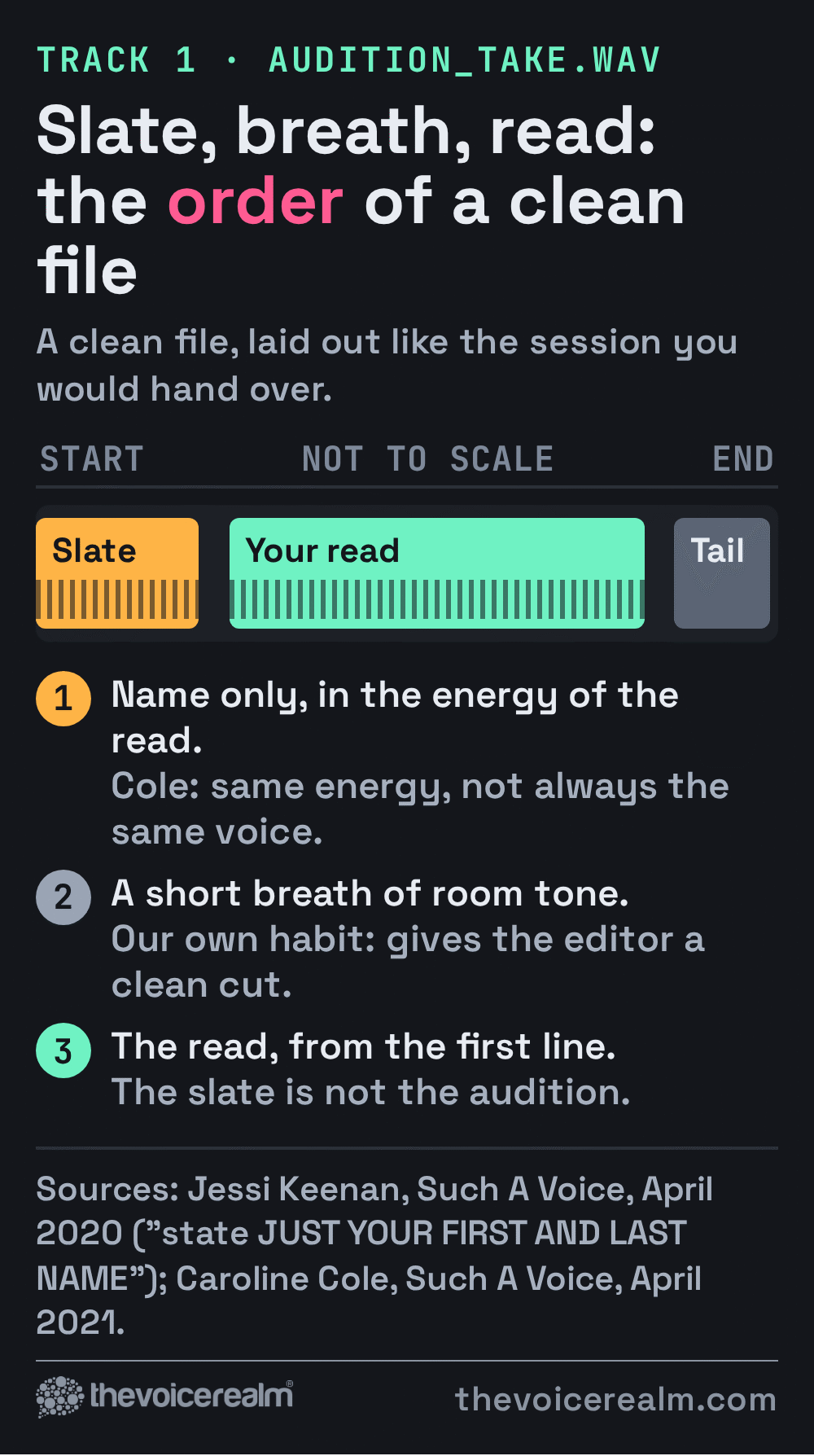
Character work is the exception, and Cole says it well: for a true character voice, “slate in the same energy, rather than the exact same voice.” If you’re reading a gruff pirate, you don’t have to say your name in a pirate growl. Say it in a warm, slightly gruff version of yourself, with the same attitude. The listener should feel the character coming, not hear a different actor.
A good test: say your slate and the first line of the script back to back, then listen. If the jump between them is bigger than you’d like, move the slate towards the read, not the other way round.
© The Voice Realm
Recording it so the file stays clean
The slate sits at the front of the file, so it gets scrutinised for technical problems more than anything else. Here’s how to keep it clean.
Record the slate and the read in one take where you can. The room sound, the distance from the mic and the level then match without any fiddling. If you record them separately, check that the two clips sound like the same room, because a sudden change in background noise at the join is an instant giveaway.
Leave a clean pause between the end of the slate and the start of the read. A breath’s worth of room tone, short enough that it doesn’t feel like a gap, gives the listener a moment to reset, and gives you a clean place to cut if the brief wants the slate removed or moved. Don’t rush from your name into the first word of the script without taking a breath, as it sounds like you’re running a race.
Match the loudness of the slate to the read. A slate that’s noticeably louder or quieter than the script is a small thing that makes a file feel amateur. And listen for mouth clicks in those first few words, because a dry mouth at the very start of a take is common. Our guide to stopping mouth noise covers the fixes.
Finally, follow the file naming instructions to the letter. If the casting notes say to name the file with your name and the project, do that. Don’t rely on the slate to carry the information the filename was supposed to. The two should agree, and where the brief says nothing, a plain “Firstname_Lastname” is a safe choice.

© The Voice Realm
Mistakes that cost you the first impression
The most common slate mistakes are the ones that come from nerves. People slate too slowly, as if they were on a stage. They add a nervous laugh, or a “sorry, one more time,” or they say their name in a voice that has nothing to do with the read. Our piece on calming audition nerves is a good companion if that’s you.
The other big one is slating when the brief said not to, or the reverse. That tells the casting director, fairly or not, that you didn’t read the instructions. It’s the easiest mistake to avoid and the one that costs the most.
- Read the brief first. If it says slate, no slate, or where to put it, that’s your answer.
- Keep it short. First and last name unless you’re asked for more.
- Match the energy of the read. Same attitude, not necessarily the same voice.
- Leave one clean breath. Then start the read from the first line.
- Check the file. Even levels, no clicks, named the way the brief asks.
The best way to get comfortable is to practise it like any other line. Record five slates in a row, each a little different in warmth and speed, and play them back with the first line of a script after each. You’ll hear within minutes which one sounds like the start of a good audition, and which sounds like someone reading out a form. Better still, play them to a friend who hasn’t seen the script and ask which one they’d want to keep listening to. Do that a few times before your next real audition and the slate stops being something to worry about. It becomes the easy part, and your attention goes to the read.
Sources: Caroline Cole, “To Slate or Not to Slate?”, Such A Voice, 15 April 2021. Jessi Keenan, “Working Wednesday: A Good Slate”, Such A Voice, 1 April 2020. John Kovacevich, “Six Audition Tips for Voice Over Actors”, VoiceOne, 12 October 2017.
Ready to get booked?
See the jobs open right nowAbout Sarah Robbins
Sarah Robbins writes for The Voice Realm about finding voice over work, home studios, casting and the business side of voice acting.