Blog
Blog
You can read a script beautifully and still sound like someone reading a script. Clients hear it in the first line. It’s the single most common reason a perfectly pleasant take gets passed over, and it’s the thing casting notes are really asking about when they say “conversational”. This guide is for anyone who records scripts, whether you’re sending your first audition or your five hundredth, and it’s built around things you can try today with a printed page and a phone.
None of it needs a studio. All of it needs a few minutes and a willingness to sound a bit less polished than you’d like to.
Why a script makes you sound like a script
Think about how you talk to a friend. You don’t know the end of your sentence when you start it. You pick words as you go, you speed up when you’re excited, you pause when you’re working something out. Written copy has none of that. Every word has already been chosen, the commas are in the wrong places for speech, and the sentences are often too tidy for anybody to say out loud.
When we read, our brains switch into a careful mode. We try to get the words right, we keep a steady rhythm, and we lean on the ends of sentences with a little falling tune. Listeners recognise that tune straight away, even if they couldn’t tell you what it is. It says “someone is reading to me”. The fix isn’t a new voice. It’s a different reason for speaking.
Casting notes show what clients are hoping for. Erika Ward, writing for Such A Voice, opens with a few lines that turn up again and again: “Casual and conversational; not announcer-y or character-y” and “Voice shouldn’t be too commercial-y or sales-y. Should be you in your normal voice not your polished VO voice. Should feel natural.” Notice the last part. Your normal voice, with the volume turned up a touch, is usually exactly what they’re after.
© The Voice Realm
Tell one person, not a crowd
The quickest way to change a read is to change who you’re speaking to. A crowd gets announced at. One person gets told something.
Ward’s advice is blunt and useful: “Instead of concerning yourself with what you’re selling, focus on what you’re telling.” She suggests treating a line as a casual recommendation between you and another person, the way you’d tell a friend about a great ice cream shop, with no sales pitch needed. That one change drops the pace, softens the ends of sentences and puts a bit of smile into the words without you having to add one.
Make the listener specific. Not “people at home” but your cousin who always forgets to book the dentist, or the neighbour who keeps asking about your broadband. Ward puts it this way: “The more specific you make the reasons for your words, the more natural your reads will sound.” Give yourself a reason to be saying this to this person today. Maybe you’re a bit relieved, or a bit smug, or just trying to save them a headache.
Voice over artist and coach Bill DeWees, in a set of tips for Whisper Room, adds a trick for getting into that frame of mind. Before you start the script, say something to the person in your head, perhaps their name or a phrase like “So, listen”. It matters because, as he puts it, “You usually respond to something that was said, an event, or from what you’re thinking and feeling in response to the conversation.” Your line becomes an answer, not an opening statement, and answers always sound more natural.
Speed read it, then let go
This one feels silly, which is partly why it works. DeWees recommends speed reading the final script right before you record: read as fast as you can without taking a breath, and stumble your way through. His reasoning: “Our brains are wired to control the way we sound, but speed reading helps us to take that control away.”
The payoff, he says, is a read that is less managed: “You will sound much more natural and will have a better chance of making your listener ‘feel something’.” And his line on the whole idea is worth keeping on a sticky note: “The more control you lose in the studio, the better your read.”
Try it as a reset between takes. Two fast, messy passes, then straight into a proper take while the looseness is still in your mouth. You’ll find some words fall into a more natural stress pattern by accident, and those are the ones to keep. It doesn’t replace preparation. It’s the last step after it, and a good way to shake off the careful reading voice.
Write it the way people talk
Most copy needs a quiet edit in your head before you speak it. Clients often don’t mind small changes when they’re offered as a choice, and on auditions you can usually record one take as written and one that sits a little more naturally. Where the script is locked, you can still change how you phrase it, by choosing where to breathe and which words to lean on.
 VOICEMASTERACADEMYTwenty modules, one at a time.Breath controlHome studioCommercial techniqueAuditionsStart module oneNo experience needed.
A few habits help. Break long sentences at the places you’d naturally pause, even if the commas aren’t there. Let a few words run together the way they do in speech, so “going to” can become “gonna” in your ear without changing a word on the page. Find the one word in each sentence that carries the meaning and let the rest sit lightly around it. Our guide to marking up a script before you say a word shows how to put all of that on the page so you don’t have to remember it mid-take.
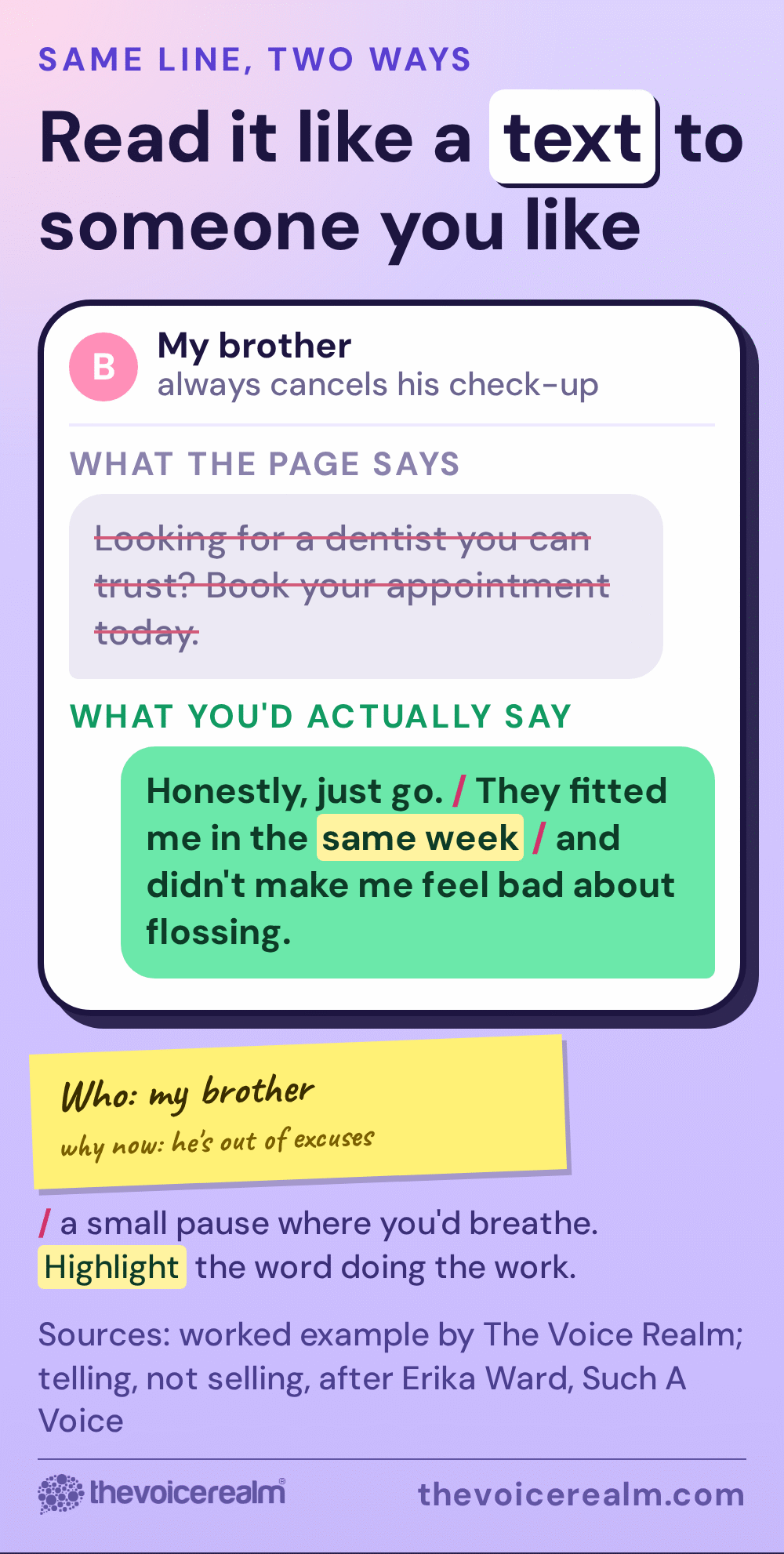
The graphic below shows what this looks like on a single line of copy, the same sentence as an announcer might deliver it and as you’d say it in a message to someone you like.
© The Voice Realm
Stand up and say it out loud
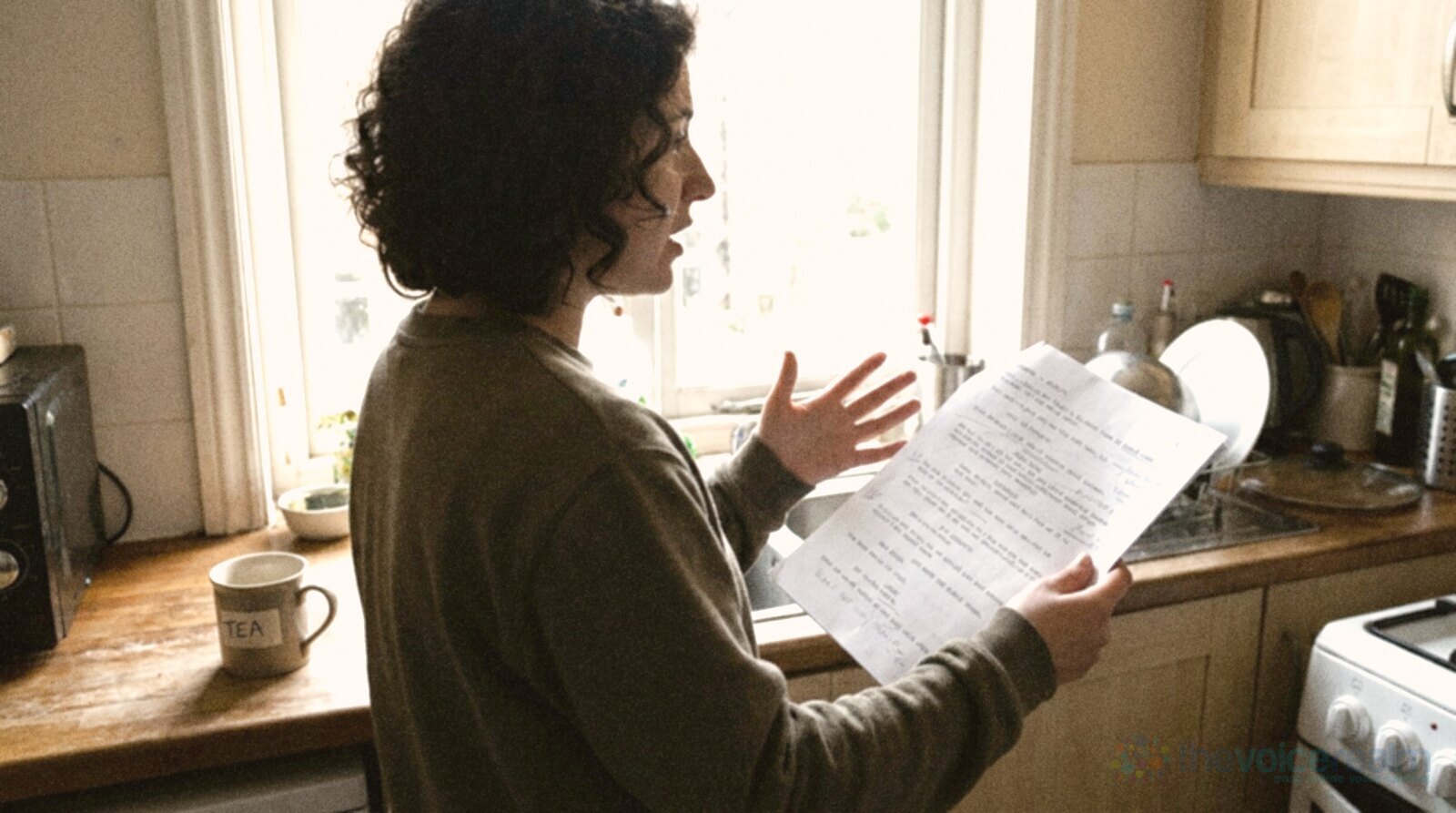
Sitting still and reading silently is the least natural way to prepare a conversational read. Stand up. Walk about a bit. Say the lines to an imaginary person across the kitchen, and let your hands do what they want. People who talk with their hands sound different from people who don’t, even down a phone line, because the movement changes the breath and the rhythm.
“Instead of concerning yourself with what you’re selling, focus on what you’re telling.”
Erika Ward, Such A VoicePost this quote
You don’t need to keep it up in the booth. But a minute of this before you sit down changes how the first line comes out, and the first line is the one the client listens to hardest. If you’re working from a tablet or a printed page, hold it loosely at chest height instead of burying your face in it. Look up between lines when you can, even if it’s only at the wall. That small habit stops the reading tune from creeping in.
A warm body helps a warm voice too, so if you haven’t already, do your five minute vocal warm-up first. Cold throats sound careful.
© The Voice Realm
Record yourself, then change one thing
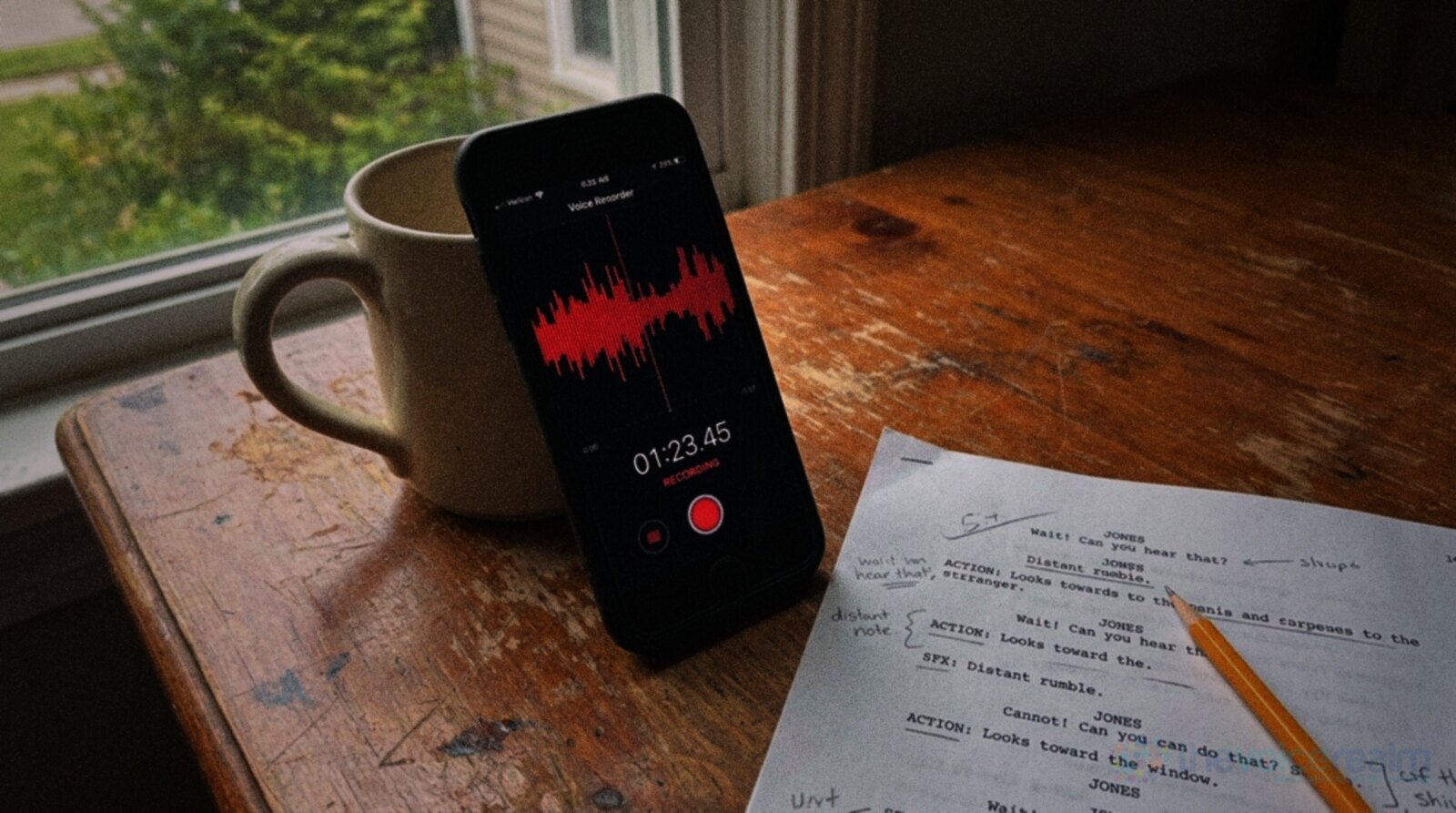
You can’t judge a read while you’re giving it. Your phone’s voice memo app is more than good enough for this stage. Record the script, wait an hour if you can, and listen back with your eyes closed. Don’t ask yourself whether it’s good. Ask a smaller question: “Where did I start reading?”
Usually it’s easy to hear. A line that rushes to the end, a list that falls into a pattern, the same little drop on the final word of each sentence. Pick one of those and fix only that one. Then record again. If you change five things at once you won’t know which one worked, and you’ll sound like you’re thinking about five things.
Keep your old takes. A folder of “before” recordings is oddly encouraging a month later, and it’s the best evidence you’ll ever have that practice is working. It also teaches you what your own natural pace is, which is worth knowing when a client sends a script with a strict word count.
© The Voice Realm
A week of five minute practice
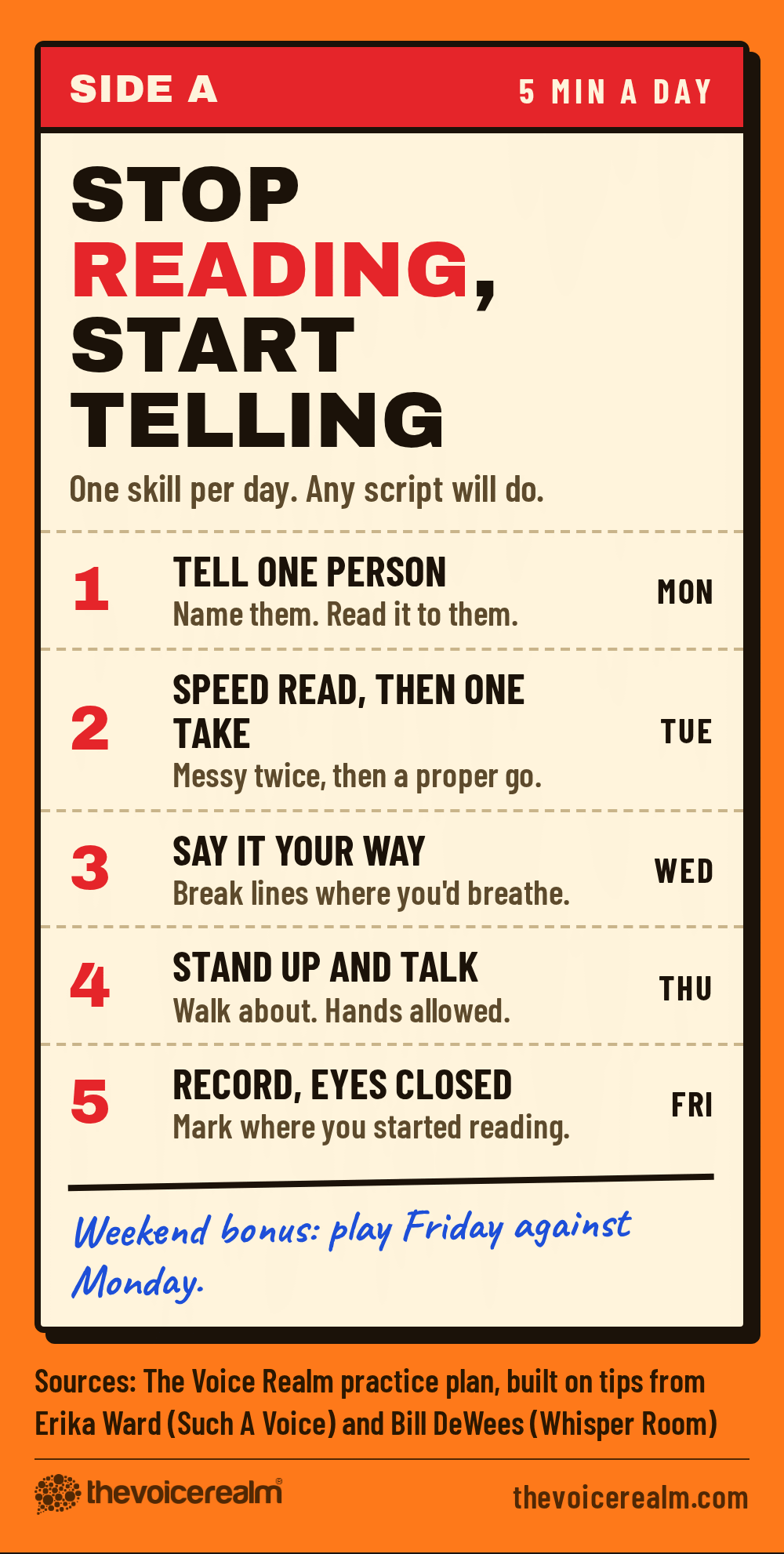
One long session won’t change much. A few minutes every day will. The tracklist below is one way to spread the ideas above across a week, with each day built around a single skill so you’re never trying to fix everything at once. Use any script you have: an old audition, a product label, a page of a book, a news paragraph.
By the end of the week you’ll have one clear before and after, and a feel for which of these methods works best for your own voice. For most people it’s one or two of them, which is exactly why it’s worth trying all of them once.
© The Voice Realm
When the brief says “conversational”
The word covers a lot of ground, and clients don’t always mean the same thing by it. For one it means relaxed and low. For another it means bright and quick, like a friendly neighbour. If you’re not sure, our piece on what direction like “warm, natural, conversational” might really mean helps you ask the right follow-up question before you record. A short message asking who the listener is and where they’ll hear it can save a lot of takes.
And if you’re still unsure, send two reads: one a little brighter, one a little lower, both aimed at one specific person. It shows range, it respects the client’s time, and it keeps your natural voice at the centre of both.
You don’t have to sound polished. You have to sound like someone worth listening to, telling one person something they’d like to know. Start with that, and the reading voice quietly goes away.
Sources: Erika Ward, Such A Voice, “Natural, Conversational, & Connected: Tips & Techniques For Commercial Voice Actors” (25 March 2021); Bill DeWees, Whisper Room, “VO Tips from Bill DeWees: 5 Ways to Sound Better, Part Two”.
Ready to get booked?
See the jobs open right nowAbout Sarah Robbins
Sarah Robbins writes for The Voice Realm about finding voice over work, home studios, casting and the business side of voice acting.