Blog
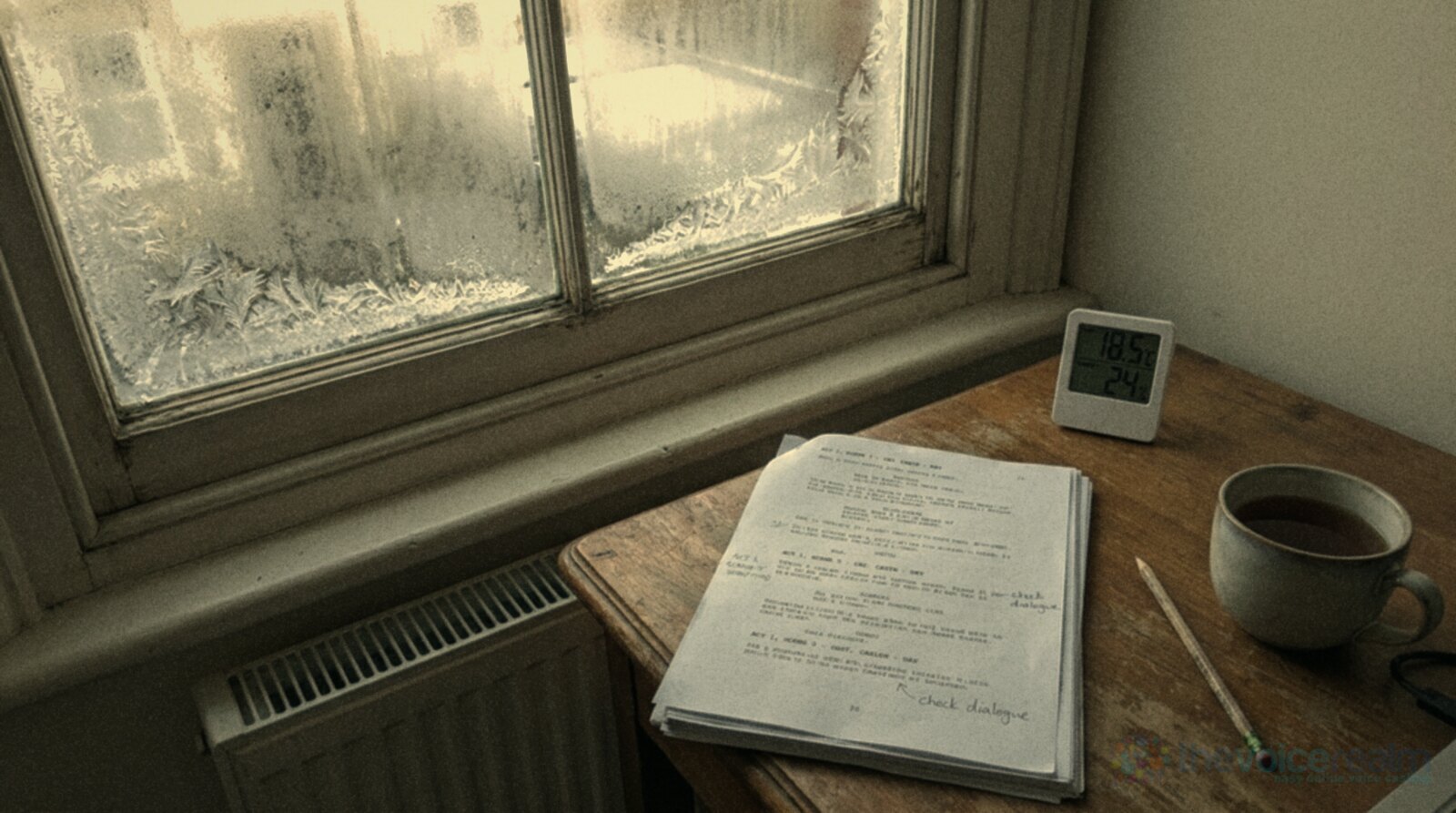
This one’s for voice actors who notice their voice gets scratchy, tired or a bit unreliable once the heating goes on. If your first take of the morning sounds like it came out of a paper bag, and by lunchtime you’re fine, dry air is a good suspect. Here’s what it does, what humidity to aim for, how to choose and look after a humidifier, and what to do when you’re recording somewhere you can’t control.
None of this replaces a doctor. If your voice keeps going wrong whatever you do, that’s a job for an ear, nose and throat specialist, not a gadget.
Why your voice feels dry air before your skin does
Your vocal folds vibrate hundreds of times a second, and they rely on a thin, slippery layer of moisture on their surface to do it easily. Every breath you take passes straight over them. In summer that air is usually soft and damp. In winter, outdoor air is cold and holds very little water, and then your heating warms it up indoors without adding any back.
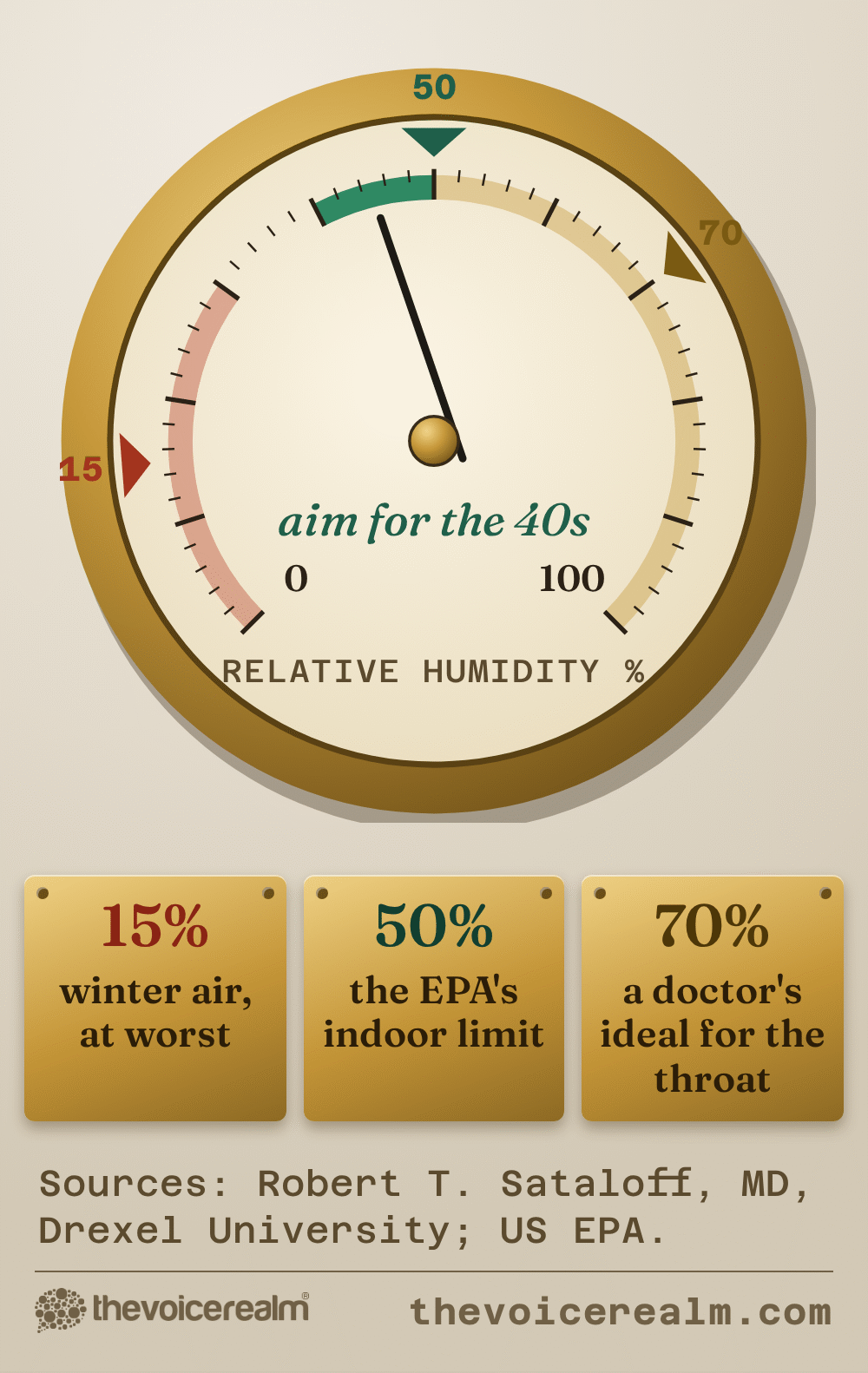
Robert Thayer Sataloff, a laryngologist at Drexel University College of Medicine who has spent his career treating singers and actors, put it simply in a Drexel interview: “Laryngeal tissues function best when our airstream is warm and humid.” He went on: “Cold winter air is dry, with humidity that can be as low as 15%. This interferes with efficient vocal fold vibration.”
In practice that shows up as a voice that takes longer to warm up, more effort to hit the same level, a scratchy edge on quiet reads, and more of those little clicks and smacks in the edit. If mouth noise always gets worse in winter, the air is part of the story, along with the habits in our piece on stopping clicks and sticky saliva.
St Olaf College’s musician health pages say the same thing in plainer words: “In dry climates or environments with air-conditioning or central heat, your voice will be happier if you add moisture.” Air conditioning counts too, so summer studio sessions in a chilled building aren’t off the hook.
Seventy percent or fifty? Two right answers to two different questions
Here’s where it gets interesting. In the same interview, Sataloff says: “Humidity close to 70% is ideal.” Then you read the United States Environmental Protection Agency’s advice on home humidifiers, and it says: “Do not humidify to indoor relative humidity levels exceeding 50 percent.”
They aren’t contradicting each other so much as answering different questions. The doctor is talking about the air your larynx would most like to breathe. The EPA is talking about your house, and explains why it draws the line where it does: “Higher humidity levels may encourage the growth of biological organisms in the home.” In plain terms, push a whole bedroom to 70% in a cold climate and you’ll get water running down the windows, damp in the corners and mould in places you won’t see until spring.
So split the job in two. Keep the room you sleep and work in somewhere in the 40s, without going over 50%. Then give your throat a short, direct dose of really moist air when it matters, before a session or after a long day of talking, with steam. More on that further down.
Measure before you buy anything
You can’t feel the difference between 25% and 40% humidity with any accuracy. You can only guess, and most people guess wrong in both directions. So the first purchase isn’t a humidifier, it’s a little digital hygrometer, the kind that shows temperature and humidity on one screen. They’re cheap, small and battery powered.
Put it where your head is: on the bedside table, then on the desk in your recording space. Leave it for a few days and look at it at different times. The pattern is usually obvious. Humidity drops overnight when the heating runs, climbs when someone showers or cooks, and drops again on a cold, clear day. A reading in the 20s in your bedroom on a January morning is common, and it tells you far more than any product review will.
© The Voice Realm
If the room already sits in the 40s, you may not need a humidifier at all. Spend the money on something else and keep drinking water.
Cool mist or warm mist: choosing a humidifier
There are two broad families, and they each have a good case. The choice comes down to the room, the household and how much cleaning you’ll really do.
Evaporative or ultrasonic
Quiet, cheap to run and safe around children and pets, because nothing gets hot. Evaporative models blow air through a wet wick, so they can’t overshoot much. Ultrasonic models make a fine fog and, with hard tap water, can leave a white dust on dark furniture and gear.
Steam vaporiser
Boils the water, so the mist is clean of minerals and feels lovely to breathe. It uses more power, the steam outlet gets hot, and it isn’t a good idea anywhere a child or a dog can knock it over. Often the quieter choice for a bedroom.
Whichever you pick, buy one sized for the room rather than the biggest on the shelf. An oversized unit in a small bedroom will drive the humidity well past 50% overnight. A model with a built-in humidistat, which switches off when the room reaches a level you set, takes most of the guesswork out of it. Set it to 45% and let it get on with it.
Noise matters more for us than for most people. If the humidifier lives anywhere near your recording space, you’ll want one you can switch off without a fight, because even a quiet fan or a gentle bubbling is a hum under your voice that’s hard to clean out later.
Keep it clean, or don’t run it
A humidifier is a tank of still water sitting in a warm room, which is exactly what bacteria and mould enjoy. If you don’t clean it, you’re breathing whatever grows in it, all night, straight past your vocal folds. That’s a worse trade than dry air.
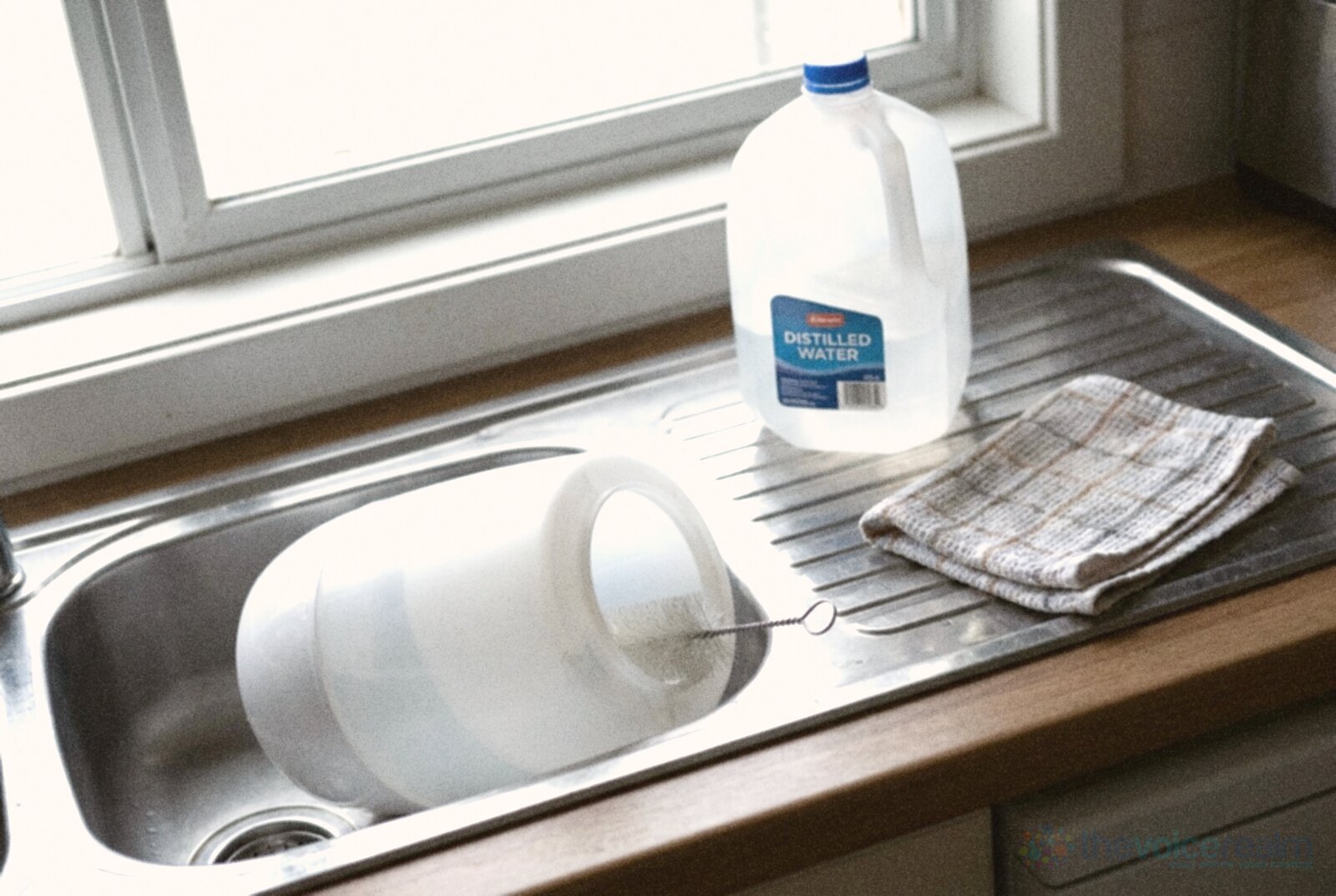
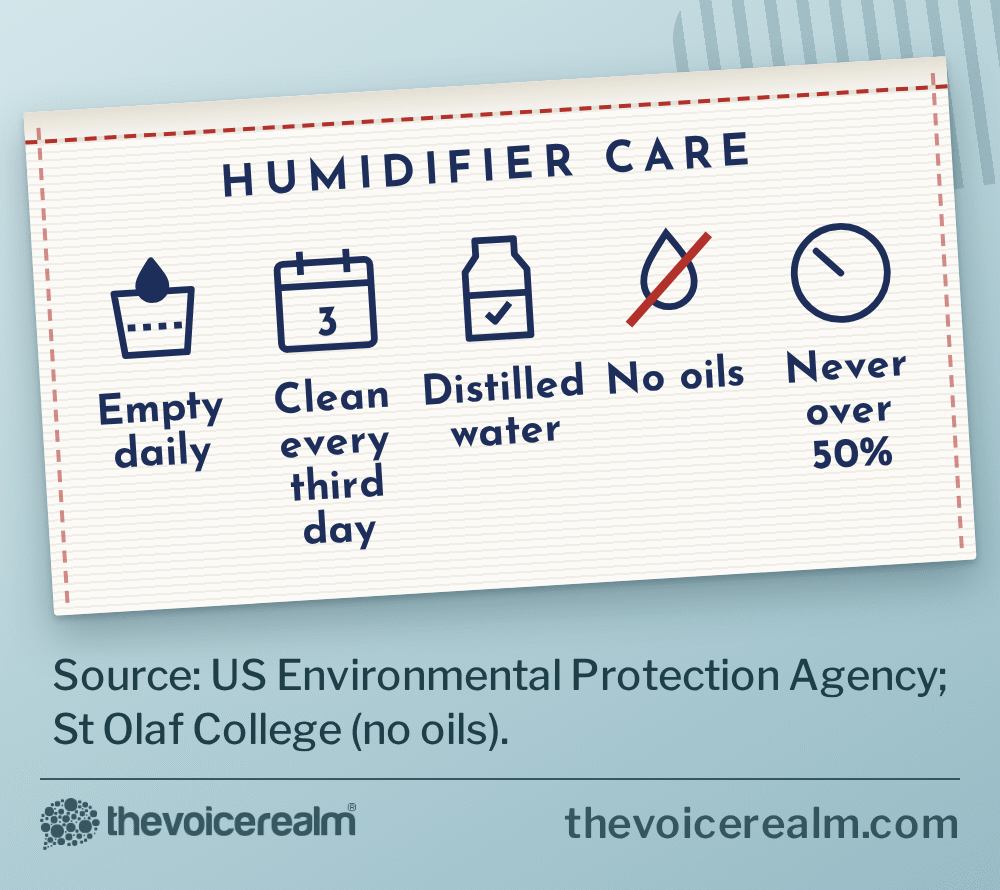
Empty, dry and refill daily; a proper clean every third day. © The Voice Realm
The EPA’s advice is specific, and the label below sets out its routine. One part of it deserves a word of explanation. The agency says to “use water with low mineral content, such as distilled water, to prevent releasing minerals into the air.” That’s the cause of the white dust that ultrasonic models leave on everything, and it’s also dust you breathe.
 VOICEMASTERACADEMYTwenty modules, one at a time.Breath controlHome studioCommercial techniqueAuditionsStart module oneNo experience needed.
Two more things worth knowing. St Olaf’s guidance is that a bedside humidifier “should be filled with water only, not commercial mentholated additives or aromatherapy oils,” which rules out the scented drops some models are sold with. And at the end of winter, clean it, dry it completely and store it dry, so you’re not starting next season with a tank of last year’s slime.
© The Voice Realm
Where the humidifier goes, and where it doesn’t
The best place for most voice actors is the bedroom. You spend seven or eight hours breathing that air, often through your mouth, and the morning voice is where dry air hurts most. A room in the 40s overnight makes a real difference to how your first session of the day sounds.
The worst place is inside a small vocal booth, right next to the microphone. A booth that’s sealed tight already gets warm and stuffy from your own breath in a long session, as we covered in keeping a booth cool and breathable. Add a humidifier and you’re pushing moisture into acoustic foam and blankets that don’t dry out quickly, and into a condenser microphone that doesn’t like it. Humidify the room the booth sits in, between sessions, and keep the unit itself out of the booth.
Keep it off the floor and away from walls and curtains too. A metre or so of clear space and a spot at about table height lets the mist mix with the room instead of soaking one patch of carpet.
Fast moisture before a session
A humidifier works slowly, across a whole room, over hours. When you’ve got a session in twenty minutes and your voice feels like sandpaper, you need something faster. That’s steam.
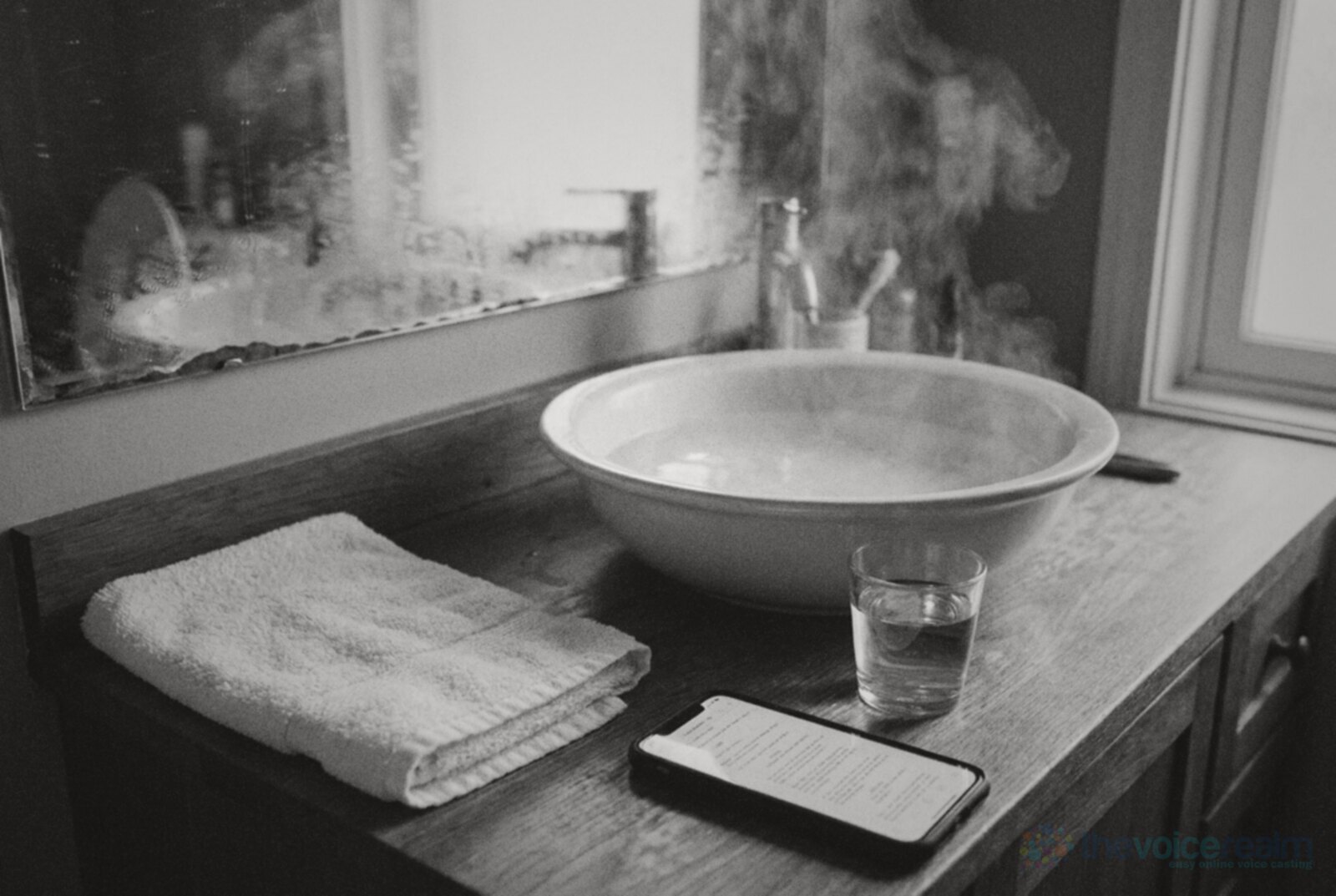
A bowl of hot water and a towel: the quick dose before a session. © The Voice Realm
A hot shower does it. So does a bowl of hot water with a towel over your head for a few minutes, breathing gently through your mouth and nose. A personal facial steamer is a neater version of the same thing. The point is to put warm, wet air right where the doctor said the larynx likes it, for a short while, without turning the whole house into a greenhouse.
Steam is the quick fix, not the foundation. Water you drank yesterday is what hydrates the tissue from the inside, and it takes hours to show up. If you want the longer version of how those two work together, our guide to what hydration really does for your voice goes through it.
On the road, in hotels and borrowed studios
Hotel rooms are often the driest rooms you’ll ever sleep in. Sealed windows, a wall unit blasting warm air all night, and nothing in the room adding moisture back. If you’ve ever woken up in a hotel with a voice that sounds two days older than you are, that’s probably why.
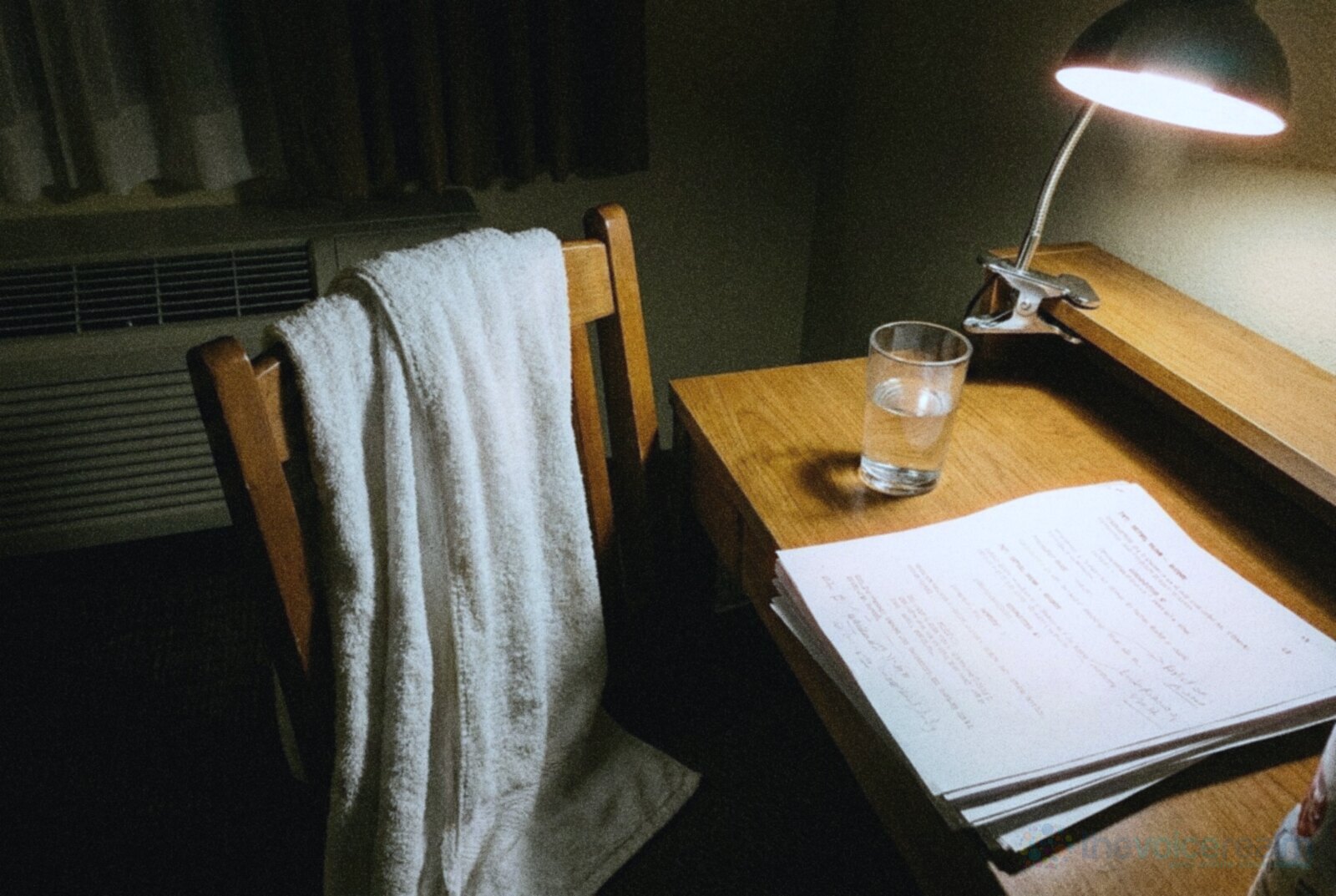
A wet towel near the heater gives a dry hotel room some water back overnight. © The Voice Realm
You don’t need to pack a humidifier. A few small tricks get you most of the way:
- Turn the heating down or off before you sleep, and use the extra blanket instead.
- Hang a damp bath towel over a chair near the heater. It gives water back to the air overnight.
- Run the shower hot for a few minutes with the bathroom door open before you start talking in the morning.
- Keep a bottle of water by the bed and sip when you wake in the night.
- Breathe through your nose as much as you can. It warms and moistens air before it reaches your throat.
Planes are the extreme version of all this. Drink more than you think you need, and try not to talk over the engine noise for hours, because a long, loud chat in dry air is about the most tiring thing you can do to a voice before a session.
When dry air isn’t the whole story
Humidity is one of the easier things to fix, which is exactly why it’s worth ruling out first. But it isn’t the only reason a voice gets rough in winter. Colds, reflux, allergies to the dust that comes off heating systems, and simply talking more at holiday gatherings all play their part.
If your voice is hoarse for days at a time, if it hurts to talk, or if something just feels different, see a doctor rather than buying another gadget. And if you’ve caught something, the call on whether to record is a separate question, which we’ve covered in recording with a cold, adjusting or resting.
For everyone else, the winter routine is short. Get a hygrometer. Aim for the 40s, never over 50. Clean the humidifier like you mean it. Steam before sessions. Drink water all day. Your first take of the morning will thank you.
Sources: Drexel News Blog, “Q&A: How Can I Keep My Voice Healthy During Cold Winter Months?” (Robert Thayer Sataloff, MD, DMA, 21 October 2024); United States Environmental Protection Agency, “Use and Care of Home Humidifiers”; St Olaf College Musician Health and Wellness, “Taking Care of Your Respiratory System”.
Ready to get booked?
See the jobs open right nowAbout Sarah Robbins
Sarah Robbins writes for The Voice Realm about finding voice over work, home studios, casting and the business side of voice acting.