Blog
Blog

Diseases related to our voice are something some of us take for granted unless of course our voice is how we make a living. People like voice actors not only rely on their voice but also need it to be resonant and good in quality for recording. It’s not a job where as long as you can talk, you’re fine. While we cannot put a complete stop to falling ill and having to take medication, what we can do is to be aware of how this happens and how we can prevent our voices from deteriorating.
How aging changes the voice
Aging is a normal and unstoppable occurrence in our lives. The aging of the larynx and the vocal cords causes changes to the voice. For example, bowing and thinning, which allows air to escape between the vocal cords. This causes problems with functionality and lessens the voice quality. This can cause a lower pitch to the voice for women and for men, you can actually hear a higher pitch. Now, as we age and go through life, it is unavoidable that at some point we take medications. Whether they help our bodies heal, fight infection or help prevent us from getting ill, medications can also cause adverse effects to one’s voice. Denis W. Grillo, D.O., FOCOO, an ear, nose and throat specialist from Crystal River, shares that medicines also have an effect on voice quality. Medications that we take can directly affect the larynx and can also affect the diaphragm, lungs, and tongue, which is an important muscle for speech. The nose and sinuses, too, are important for voice resonation. Adverse effects mostly have something to do with moisturization, humidity, and lubrication of the airway.
How common medications affect the voice
- Medicines such as antihistamines, decongestants, medication used for coughing, medications for blood pressure and psychiatric
 medication used for anxiety and depression, as well as anticholinergic medications (another group of medications, for stomach and bowel disorders), can have an adverse effect on voice quality by drying out the airway. In addition, there is a specific group of antihypertensive medications called angiotensin converting enzyme inhibitors, or ACE inhibitors for short, that are known for causing different adverse effects, not just affecting the voice but making patients feel like they have a lump or a tickle in their throat or constant need for coughing or clearing of the throat, which we all know won’t do when we need to complete a recording for an audition or a job.
Drying is not the only downside to these medications, as they can also affect the neurologic system, thus also affecting voice quality. Anything that affects muscles can cause speech quality impairment such as slurring, mumbling and even a tremor quality to one’s voice. Our brain controls muscle movement, which includes the larynx, and so we have all those adverse effects as stated.

 VoiceEditSuiteClean it up, check it, send it.Loudness NormalizerScript AccuracyRate CalculatorSee the suiteThe studio check is free to try.
- It has been reported that large doses of vitamins like Vitamin C can also have a drying effect on the vocal tract. It has been said often enough: before taking anything, it is best to consult your doctor. It is important to note that acne medications that are derived from retinoic acid have, in rare instances, caused dryness to the airway. Consulting with a doctor before using any of these will help determine if you have a pre-existing condition that might worsen when medications like these are taken. Also, determining the right dose to take is important to avoid unpleasant side effects.
- Hormones can have an effect on the voice box and vocal cords, too. Women taking hormones have commented on a lower pitch to their voice. Men who have been treated with estrogen therapy for urologic issues have reported noticing a high pitch quality change to their voice in some instances.
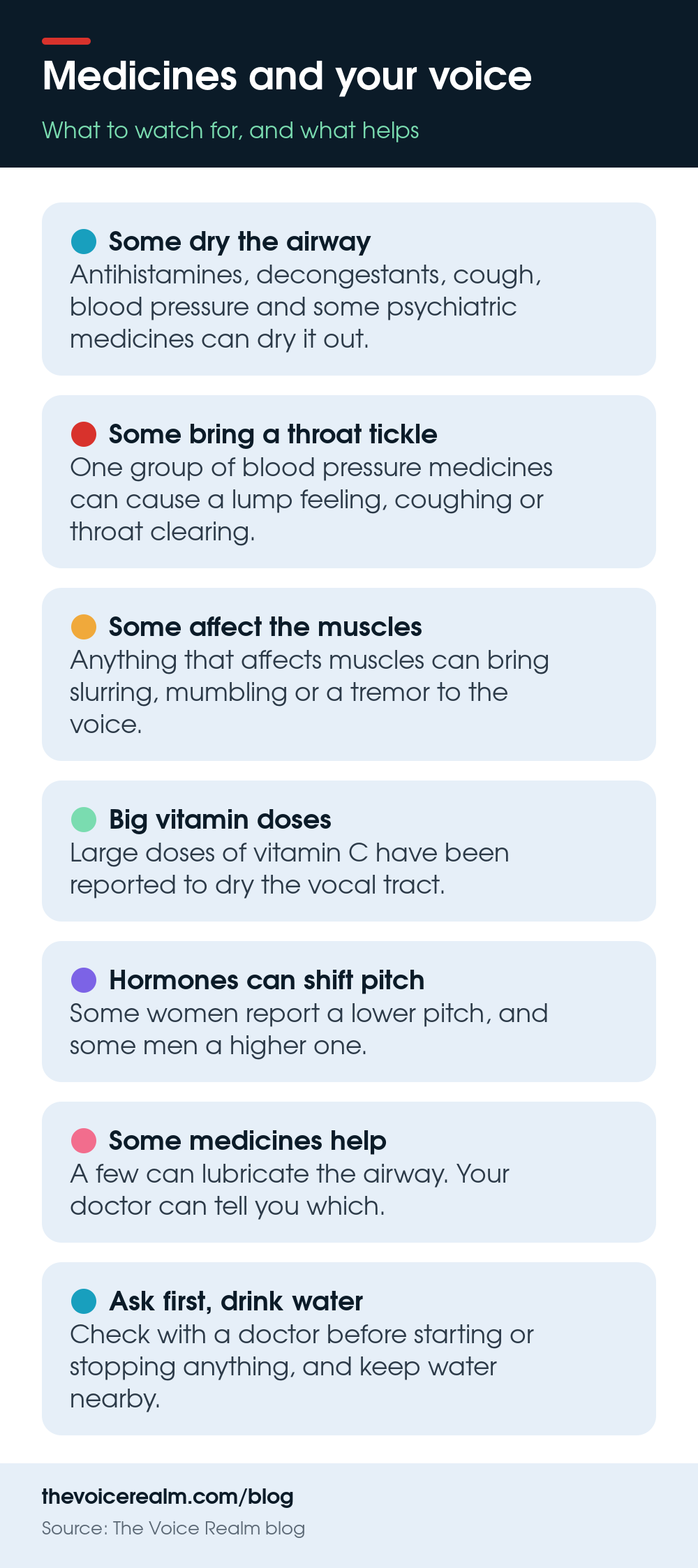
Medicines and your voice, in one picture © The Voice Realm
Medications that can help your voice
 While there are medications that can be harmful to the voice with over time use, there are also those that have beneficial effects on voice quality when used. An example of this is guaifenesin. Guaifenesin has been found to be helpful in lubricating the airway, which, in turn, improves voice quality. Saliva substitute medicines have been known to have a beneficial effect, too, an example of which is Glyceryl. Laryngeal disorders that affect voice quality can also benefit from steroid therapy.
In addition, while medication can have an acute effect on voice quality, in most cases, the effect is subtle and not noticeable. But then again, if you are a voice actor, it does matter. Remember to balance the need for medications, and always, always check with a physician before deciding which medications to take, how much you should take and whether you can remove yourself from them. Always stay hydrated. As voice actors, we know this, and this article is to reiterate the importance of always having a bottle of water nearby. Hydration can also come in the form of saline and nasal spray, which you can use on nasal sinus components. We welcome additional tips and thoughts on the subject, just write them in the comments box below.
Ready to get booked?
See the jobs open right now