 Blog
Blog

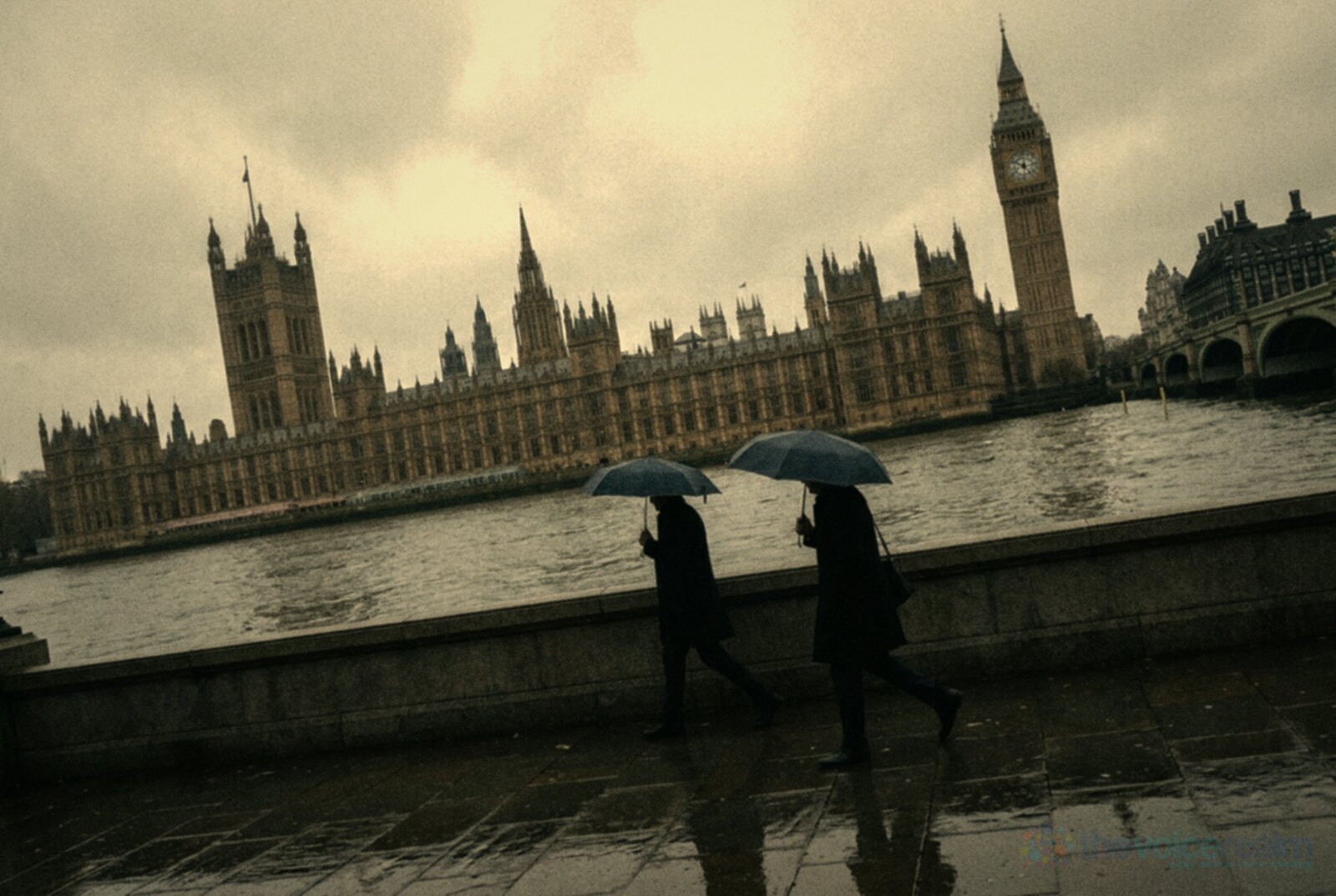
This is for British voiceover artists, narrators and anyone who books them. At the end of August, more than 80 performers wrote to the Prime Minister asking for something that sounds obvious and isn’t yet true: legal ownership of their own voice. The campaign is called Save Our Voices Now, it has a parliamentary petition behind it, and it’s the clearest attempt yet to fix a gap that working voice artists have been falling into for years. Here’s what it asks for, why the people most at risk aren’t the famous names on the letter, and what you can do about it before Westminster does.
What the campaign is asking for
The open letter went to Andy Burnham on 28 August, signed by actors, narrators and singers including Hugh Bonneville, Nicola Coughlan, Matt Lucas, Siobhan McSweeney, Luke Evans and Pearl Mackie. It asks Parliament to make a person’s voice a protected right, in the same way the law already treats how a person’s name and likeness can be used.
The campaign was started by audiobook narrator Alice Sockett and performer Peter Caulfield, and Caulfield’s summary of the problem is blunt. “In just three seconds, with the right AI system, your voice can be cloned, stolen and reinterpreted without your knowledge,” he said, as reported by the Irish News. Bonneville put the personal side of it just as simply: “My voice is unique, it’s mine, it’s part of my identity. So is yours. That’s worth speaking up about.”
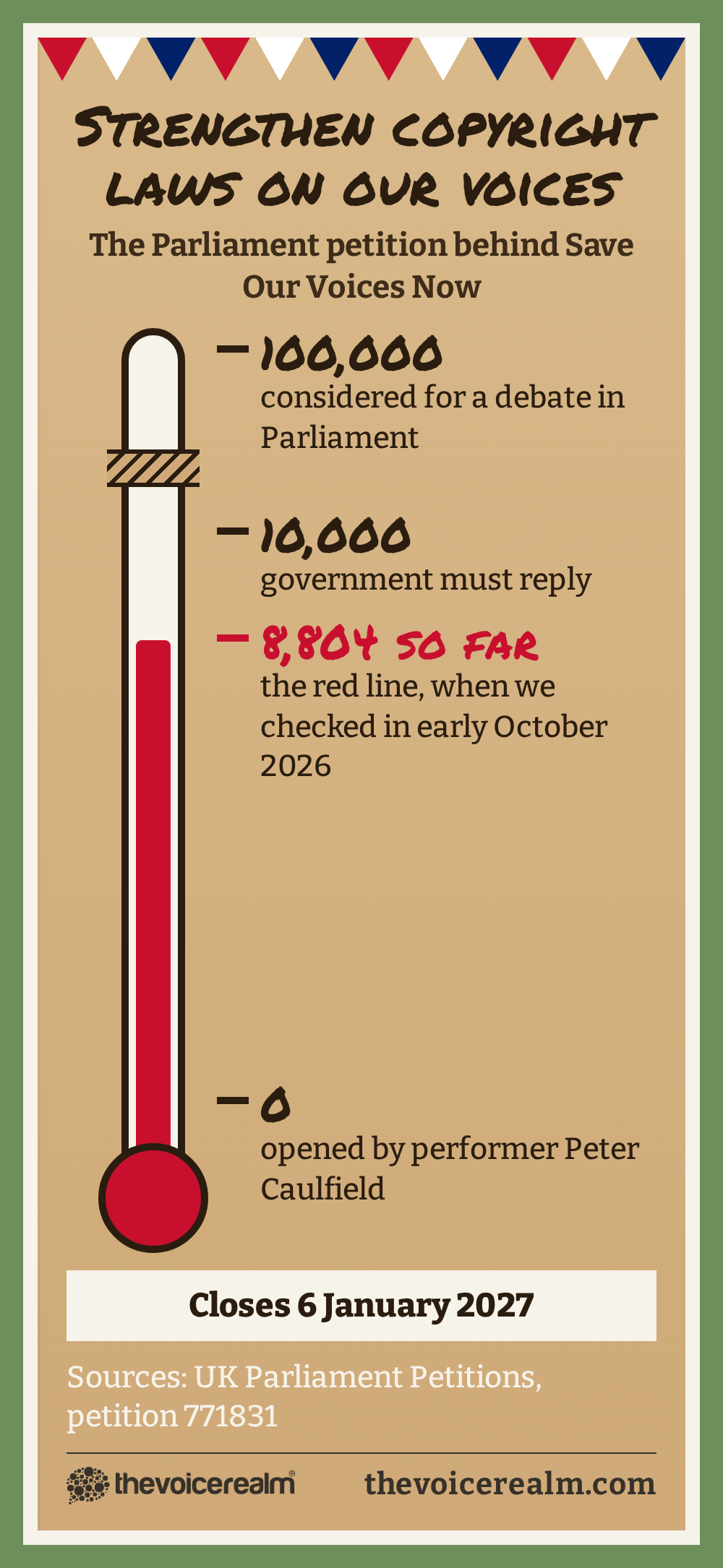
Alongside the letter sits a petition on the Parliament website, created by Caulfield, titled “Strengthen copyright laws on our voices”. Its opening line: “our voice is a key part of our identity and right now we feel it is inadequately protected by UK law.” It points to Denmark and some US states as places that have already moved. When we checked in early October it had passed 8,800 signatures. At 10,000 the government has to respond in writing, at 100,000 it’s considered for a debate, and it closes on 6 January 2027.
© The Voice Realm
The gap in the law
If you’ve assumed copyright already covers this, you’re not alone. It covers recordings. It doesn’t really cover the sound of you. If a model is trained on your old reads and then says something you never said, there’s no copy of your recording to point at, and that’s where most claims run out of road.
Dr Mathilde Pavis, a specialist in performers’ rights, described it neatly in a statement quoted by ResultSense: “The law comes close without quite protecting a person’s voice, face or identity. The gap is not a loophole so much as an absence.” The same report says the government has offered a consultation rather than legislation so far.
We covered the everyday side of this in our explainer on usage rights and who owns a recording. That piece is about licences for a normal job. This campaign is about the thing a licence can’t reach on its own: what happens when nobody asked you at all.
It’s already happened to a Scottish voice
The best known British example isn’t a film star. In 2025, Scottish actor and voice artist Gayanne Potter discovered that an AI voice used for ScotRail announcements sounded strikingly like her. She told RadioToday she had recorded material for ReadSpeaker in 2021, understanding it was for e-learning and accessibility work.
“I’ve built my career on the strength and character of my voice. When something that sounds so close to me is being used without a contract or even a conversation, it crosses a line,” she said. Her description of hearing it is the one that stays with you: “It’s like watching someone wear your face as a mask.”
Potter took her complaint to the Information Commissioner’s Office, but with the company based in Sweden, the case ran into exactly the cross-border fog the campaign describes. For anyone working as one of the voiceover artists in Glasgow or Edinburgh, where a recognisable regional sound is the whole selling point, that story is a warning. The more distinctive your voice, the more useful it is to someone building a synthetic one.
© The Voice Realm
The voices most at risk aren’t the famous ones
When a household name speaks up, the press prints it. A narrator in Leeds with 40 audiobooks online doesn’t get that platform. Neither does the IVR voice who recorded a few thousand phone prompts for a building society, or the e-learning narrator whose modules sit on hundreds of company training portals. Their work is long, clean, single voice audio, which happens to be exactly what a cloning system wants.
That’s why this matters most for the everyday end of the business. The people booked for British audiobook narration, phone systems and corporate training have years of material out in the world, usually under contracts written before anyone thought about AI. Siobhan McSweeney named that problem directly: “I’m deeply worried that legislation, contracts, working practices and ethics, and artists’ rights are not being considered or protected as quickly as AI technology is progressing.”
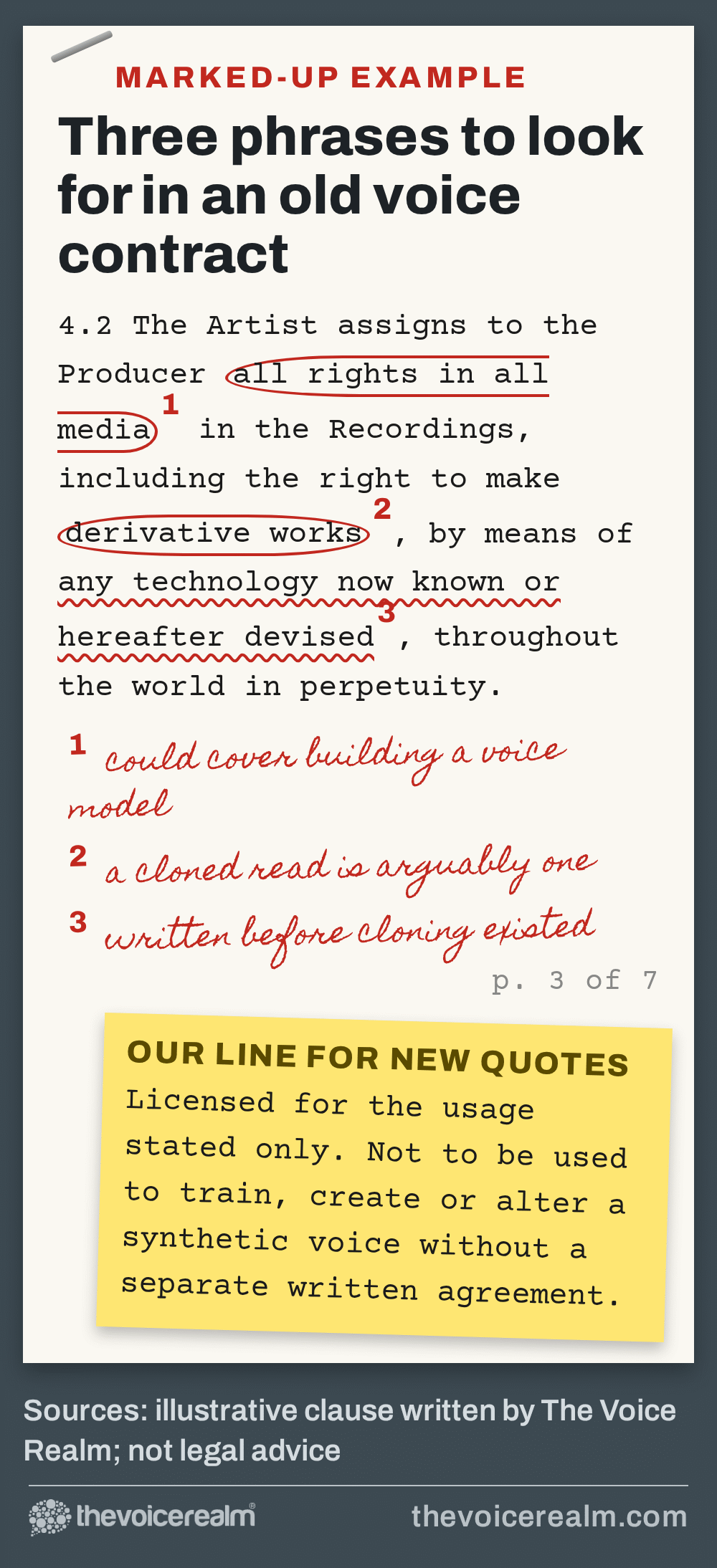
She’s right about contracts. Plenty of older agreements grant the client “all rights in all media” for the recording. Nobody signing those in 2016 imagined that could be read as permission to build a voice. A clear law would settle the argument. Until then, it’s settled one contract at a time.
© The Voice Realm
How to tell if your voice is already out there
Most voice artists who find a clone of themselves don’t go looking. A colleague messages them, or a friend hears a station announcement and asks when they recorded it. That’s how Potter found out. You can be a little more deliberate than that.
 VOICEMASTERACADEMYLearn the craft in order.Module one is freeStart module oneTwenty modules, start to finish.
Keep a short list of the places your voice would be most useful to someone else: long narration, phone menus, character work with a distinctive sound. Every so often, listen to the free voice libraries on the big text to speech sites and the stock voices in popular editing apps. If one sounds uncomfortably familiar, write down where you heard it, the date and the name it’s listed under, and save a recording. Then check your own records for any job that might have handed over the rights.
Tell your network what you’re listening for, too. Other voice artists are often the first to notice, because they know your read better than any client does.
“The gap is not a loophole so much as an absence.”
Dr Mathilde Pavis, quoted by ResultSensePost this quote
What to do while Parliament decides
You don’t need to wait for a statute to protect yourself on the jobs you take from now on. These steps cost nothing and take an afternoon.
- Add an AI line to every quote and invoice. For example: “Licensed for the usage stated only. Not to be used to train, create or alter a synthetic voice without a separate written agreement.” Put it in your standard terms so it goes out every time.
- Spell out usage and term. Media, territory and length of licence. “UK broadcast radio, 12 months” protects you. “All media, worldwide, in perpetuity” protects the client.
- Go back through old contracts. Look for “all rights”, “derivative works” or “any technology now known or later developed”. You can’t always change them, but you’ll know where your exposure is.
- Check the small print on tools you use. Free text to speech sites, voice changers and some practice apps claim wide rights over anything uploaded. Never feed them client audio.
- Sign the petition if you agree with it. Ten thousand signatures gets a written answer from government. That’s a low bar for an industry this size.
It’s also worth pricing AI use as what it is. A client who wants to train on your voice is buying every future session you might have recorded for them. Start from the published UK voiceover rate card for the job itself, then treat any synthetic voice permission as a separate line with its own fee, not a quiet extra.
© The Voice Realm
Why clients should care too
This isn’t only a performers’ fight. Brands and producers have as much to lose from a muddy law as the voices they hire. A client who casts a London voiceover artist for a national radio campaign wants to know that voice won’t turn up next month reading for a rival, in a clone somebody else built. A Manchester charity booking a warm local narrator wants supporters to trust that the person they hear is real.
The simple fix sits with the people writing the briefs. Agree the usage up front, keep AI out of the licence unless you’ve agreed it and paid for it, and say in the brief that the recording won’t be used to train a model. Good studios already do this. When you book British voiceover artists, it should be the default.
And if you’re just starting out and wondering whether this all makes voice work a bad bet, it doesn’t. Our piece on why knowing copyright is part of the job is a good place to begin, and there’s still plenty of voiceover work online for UK voice actors that wants a real person behind the microphone.
© The Voice Realm
Our take
Save Our Voices Now is asking for something that should have been in place before the technology arrived. The famous names on the letter will get the headlines, and that’s useful, because it’s the narrators, phone voices and training voices of Birmingham, Bristol and Belfast who need the law most and have the least power to make a fuss on their own.
Until Parliament acts, the protection is in your paperwork. One sentence on every quote does more today than any petition can. We’ll be watching for the government’s response, and we’ll report back when it comes.
Sources: “Hugh Bonneville among stars backing campaign against AI voice cloning”, Irish News, 28 August 2026; “Strengthen copyright laws on our voices”, UK Parliament Petitions; “Actors press UK government to legislate on voice cloning”, ResultSense, 28 August 2026; “Gayanne Potter takes on AI over voice likeness rights”, RadioToday, June 2025.
Ready to get booked?
See the jobs open right nowAbout Sarah Robbins
Sarah Robbins writes for The Voice Realm about finding voice over work, home studios, casting and the business side of voice acting.