Blog
Blog

This one is for working voice actors who find some or all of their auditions through online casting sites. From November 1, Voice123 will start charging clients to post castings once they pass a monthly allowance. Clients pay the fee, but voice actors are the ones who’ll notice the difference. Here’s what’s changing, why it reaches your inbox, and what to do about it before it does.
Voice Over Herald broke the story this week in Voice123 Will Start Charging Clients to Post Castings, and we’ve drawn on its reporting here.
Why a client fee lands on the voice actor
It’s easy to read a client price change and move on. It isn’t your money, after all. But on a pay to play site, your auditions come from what clients post. On Voice123, you can’t browse a list of open jobs. The site’s own plans page says it plainly: “There are no open job lists to search and apply for.” Clients post a project, and the site sends invitations to the members it matches.
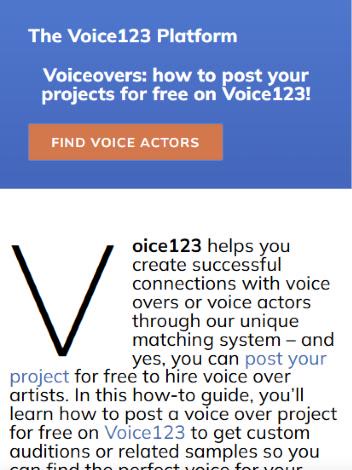
Image: Voice123
Paid members are buying a share of those invitations. Voice123’s plans page sells three Pro tiers for English in the USA and Canada at $495, $888 and $2,200 a year, promising access to 50%, 65% and 80% of matching projects. As Voice Over Herald pointed out, those are percentages of whatever gets posted. If clients post less, the same membership brings in fewer auditions, and nothing on the plans page says the price changes to match.
Actors had doubts about the pricing before any of this. In September, a voice actor posting as Ella on Bluesky called the Pro plans “extortionate,” asking “why do you have to shell out FOUR DIGIT PRICES just for a 4/5 chance to get work.” That post came before the client fee was announced, but it shows where many members already stood.
“Voice actors already pay to be seen on that site. Now the clients pay to be heard as well. Both ends of the same job are getting squeezed.”
Kurt Myers, Business Development Manager, The Voice RealmPost this quote
The fine print
Here’s how the change works, from Voice123’s client help page. “Eligible free Voice123 client accounts” get three projects or castings each calendar month, with unlimited bookings and messages. The allowance resets on the first of the month and doesn’t roll over. Every casting after the third costs $25.
The fee isn’t paid at checkout. The client submits the project, then Voice123’s support team sends a payment request, and the casting is only “reviewed and approved” once that’s paid. The fee doesn’t go to the voice actor either. Voice123 says the actor’s rate “is separate.” Clients who cast often are told to contact the team for “a tailored solution.”
The page also closes a gap. Clients can’t use messages “for high-volume talent sourcing or as a replacement for posting a casting.” In other words, a client who wants to skip the fee can’t simply message a few dozen actors instead.
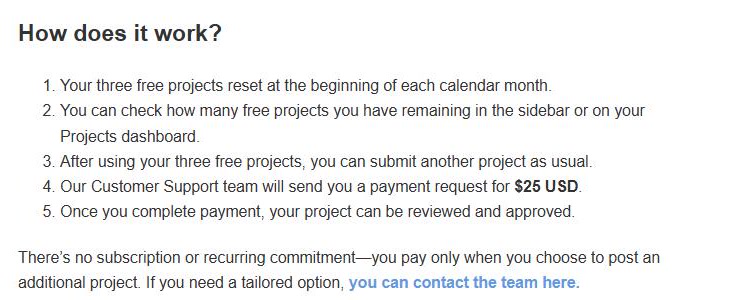
Image: Voice123
The castings most likely to go
Someone casting one explainer video a year won’t hit the limit. The clients who will are the regulars: e-learning teams, production houses, small agencies and app makers who cast every week. Those are the clients worth the most to a working voice actor, because one good booking with them tends to turn into ten.
Voice123’s own figures give a sense of scale. Its plans page puts the average English project budget in the USA and Canada at $350 over the last 12 months. A $25 fee is about 7% of that before anyone has auditioned, and a bigger share of the small jobs that fill out most actors’ months.

 VoiceEditSuiteIt edits like you would, and it gets better every file.Every fix you make in the editor teaches Auto Clean Up more, so each file comes back sounding like you edited it yourself.See how it worksLearns from numbers, never your audio. Never used to train AI.
A regular client looking at that charge can pay it, post fewer and broader castings, or cast somewhere else. Two of those three mean fewer castings on that site.
There’s also the wait. A casting that needs a payment request, a payment and then a review isn’t open while that happens. For a short deadline job, that’s time you’d otherwise have spent recording.

What you can do before November 1
Start counting your invitations now
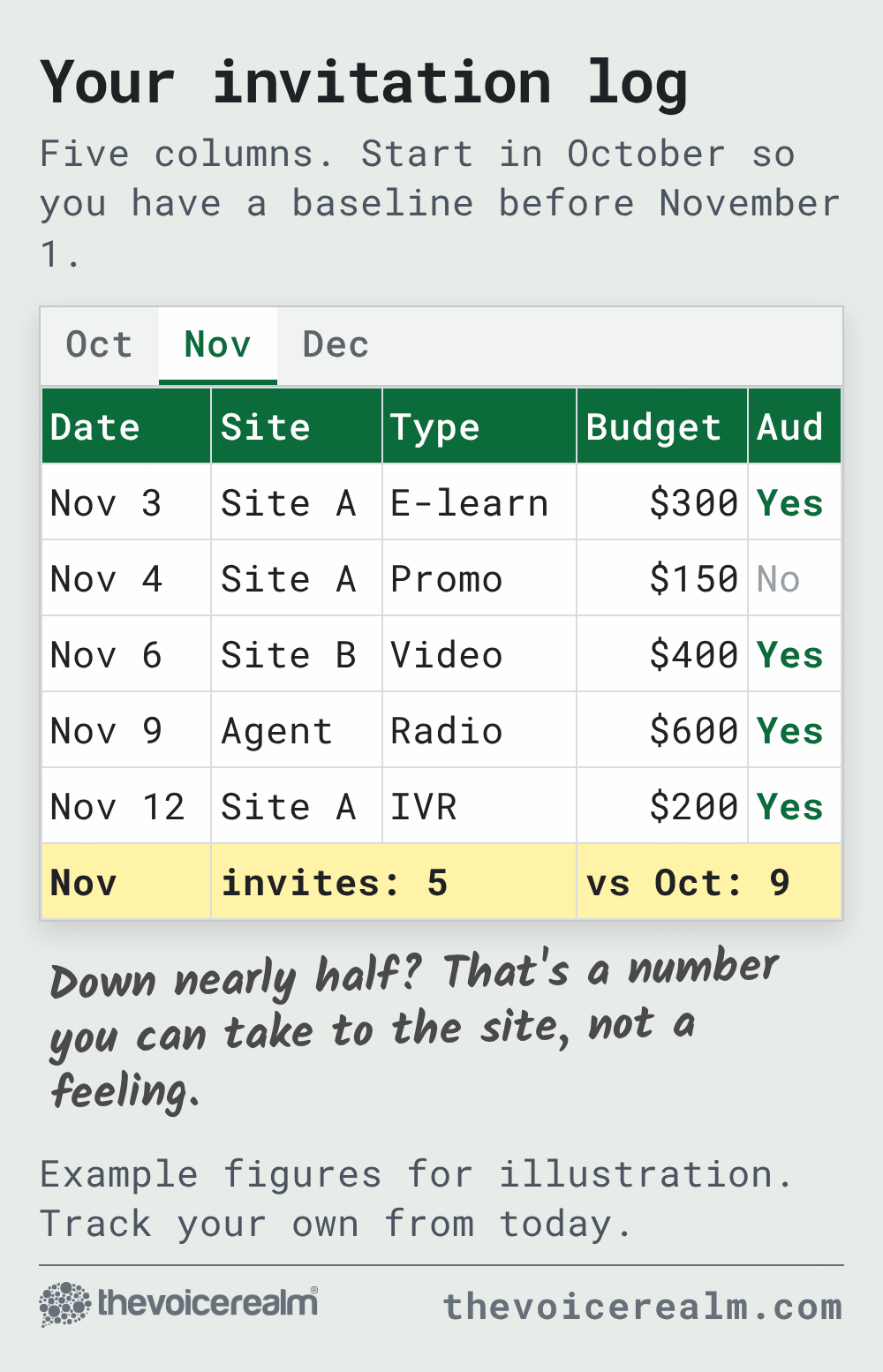
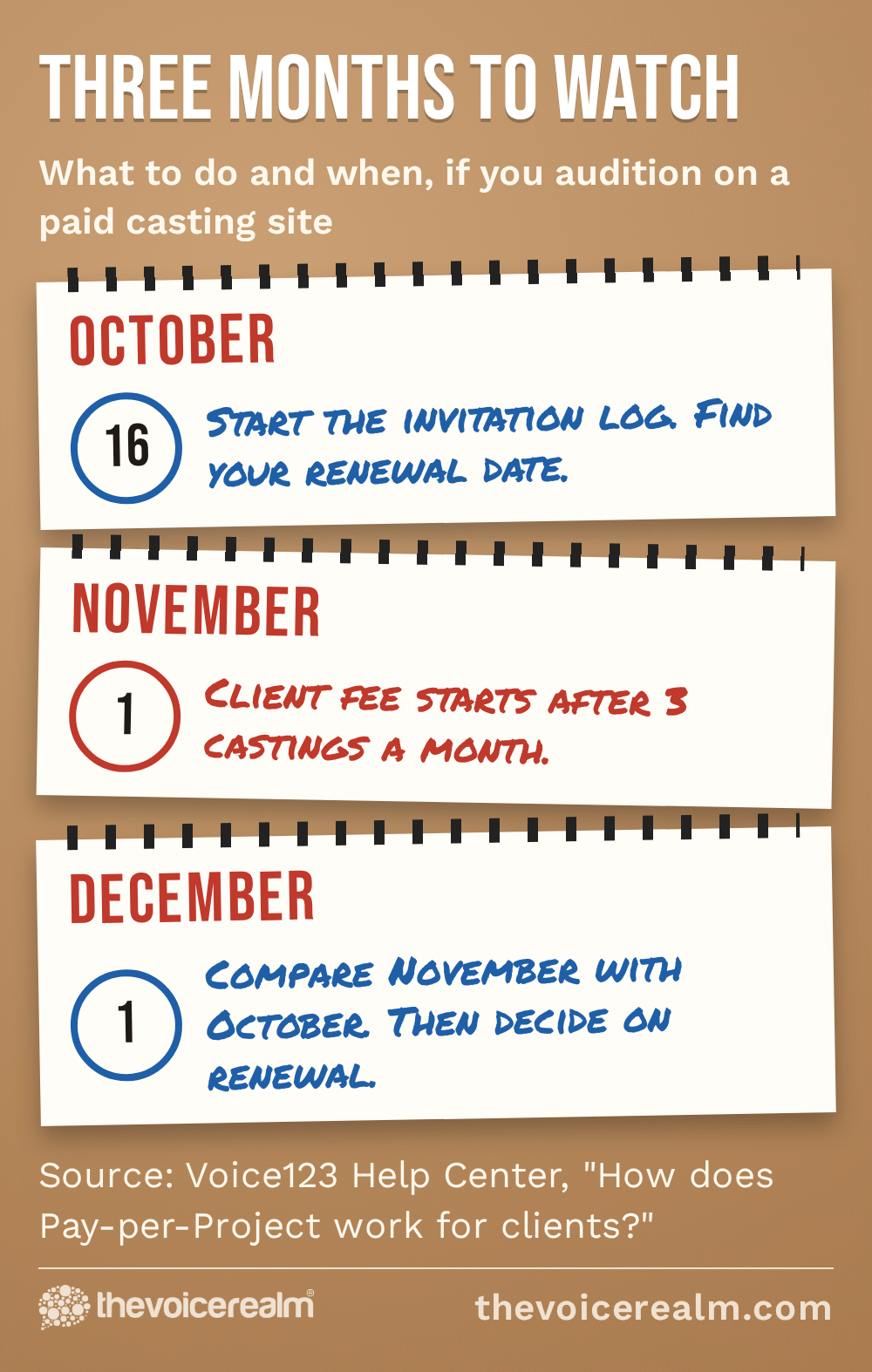
You can’t judge a change you didn’t measure. Open a simple sheet today with five columns: date, site, project type, budget, and whether you auditioned. Fill it in for the rest of October so you have a baseline, then keep going through November and December. If your invitations drop, you’ll have numbers to point to, not a feeling.
Check your renewal date
Voice123’s plans page says memberships “are set to auto-renew by default,” and that its 30 day money back guarantee is for first time paying members only, not monthly or discounted plans. If your plan renews in the next few months, find the date and the setting in your account now. You may want to see what November looks like before you commit to another year.
Don’t let one site carry your month
This change is a reminder that a casting site can rewrite its rules whenever it likes. Spread your sources. Keep an eye on the voice over jobs board, keep building direct relationships, and look again at the work you’re getting through agents. If you’ve been auditioning a lot without booking, fewer invitations is a good moment to put more care into each one.
Turn bookings into regulars
A client who books you directly again never needs to post a casting at all, on any site. That’s the strongest protection you have against fee changes. Deliver clean files on time, follow up after the job, and make it easy to rebook you. There’s more on that in our piece on the secret to getting repeat clients.
Tell your clients where they can post for free
Some of your clients will ask where else they can cast. On The Voice Realm, posting a casting is free for clients and there’s no monthly limit. If one of your regulars is thinking of moving, it’s worth telling them, because a client who keeps casting keeps auditions coming in. Businesses comparing the options can read why businesses choose The Voice Realm.
Kurt Myers, Business Development Manager at The Voice Realm, told Voice Over Herald: “Clients come to a casting site to find a voice, not to count how many castings they’ve got left this month. Every limit like this means a casting that never gets posted, and that’s an audition a voice actor never gets.”
Keep an eye on it
Nothing changes until November 1, and the real effect won’t show for a month or two. Voice Over Herald will follow how the change lands. Keep counting, keep your sources wide, and judge your membership by what it brings in, not by what it promises.
Sources: Voice123 Help Center, “How does Pay-per-Project work for clients?”; Voice123 Plans and Pricing page (English, USA and Canada), both read October 16, 2026; public Bluesky post by Ella (@lunajoker); “Voice123 Will Start Charging Clients to Post Castings,” Voice Over Herald.
Ready to get booked?
See the jobs open right nowAbout Sarah Robbins
Sarah Robbins writes for The Voice Realm about finding voice over work, home studios, casting and the business side of voice acting.