Blog
Blog
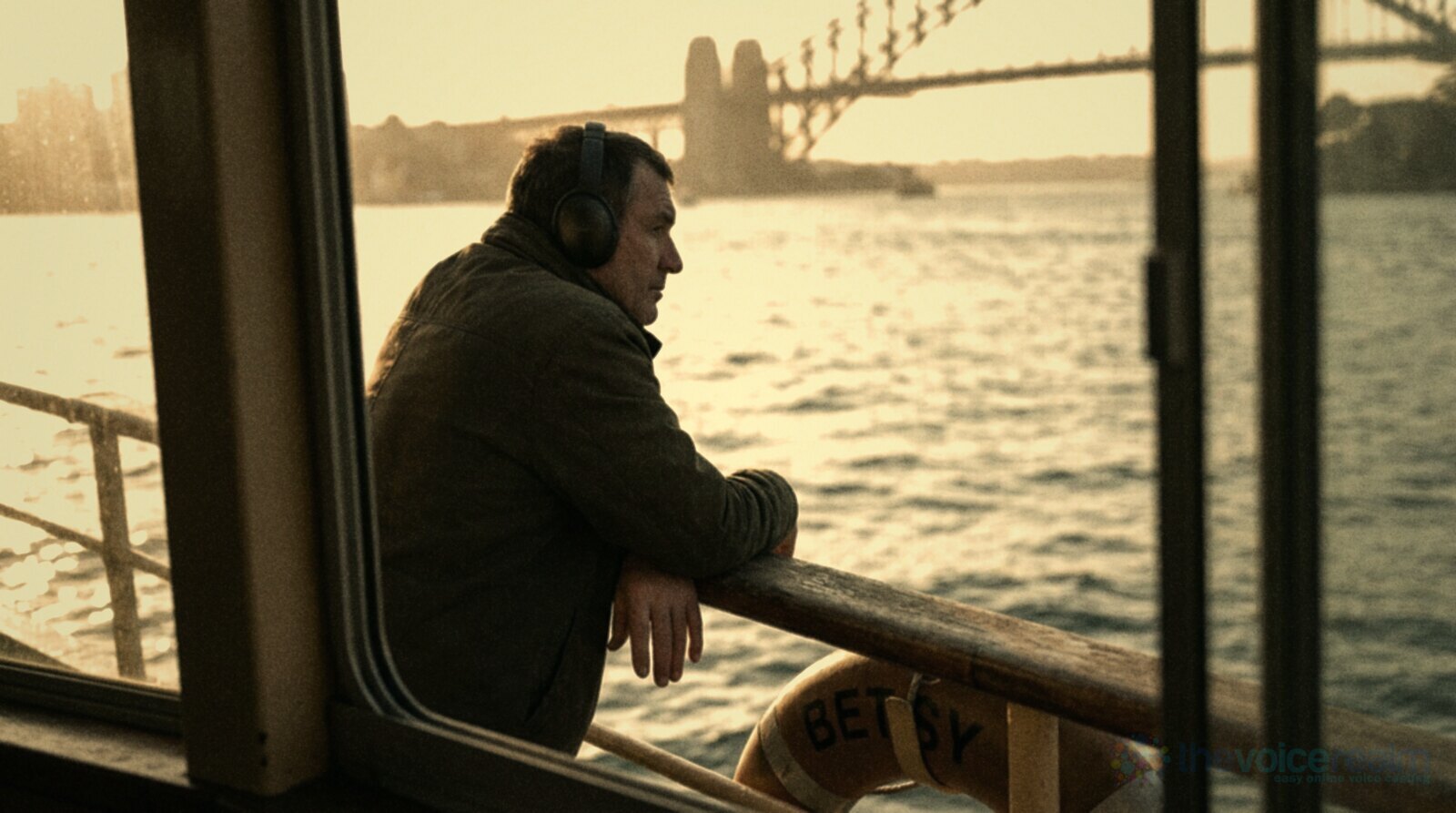
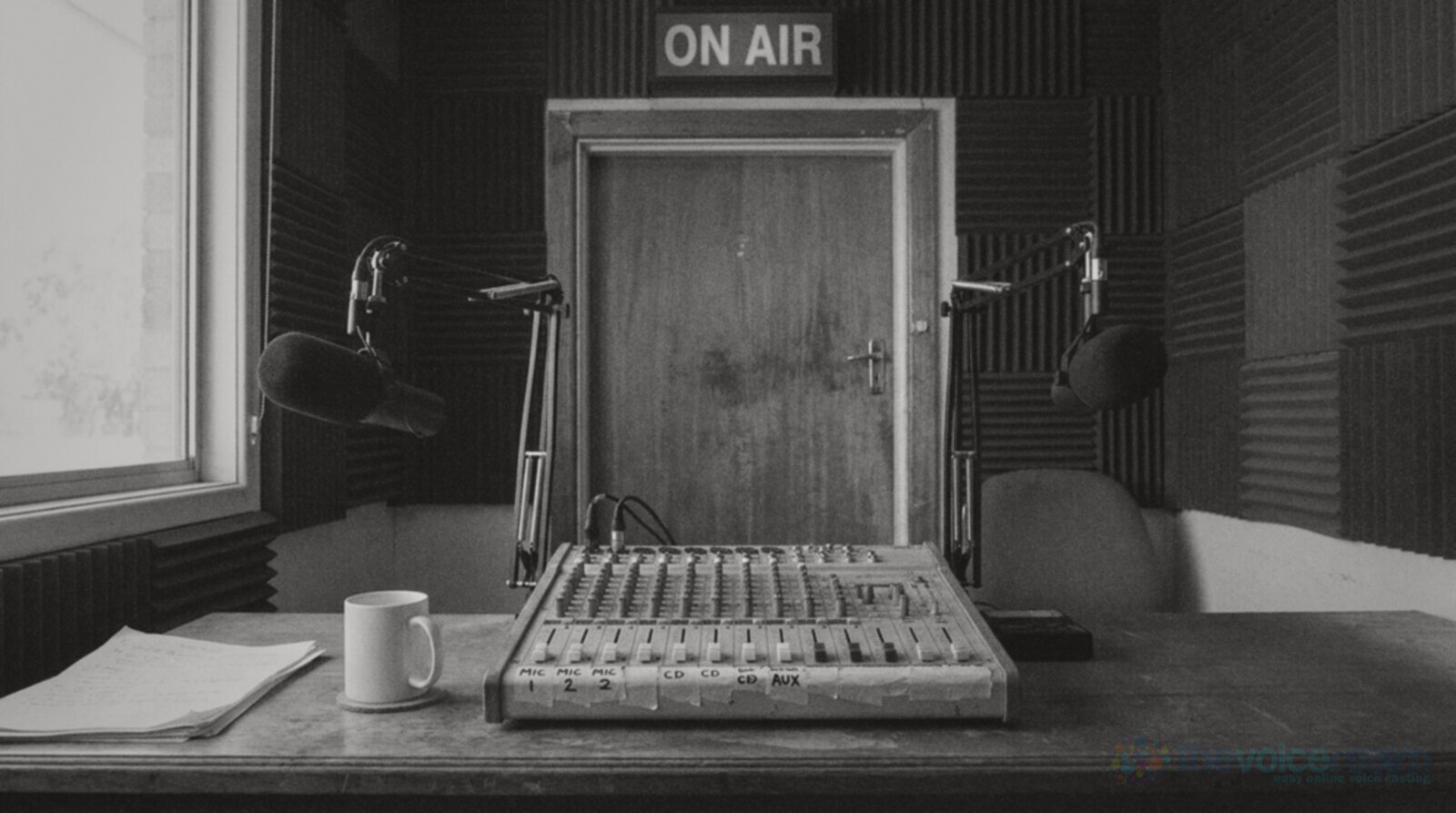
Australia has never had one awards night for everyone who works in audio. Radio had its own. Podcasts had theirs. Audiobooks and voice over mostly got a polite nod at the edge of someone else’s evening. On 15 October that changes, when the first SONARR gala dinner is held in Sydney. This one is for working voice over artists, for anyone thinking about becoming one, and for the people who book them.
SONARR stands for Sound and Narrative. Below is our read on why a single audio awards night matters to people who record for a living, where voice over fits inside it, and what you can do about it this week.
What SONARR actually is
SONARR is an independent awards program founded by Pariya Taherzadeh, an executive producer and academic. It puts four things under one roof: podcast, radio, audiobook and voice over. The Australian Film Television and Radio School is its founding educational partner and holds the naming rights to the AFTRS Narrative Excellence Award, which recognises original audio storytelling, fiction and non-fiction. The gala dinner is at Machine Hall in Sydney, and the prize pool is shared evenly between a commercial stream and an indie stream.
Taherzadeh put the idea behind it in one sentence when the program launched: “Audio in Australia is not one simple industry.” Anyone who has voiced a radio ad on Monday, narrated a corporate module on Tuesday and recorded a podcast intro on Wednesday will know exactly what she means. The work does not sit in neat boxes, and for years the awards did.
© The Voice Realm
Why there was a gap to fill
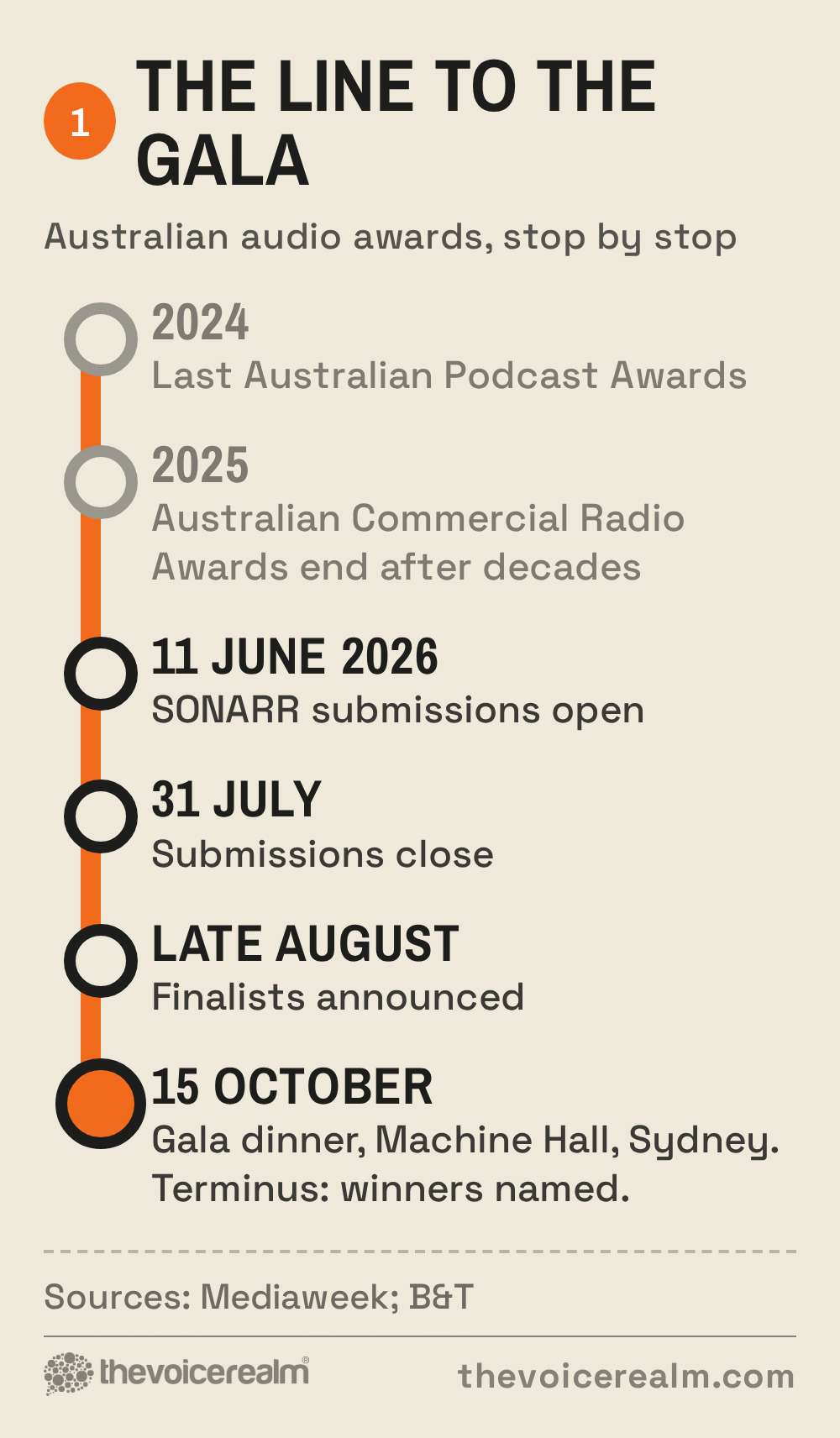
The trade press puts it plainly. B&T and Mediaweek both report that the Australian Commercial Radio Awards, which ran for decades, ended in 2025, and that the last Australian Podcast Awards was held in 2024. Neither report gives a reason, so we will not guess at one. What it left was a stretch of time with no big night for the people who make audio in this country.
When the 91 finalists were announced, Taherzadeh said: “Conventional awards, although well-intentioned, haven’t kept pace with an industry that has outgrown them.” The list spans 34 categories, and Mediaweek notes that Marc Fennell is a finalist in three of them, including the AFTRS Narrative Excellence Award, while SBS Audio is the only finalist for Network Excellence. One category, Marketing for Audio, produced no finalists at all.
Here is our own reading, and it is only that. Awards built around radio networks and podcast charts tend to celebrate the host with the famous name. The person who voices the ad before the news, the narrator whose audiobook gets finished on the train home, the voice on the airline’s safety film: they rarely made it onto a shortlist, because nobody had built a shortlist for them. An awards night that lists voice over as a core part of the industry is a small but real change in who gets counted.
© The Voice Realm
How the winners get picked
SONARR says its judging is practitioner-led. According to Mediaweek, the judges were industry practitioners and academics, each entry was judged independently against six fixed criteria, and entries were scored in writing, without group deliberation. Nothing was ranked head to head against other entries in its category.
That detail is worth a moment. In a room where judges debate, the loudest voice and the most famous name tend to win the argument. Written scores against set criteria give a quiet, well-made piece of work a fair shot against a flashy one. For independent artists and small producers, that is good news.
“Not just the biggest ones, but the independent, the regional, and the underrepresented.”
Pariya Taherzadeh, founder of SONARR, on who the awards are meant to seePost this quote
The program also has dedicated categories for First Nations creators, CALD creators, LGBTQIA+ creators, female creators, students and independent producers. If you are early in your career, working outside the capital cities, or recording from a spare room, there is a place on the form for you.

© The Voice Realm
Where voice over sits in the program
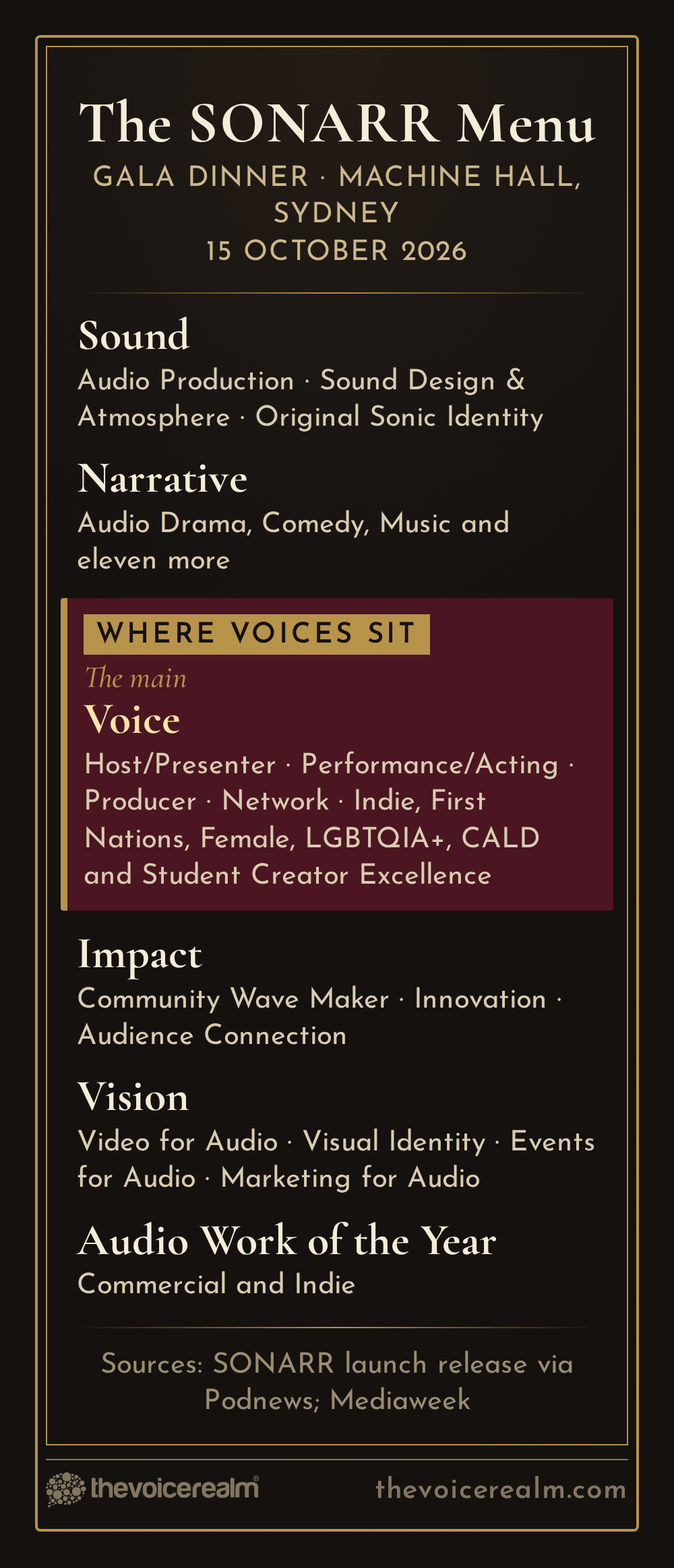
SONARR groups its categories into judging blocks: Sound, Narrative, Voice, Impact and Vision, plus a grand award for Audio Work of the Year. The Voice block takes in Host and Presenter Excellence, Performance and Acting Excellence, Producer Excellence, Network Excellence and the creator categories for indie, First Nations, female, LGBTQIA+, CALD and student entrants.
We have to be straight about something. The material we could read says that voice over is one of the four areas the program covers, but no category carries the words “voice over”, and the finalist coverage does not say which finalists sit in the Voice block. On paper, Performance and Acting Excellence is the closest match for a voice performance. If you expected a category called Best Commercial Voice, it is not there, at least not under that name.
 VoiceEditSuiteAuto Clean Up now learns how you breathe.A 30-second setup teaches it your breath, and you can teach it any breath it misses.See how it worksLearns from numbers, never your audio. Never used to train AI.
Audiobooks are in the program as well, and the quickest way to hear what excellence sounds like is to listen to a handful of Australian audiobook narrators back to back, then to the finalists once they are public. Notice the pace, the way breath is placed, how a character shifts without a change of accent. If you want to start narrating yourself, our guide to how audiobook narration works as a career covers the real hours behind each finished hour.
© The Voice Realm
What it means for the people who book voices
If you are a producer, a marketing manager or a small business owner, an awards night is a free listening list. The finalists show what the industry’s own practitioners think good sounds like right now. Put three of them in a folder before your next briefing and play them to whoever approves your script. It is much easier to say “we want this feel” than to describe a tone in words.
It also changes who you might think to ask. A brand in Sydney planning a launch will often look for local ears and local vowels first. There are plenty of Sydney voice over artists with broadcast and narration credits, and an awards program that counts voice work alongside radio and podcasts is a reminder that these are the same skills moving between formats.
A word on briefing, too. The judges here score against fixed criteria, and you can borrow the habit. Before you send a script out for audition, write down in a sentence or two what the listener should feel at the end and what they should do next. Share those two lines with every artist you invite. You will get reads that aim at the same target, and choosing between them becomes far easier.
One more practical point for clients: the program’s own wording about independent and regional creators is a hint. A great read does not need a capital city postcode. If your script is a regional tourism spot, an indie podcast ad or a community service announcement, the best voice for it may live somewhere other than the nearest big studio.
What to do this week
You do not have to be in the room at Machine Hall to get something out of this. Here is what we would do if we were recording for a living in Australia.
Start listening. Once the winners are announced, spend an hour with them. Play the voice work and the narrative work. Write down what you notice about pacing and pauses, and what the listener is never made to work for.
Open your credits file. Awards entries ask for clips, context and permission. If you have no tidy record of what you have recorded, who it was for and where the finished audio lives, build one now. It helps for entries and for the next time a client asks for references.
Check your demo against the Voice categories. Does it show performance, or only a pleasant tone? Our post on making a voice over demo reel that stands out is a good place to start tightening it.
Pitch to the independents. A program that sets aside space for indie work is a nudge that podcasters, small publishers and local producers are doing serious work and often need voices. If you are looking for jobs, keep an eye on voice over work online and send a short, specific note to the people whose work you actually like.
Mark next year’s window. This year entries opened on 11 June and closed on 31 July. If the program runs again, you will want clips ready before the form appears.

© The Voice Realm
Our take
We think a single awards night for Australian audio is a good thing, and the best part is the idea underneath it: that radio, podcasts, audiobooks and voice over are one trade seen from four sides. People who work in it already know that. The industry has just not had an evening that behaves as though it is true.
We would like to see more clarity about where straight voice over work, the commercials, the phone systems, the e-learning, fits inside the categories, because that is where a large share of working artists earn their living. The press material does not make that clear, and we would rather say so than pretend it does. If you work in those areas, the first year is a chance to watch how the program treats you, and to tell the organisers what you would like to see.
For artists, the sensible move is the unglamorous one: record well, keep good records, and listen to the best of your peers. For clients, listen before you brief. Either way, Australian audio just got a bigger tent.
Sources: Mediaweek, “Australia finally has one awards night for all of audio”; Mediaweek, “SONARR names 91 finalists for inaugural audio awards”; B&T, “SONARR Awards steps in where Australian commercial radio podcast awards left off”; Podnews, SONARR launch press release.
Ready to get booked?
See the jobs open right nowAbout Sarah Robbins
Sarah Robbins writes for The Voice Realm about finding voice over work, home studios, casting and the business side of voice acting.