Blog
Blog
The Doctor is going to nursery. Earlier this month BBC Children’s and Education showed the first look at Doctor Who: TARDIS Crew, an animated series for CBeebies, and the one thing it didn’t show was who will voice it. For British voiceover artists that blank space is the interesting part. This piece is for anyone who records character work in the UK, or wants to, and for the producers who’ll be casting children’s animation over the next few years.
Here’s the short version. A British studio is making 52 episodes of a preschool cartoon based on one of the most famous shows on earth, the series is in production now, and no voice cast has been announced. Everything below is our read on what that means for people who talk for a living.
What the BBC announced
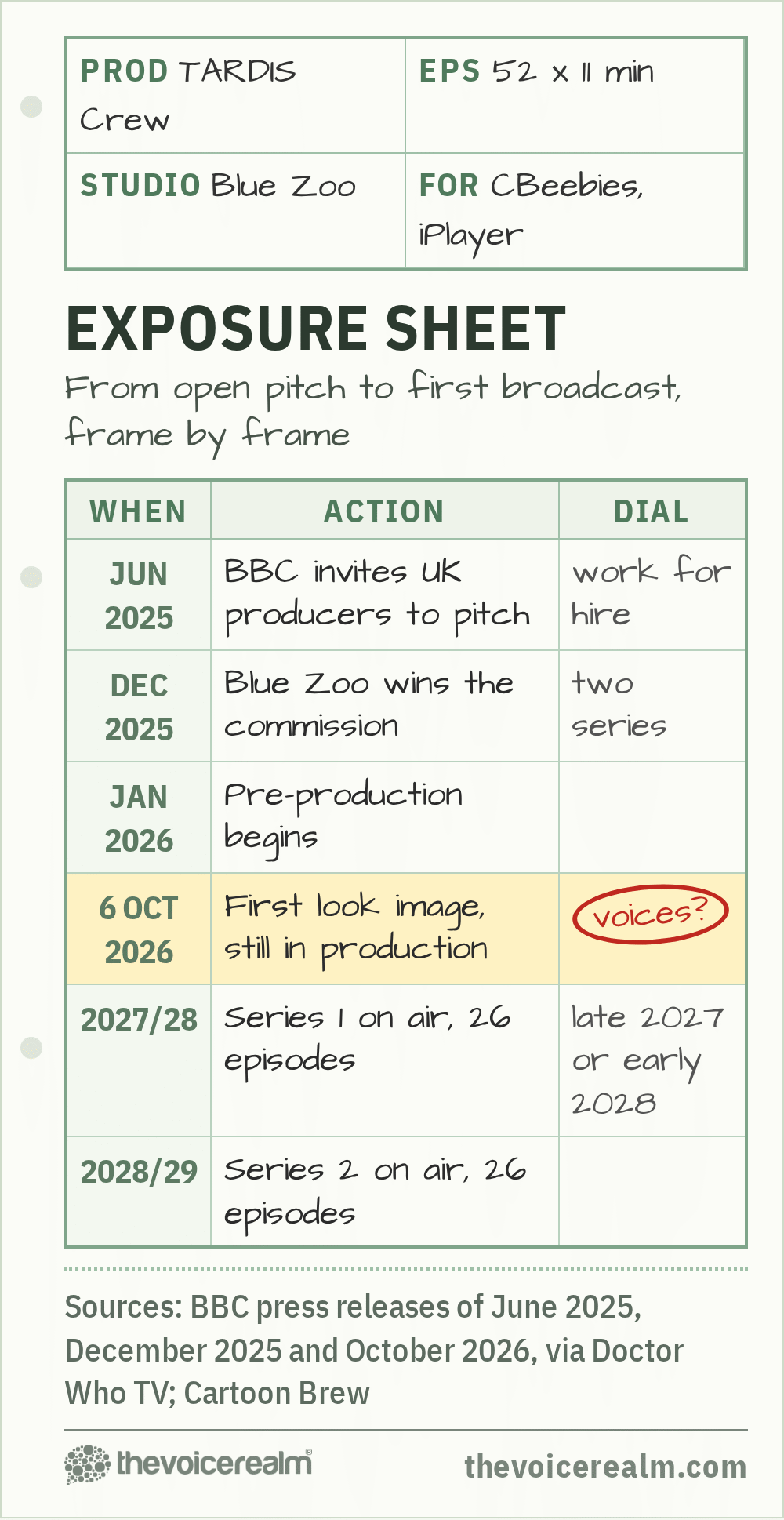
The press release, published on 6 October and carried in full by Doctor Who TV, describes “a brand-new animated preschool series that introduces younger audiences to the wonder, adventure and endless possibilities of the Whoniverse.” The Doctor, described as “a young Time Lord”, travels with his friends Hannah, Beastie and Toast-IE, and they “come face-to-face with legendary Doctor Who foes, including the Daleks.”
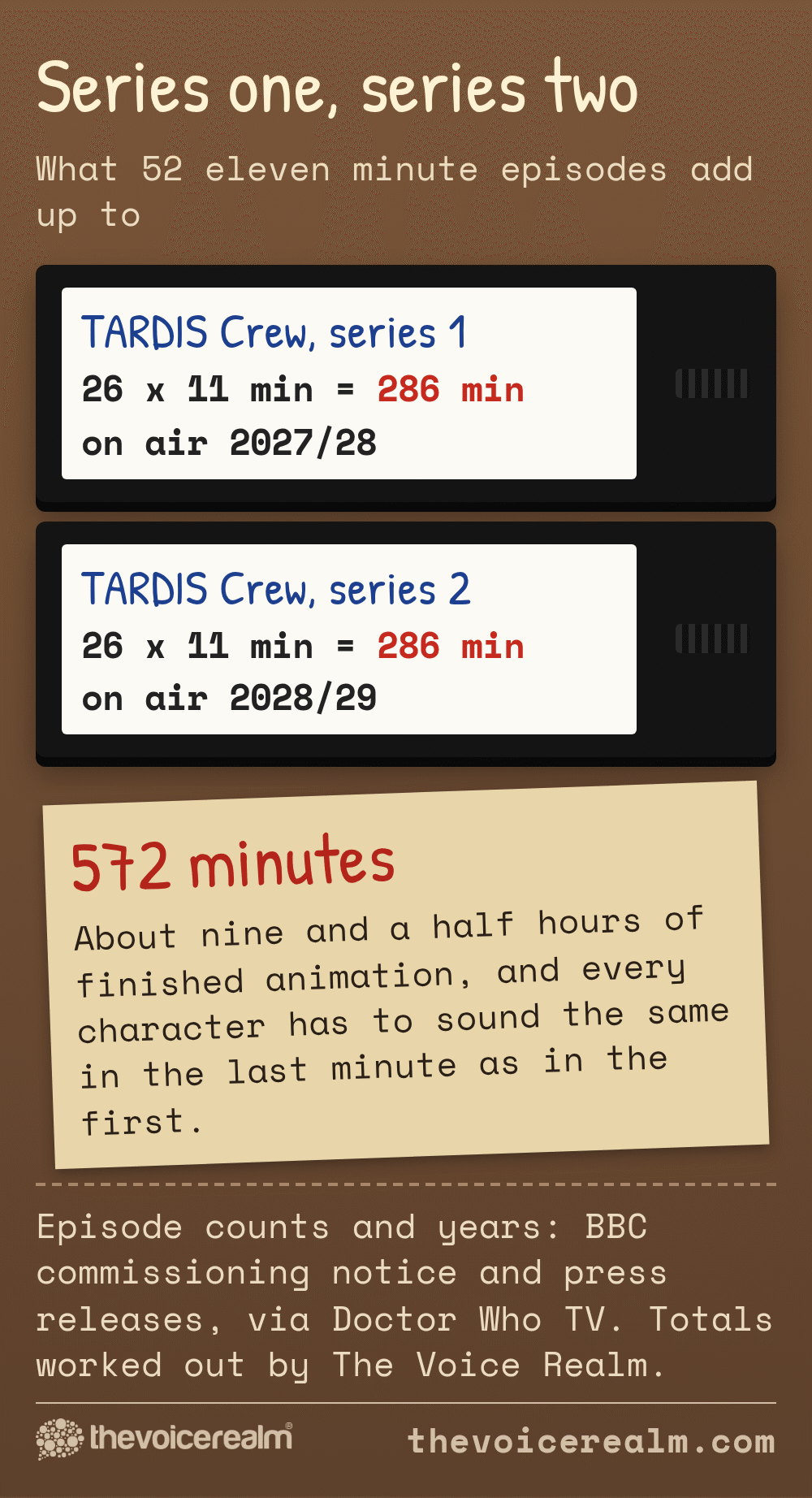
The series runs to 52 episodes of eleven minutes each, made by Blue Zoo Animation Studio with Dominic Minns as series director, and it’s due on CBeebies and BBC iPlayer in late 2027 or early 2028. Kate Morton, Senior Head of Commissioning for CBeebies, set the tone: “The TARDIS is ready for its youngest crew yet.” She called it “everything families love about Doctor Who, wonder, excitement and endless possibility, reimagined for CBeebies’ youngest explorers.”
Cartoon Brew, reporting the same news the next day, confirmed the series is in production. What nobody has published yet is a single name in the voice cast.
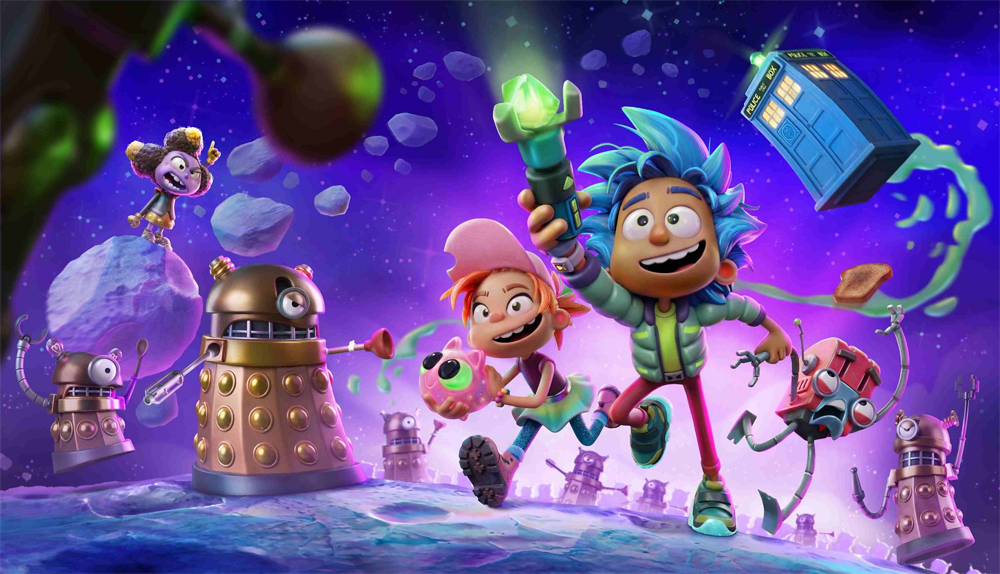
The first look at Doctor Who: TARDIS Crew. Image: BBC
How it got here
This one didn’t arrive by a quiet phone call. In June 2025 the BBC opened the project to pitches from UK producers. Patricia Hidalgo, Director of Children’s and Education, said at the time that “Everyone is welcome at CBeebies, including the Doctor!” and spoke of the corporation’s “commitment and investment in the UK’s animation industry.” The commissioning notice was plain about the deal: the series would be made “on a work-for-hire basis” and “All rights will remain with the BBC.”
In December, after what the BBC called a competitive process, Blue Zoo won it. The studio’s co-founder Adam Shaw said: “Reimagining something this legendary for a preschool audience is a brilliant creative challenge, and one we’re incredibly excited to dive into.” Blue Zoo is no stranger to CBeebies; the BBC’s own announcement lists Numberblocks, Alphablocks and Mojo Swoptops among their earlier work together.
Why does the history matter to a voiceover artist? Because it tells you this is a homegrown production made in Britain, for a British broadcaster, by a studio with a long record of preschool shows that lean hard on voice. That’s a different prospect from a big overseas series dubbed into English somewhere else.
© The Voice Realm
No voices yet, and why that matters
An unannounced cast doesn’t mean an open audition, and we’d never suggest anyone pester a studio about a show they haven’t advertised. Preschool series are usually cast through agents, casting directors and studios’ own trusted lists, and the lead roles on a brand this size will draw serious names.
But think about how many voices a preschool cartoon actually needs. There’s the Doctor and three friends. There are the villains, the creatures of the week, the narrator if there is one, the planets full of background characters, and the songs. Across two series, a show like this can use dozens of voices, and the smaller roles are where a lot of British character actors first get heard in animation. More important still, every new preschool series raises the bar for what producers expect from children’s voices across the whole UK market: in ads, apps, toys and educational content as well as on telly.
So the useful question isn’t “how do I get on Doctor Who?” It’s “am I ready for the kind of work this show stands for, when it comes my way from anywhere?”
© The Voice Realm
What preschool voice work asks of you
Voicing for under fives looks easy and isn’t. The audience can’t read, has a short fuse and will watch the same episode eleven times. Here’s what tends to separate the voices that get booked again.
Clarity comes first. Small children are learning language from what they hear, so every consonant counts, and the pace needs to leave room for them to catch up. Warmth comes a close second. Sarcasm and irony don’t land with a three year old, so the comedy has to be in the voice itself: a wobble, a squeak, a big surprised gasp. And consistency matters enormously. If your character’s voice drifts between episode four and episode forty, parents notice and children notice faster.
- One character, three emotions. Record a short line as happy, scared and cross, and check the character is still recognisably the same person in all three.
- The cold restart. Leave a character for a week, then record it again without listening back first. Compare. That gap is what a director hears on day two of a session.
- Efforts and reactions. Laughs, gasps, running breaths, a fall, a sneeze. Animation sessions are full of them, and they’re often what a casting director remembers.
- A sung line. Preschool shows love a song. You don’t need to be a singer, but you do need to stay in character while you hold a tune.
There’s one more skill worth naming, because it trips up a lot of good actors. Many young characters in animation are voiced by adults, and the trap is to play “a child” rather than a particular child. Squeezing the voice up into a cartoon register gets tiring within the hour and sounds false to the parents in the room. The voices that last tend to start from the actor’s own voice and change the thinking instead: shorter attention, bigger feelings, a sentence that changes direction halfway through because something more exciting just turned up. Spend ten minutes listening to how real five year olds tell a story and you’ll hear it. They’re not high pitched so much as wholehearted.
 VOICEMASTERACADEMYFirst read to first booking.Twenty modules. The first one is free.Start free
If character work is new to you, our piece on breaking into animation voice acting covers demos and agents, and it’s worth reading alongside a good five minute warm-up before the mic, because a morning of squeaks and shouts will find any weakness in your voice. Clients who need a cheeky robot or a grumpy dragon for an advert or an app already browse cartoon and character voices in the UK, and that’s often where this kind of skill first pays the bills.
© The Voice Realm
The work beyond the episodes
One line in the press release deserves more attention than it got. BBC Studios handles global sales for the series “as well as licensing, consumer products, digital and immersive experiences on behalf of the BBC.” Every one of those words can mean voice work.
A successful preschool brand rarely stops at the telly. There are talking toys that need a few hundred short lines each, story apps and games, audio stories for smart speakers, live shows and touring experiences, promos and trailers for iPlayer, and adverts for the toys themselves. Some of that will use the series cast. Plenty of it, across the wider market, uses voiceover artists who simply sound right for children and can turn work around quickly and cleanly from a home studio.
Our read is that the biggest opportunity in children’s voice work isn’t the hero role on one famous show. It’s the steady stream of smaller jobs that a healthy preschool industry creates around it, year after year.
© The Voice Realm
A note for UK studios and producers
If you’re commissioning children’s content yourself, the TARDIS Crew announcement is a reminder of how high the bar now sits. Families are used to clear, warm, well-directed voices from CBeebies, and they’ll hold your app, your toy or your educational video to the same standard whether they know it or not.
CBeebies is made at MediaCityUK in Salford, and much of the north west’s children’s media sits around it, so producers there have plenty of Manchester voiceover artists on the doorstep for children’s work, from cheerful narrators to properly odd creatures. Wherever you’re based, cast with auditions on your actual script rather than a general demo, ask for two takes at different energies, and remember that a line written for a screen often runs longer out loud than it looks on the page. Our free script timer will tell you how long an episode or a thirty second promo will really run before you book the session.

© The Voice Realm
Our take
We think this is good news for British voice talent, full stop. A homegrown studio, a homegrown broadcaster and a homegrown hero, with 52 episodes and a whole world of toys, apps and live shows likely to follow. The BBC said in plain words that it wanted to invest in UK animation. Animation in Britain runs on British voices.
The cast list will come, and it’ll probably feature names you already know. That’s fine. The lesson for everyone else is about readiness. Preschool work rewards clarity, warmth and a character you can find again on a wet Tuesday six months later. Build those this autumn and you’ll be ready for whatever children’s job lands next, whether it comes from Cardiff, Camden or a small toy company in Leeds.
And if you’re a producer, cast like a three year old is listening. Because they are, eleven times in a row.
Sources: “First Look at Doctor Who: TARDIS Crew, the New Preschool Animated Series”, Doctor Who TV (BBC press release), 6 October 2026; “Blue Zoo to Produce New CBeebies Doctor Who Animated Series”, Doctor Who TV (BBC press release), 17 December 2025; “BBC Reveals Plans for Animated Doctor Who CBeebies Spin-Off in 2027”, Doctor Who TV, 12 June 2025; “BBC Unveils First Look At Animated ‘Doctor Who’ Preschool Series ‘TARDIS Crew'”, Cartoon Brew, 7 October 2026. First look image: BBC.
Ready to get booked?
See the jobs open right nowAbout Sarah Robbins
Sarah Robbins writes for The Voice Realm about finding voice over work, home studios, casting and the business side of voice acting.