Blog
Blog
Most people in Britain have heard thousands of radio adverts and could not name one voice behind them. That is the job, and for a lot of voiceover artists it is a good part of the living. Once a year there is a small spotlight on it. Radiocentre’s Audio Ad of the Year Award, run with Campaign, is open for entries until Wednesday 14 October, and the shortlist and public vote follow. This piece is for voiceover artists who record for radio, for those who would like to, and for the people who book them.
We are not claiming a big news story here. It is a calendar moment, and a handy excuse to talk about what a thirty second radio spot really asks of a voice, and what you can do with your own work while the award is in the news.
What the award is
The Audio Ad of the Year Award is Radiocentre’s, in partnership with Campaign. Entry is free, and Radiocentre announces it as back for another year. To qualify, an ad must have aired in a UK commercial radio ad break within the last 12 months, counted from 1 September 2025. A panel picks a shortlist of three, and Campaign readers vote online for their favourite.
Radiocentre also makes the case for the medium itself: “Audio offers the opportunity to reach 40m listeners each week”. Whatever you think of league tables and trophies, that is the audience a radio voice speaks to every time a spot goes out. A single read, repeated across a campaign, goes a very long way.
© The Voice Realm
Who judges, and what they score
According to Radiocentre’s page, the shortlist panel is Mike Sutherland, Chief Creative Officer of Adam&EveTBWA, Rania Robinson, Chief Executive and Partner at Quiet Storm, and Jon Forsyth, Chief Creative Officer and Co-founder of Neverland. The criteria are scripting, production, creative execution, and memorability and resonance.
Read that list as a voiceover artist and you will notice something. There is no box marked “voice”. Performance lives inside production and execution, and memorability is the part everybody remembers. A great read is rarely the thing a panel points at. It is what makes the script land, which is exactly why good radio voices are so often invisible. If a line sounds as though nobody had to say it, the voice did its job.
© The Voice Realm
Thirty seconds, start to finish
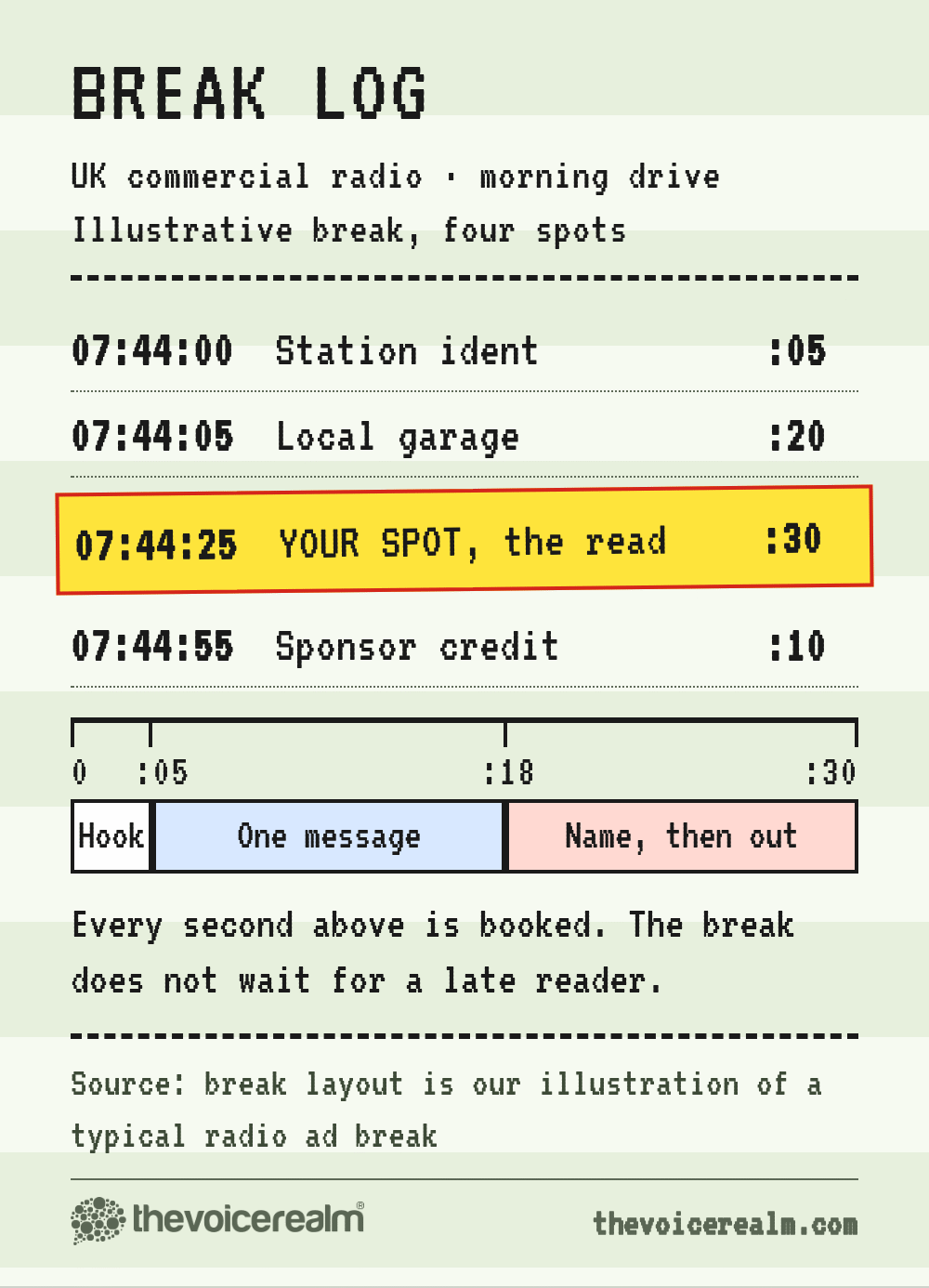
Let’s look at what the work actually involves. A radio spot is usually thirty seconds. At a natural, warm pace that gives you somewhere in the region of seventy five to eighty words, and our post on timing a voice over script by word count shows how to work it out for your own pace. The script has to carry a hook, a message, a name and a call to action, and then get out of the way before the next advert starts.
That is a tighter brief than it sounds. A voice has to find a tone in the first few words, hold it across a handful of sentences and land the brand name cleanly without leaning on it. The producer will usually want a couple of takes slightly faster, slightly slower, slightly warmer. A clock sits above everything. Eight words too many at the wrong pace, and the take is dead.
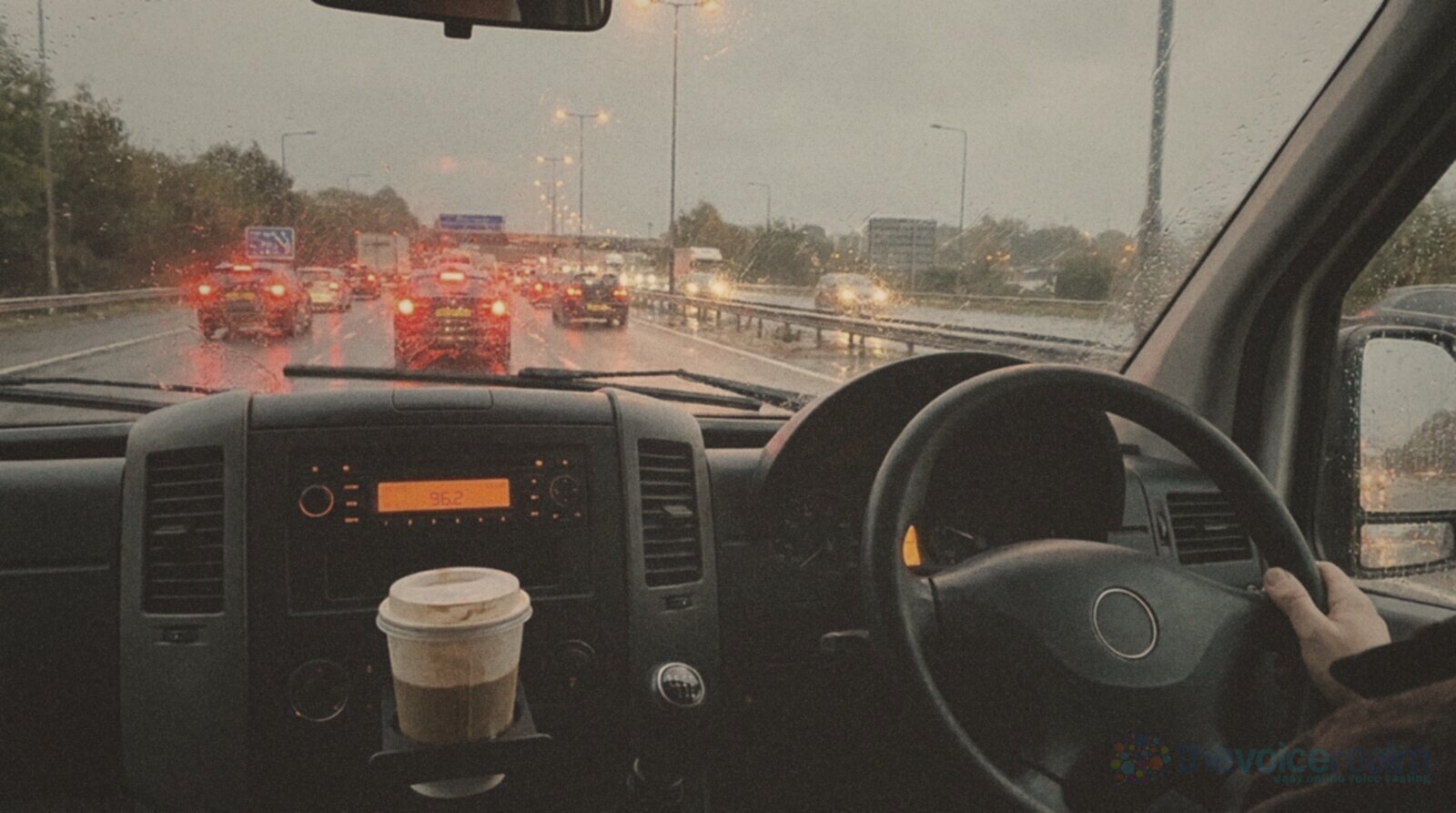
There is a quieter skill hiding in all this: consistency. A campaign may need a dozen versions of the same spot with different local details, a different offer or a different end line. The artist who delivers take twelve in exactly the same voice as take one is the artist who gets asked back. Radio is also a place where the ear is a very forgiving or very unforgiving judge. A listener driving down the M6 has no picture to rescue a weak line. They hear it, or they do not. Everything the spot has to say must be in the voice, the writing and the sound around it.
© The Voice Realm
What the past winners tell us
The page lists the recent winners. In 2025 it was Twix “Harmoniser”, created by Adam&EveTBWA. In 2024 it was Hiscox “Bad Knockoff”, created by Uncommon Creative Studio, chosen from over 1,400 reader votes.
We are not going to pretend we know who read either one, because the sources we read do not say. What we can say is that both are remembered as ideas first and as voices second, which is how radio creative tends to work. The strongest spots are built so that the reader has something interesting to perform, not something to sell. If you want to be booked for work like that, the lesson is to be the artist who makes a good script sound better, not the one who rescues a weak one.
Reading for the ear, not the page
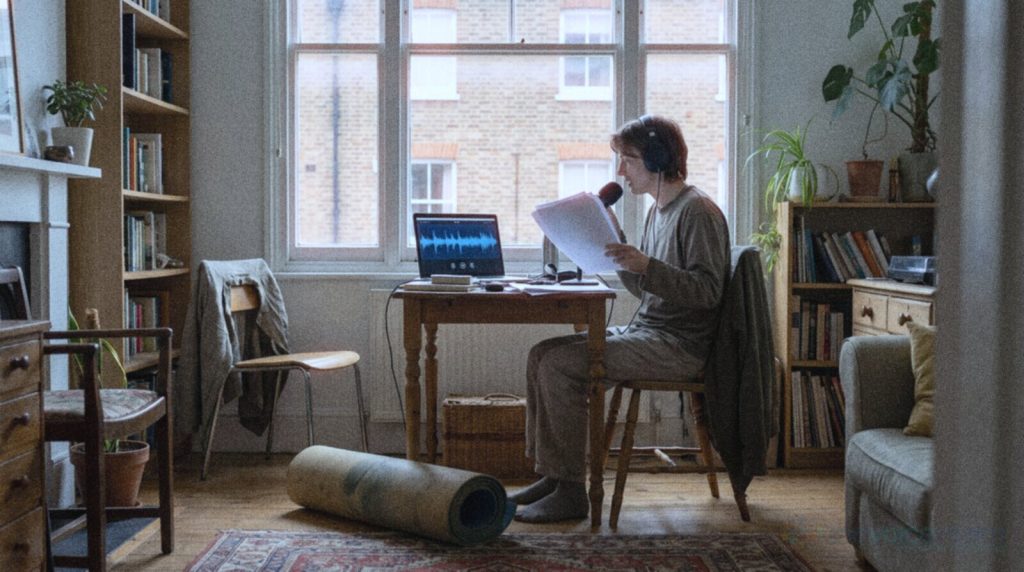
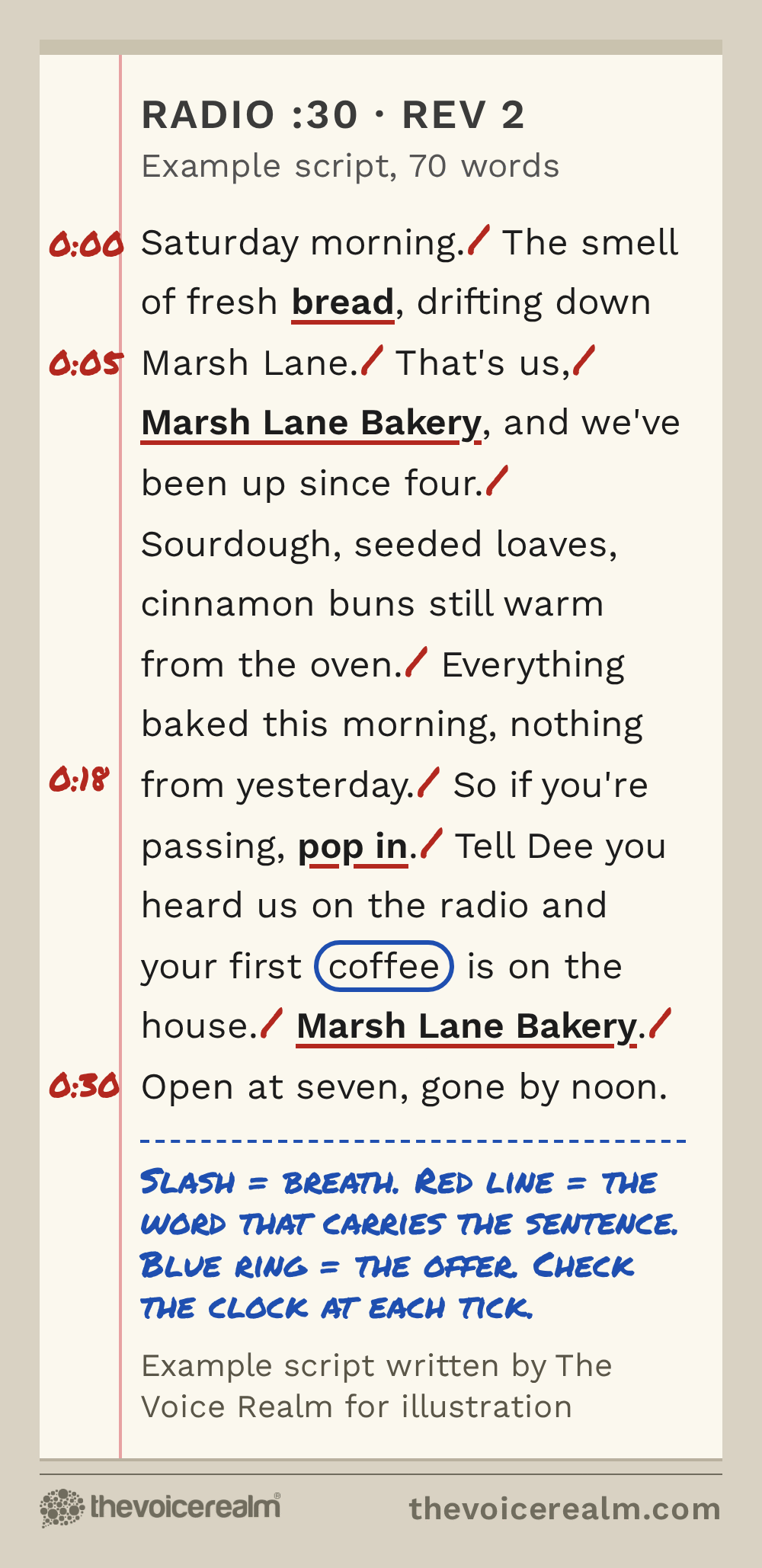
A radio script looks harmless on paper. Read it aloud and the problems show up. Long sentences run out of breath. A product name gets buried behind a clause. A joke needs a beat that the word count has no room for. Good radio readers do a quick pass before the first take: they mark where they will breathe, which word carries the meaning of each sentence, and where the brand name sits.
 VOICEMASTERACADEMYFirst read to first booking.Twenty modules. The first one is free.Start free
Then they say it the way someone would say it to one person in a car, not to a crowd. Radio is a one to one medium, however many people are listening. Pitch your read at a single friend and the spot sounds warm. Pitch it at the whole county and it sounds like an announcement.
Two small habits help. First, read the script at the speed you will record it, with a timer running, before you ever press record. If it runs long, tell the producer straight away, because trimming a script is a conversation and not something you can fix by talking faster. Second, check every proper noun, from a street to a town to the brand itself, before the session. A wrong stress on a place name is the kind of thing a local listener hears at once.
© The Voice Realm
What it means for people who book radio voices
If you are a marketer, an agency producer or a small business owner with a radio budget, an award like this is a free education. Listen to the shortlist when it appears. Notice how short the scripts are, how few ideas each one carries, and how little the voice has to push. Then check your own brief against that. Most weak radio ads try to say five things in thirty seconds.
When you come to cast, listen for a tone that fits the writing rather than a pretty voice for its own sake. Our radio and TV commercial voices page lets you hear British artists with broadcast reads side by side, and our rates page is where you can see how a radio read is priced before you brief. Both are worth a look before you brief, not after.
One more habit that pays off: ask the artist for a couple of different takes at the pace you actually need, and book a short revision window up front. It saves nerves on the day the spot has to go to the station.
© The Voice Realm
What to do this week
Entries for this year’s round may be closed by the time you read this, but the shortlist, the vote and the conversation around them all come later. It is a good moment to get your own radio work in order.
- Find your radio reads. Check which of your spots have actually aired, and keep the date and station for each.
- Ask for the finished spot. Many artists never hear the final mix. Ask the producer or agency for a copy, with permission to use it on your site.
- Trim your commercial demo. Thirty seconds of your best radio style work beats three minutes of everything.
- Listen to the shortlist. Pick one spot and note where the voice breathes, where it smiles and where it stays out of the way.
If you are new to this area, our guide to how to get into commercial voice over walks through demos, auditions and the first jobs. And if you are looking for work, the voiceover jobs online page shows what clients are asking for right now, a lot of it shaped like a radio spot.
A final practical note on credits. Awards panels, agencies and clients all like to see who made a piece of work. If you voiced a spot, write down the name of the production company and the creative agency while you still remember them. It costs nothing and it is the sort of detail that gets you a second booking.
Our take
We like this award because it puts a humble format on a stage. Radio adverts are short, unglamorous and heard by an enormous number of people, and the people who write and produce them take real care. A reader vote also gives ordinary listeners a say, which suits a medium that exists to be heard by ordinary listeners.
We would like to see voice credited more often when winners are announced. The panel is made up of creative leaders, and the scoring covers scripting, production, creative execution and memorability. All of it is fair. It also means that the artists whose reads are being heard rarely get named alongside the agencies. If you are one of them, claim your credit quietly and keep your own record.
The practical message is simple. Radio rewards short, clear, warm work, delivered on time and to length. If that is what you offer, you are doing what the best spots in the country are built on, whether or not anyone gives you a trophy for it.
Sources: Radiocentre, “Audio Ad of the Year Award”; RadioToday, “Radiocentre Audio Ad of the Year returns with Campaign”.
Ready to get booked?
See the jobs open right nowAbout Sarah Robbins
Sarah Robbins writes for The Voice Realm about finding voice over work, home studios, casting and the business side of voice acting.