Blog

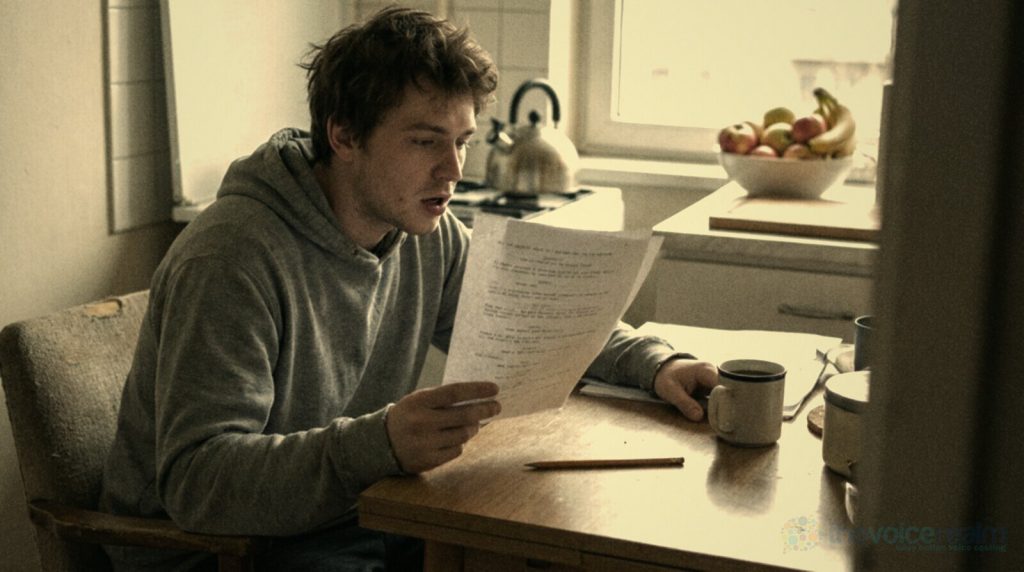
This guide is for adult voice actors who keep seeing “young boy, 8” or “girl, 10” on casting notices and wonder how anyone over thirty gets those parts. They do, all the time. Animation, games, toys, audiobooks and ads hire adults to play children every week, because adults can take direction for hours, work any time of day and keep the same voice for years while a real child’s voice changes.
Below you’ll find what actually makes a voice sound young (it’s less about pitch than you’d think), how to build a child character from the inside, what a kid sounds like at four, eight and twelve, and how to keep your throat in one piece doing it all day.
Pitch is the trap everyone falls into first
Ask most people to sound like a child and they’ll push their voice up into a squeak and add a lisp. It sounds like an adult doing an impression of a child, because that’s what it is. It also hurts after twenty minutes.
A child’s voice is higher, sure. But listen to real kids and you’ll notice that most of what makes them sound young isn’t the note. It’s the shape of the sound, the size of the space it comes out of, and above all the way they think and talk. A deep voiced eight year old still sounds eight. A squeaky forty year old still sounds forty.
So treat pitch as the last thing you adjust, not the first. Lift it a little if the character needs it, then leave it alone and work on everything else.
Outside in
Starts with a squeaky pitch, adds a lisp, reads the line the way a grown-up would, and hopes the high note does the rest. Tires the throat fast.
Inside out
Starts with what the child wants, lets the tongue and smile move the sound forward, lifts pitch only a little, and reacts fully and fast. Easy to hold for hours.
What researchers saw inside a voice actor’s mouth
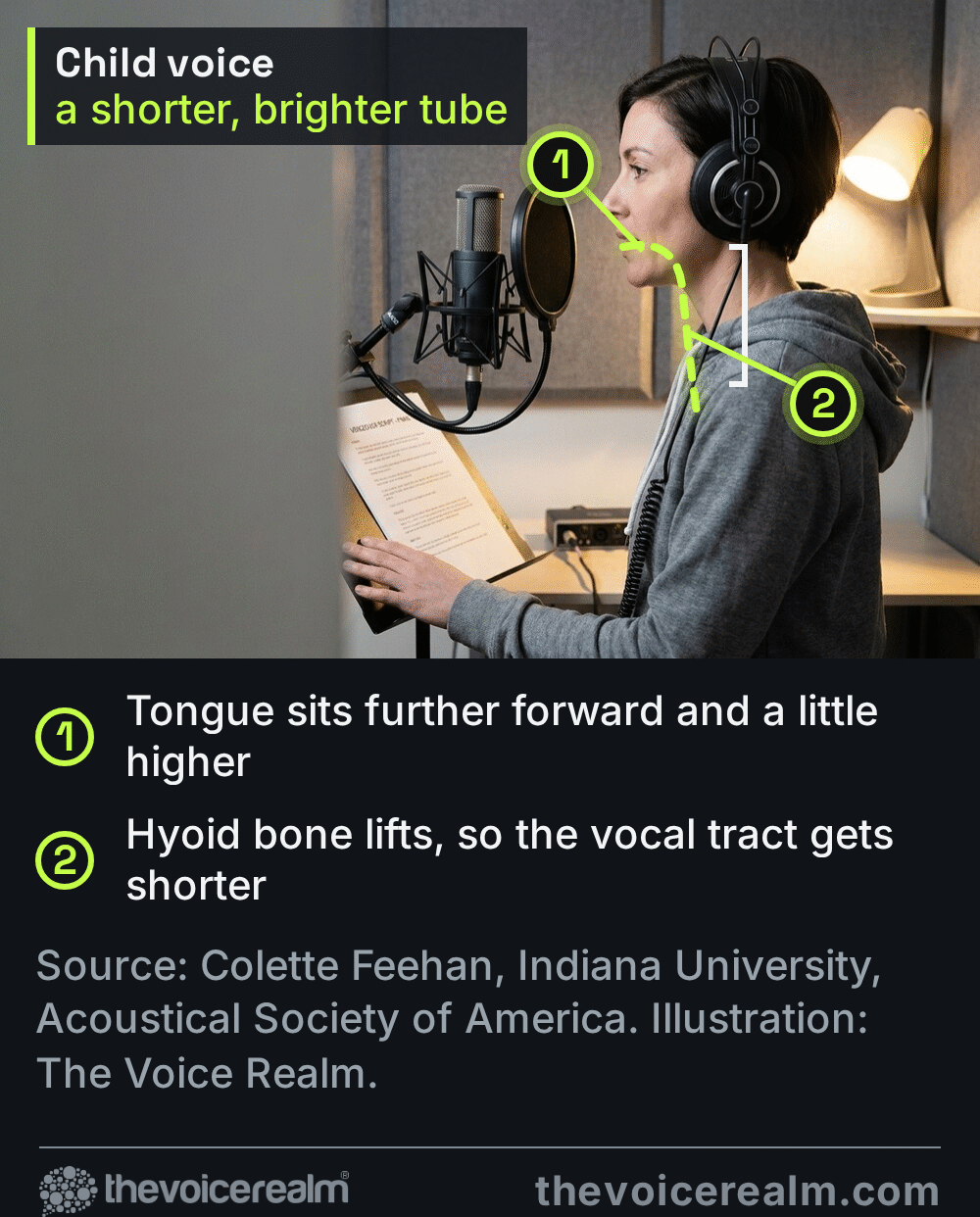
There’s a neat bit of science behind this. At Indiana University, linguist Colette Feehan used ultrasound to watch what voice actors’ tongues and throats do when they switch to a child voice. She presented the work to the Acoustical Society of America.
Two things stood out. First, the tongue moved. In her words, the tongue positions “are indeed farther forward … or higher in the mouth for the child voice.” Second, one actor raised the hyoid, the small bone above the voice box, and kept it there. It “was higher throughout the entire utterance while doing a child voice,” which suggests that actor “might physically shorten the whole vocal tract the whole time while speaking.”
That makes sense when you think about it. A child’s whole head is smaller, so the tube their voice travels through is shorter, and a shorter tube sounds brighter and smaller. You can’t shrink your skull, but you can make the space a little shorter and the sound a little more forward. Feehan’s own guess is that the actor may be “shortening their vocal tract by contracting muscles in their throat,” so this is a gentle adjustment, not a squeeze.
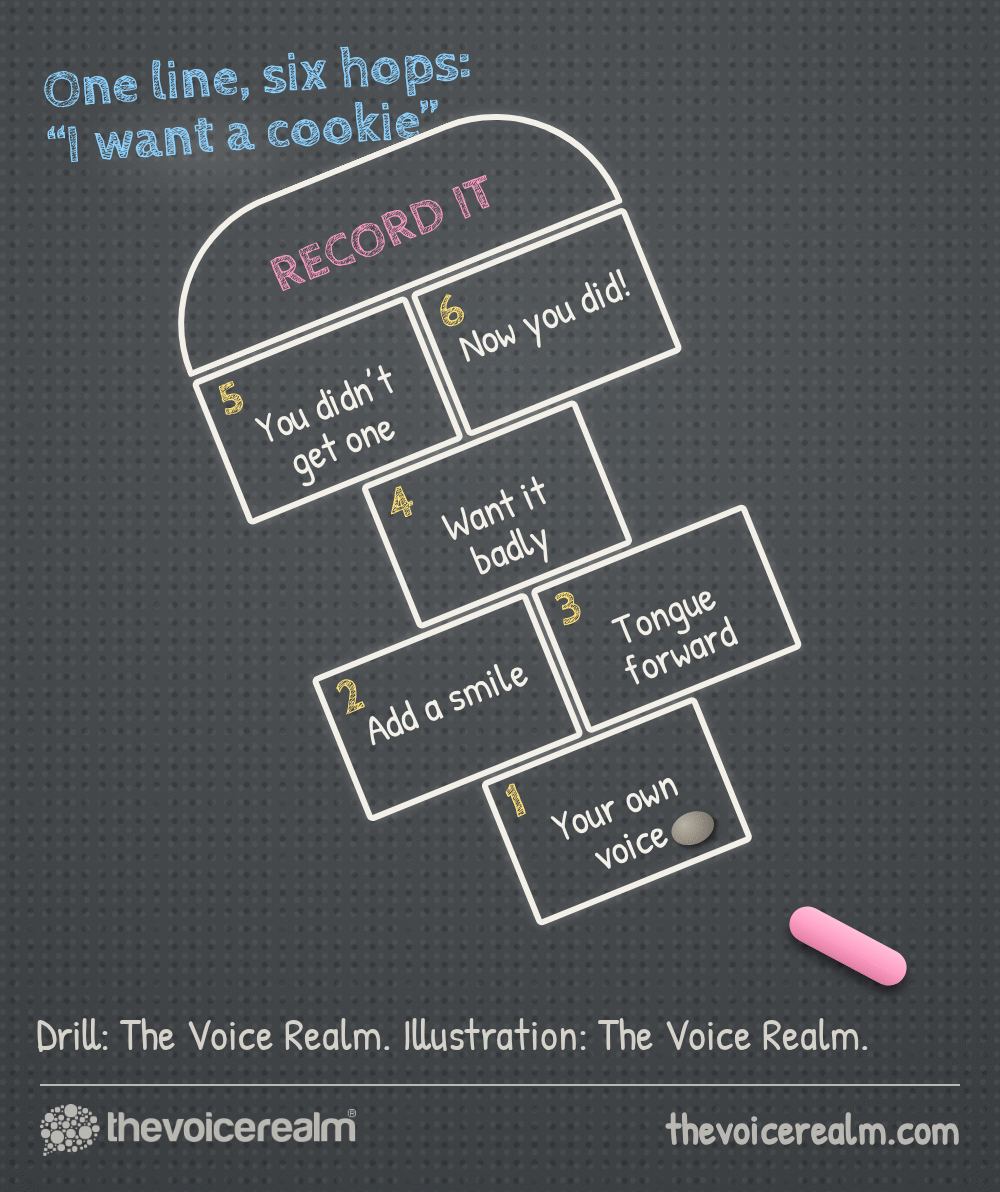
Try it now. Say “I want a cookie” in your normal voice. Then say it again with a slight smile, the tip of your tongue resting further forward and a little higher, and your voice placed at the front of your mouth, just behind the teeth. Keep the pitch the same. You’ll hear it get younger before you’ve touched the note.
© The Voice Realm
Build the kid before you find the voice
Sarah Natochenny, who voiced Ash Ketchum in the English Pokémon dub for years, put the core idea in one line to The Harvard Crimson: “Voice acting is acting. To be a voice actor, you need to have a solid foundation as an actor first.” Playing a child is the clearest proof of that. The sound follows the thinking.
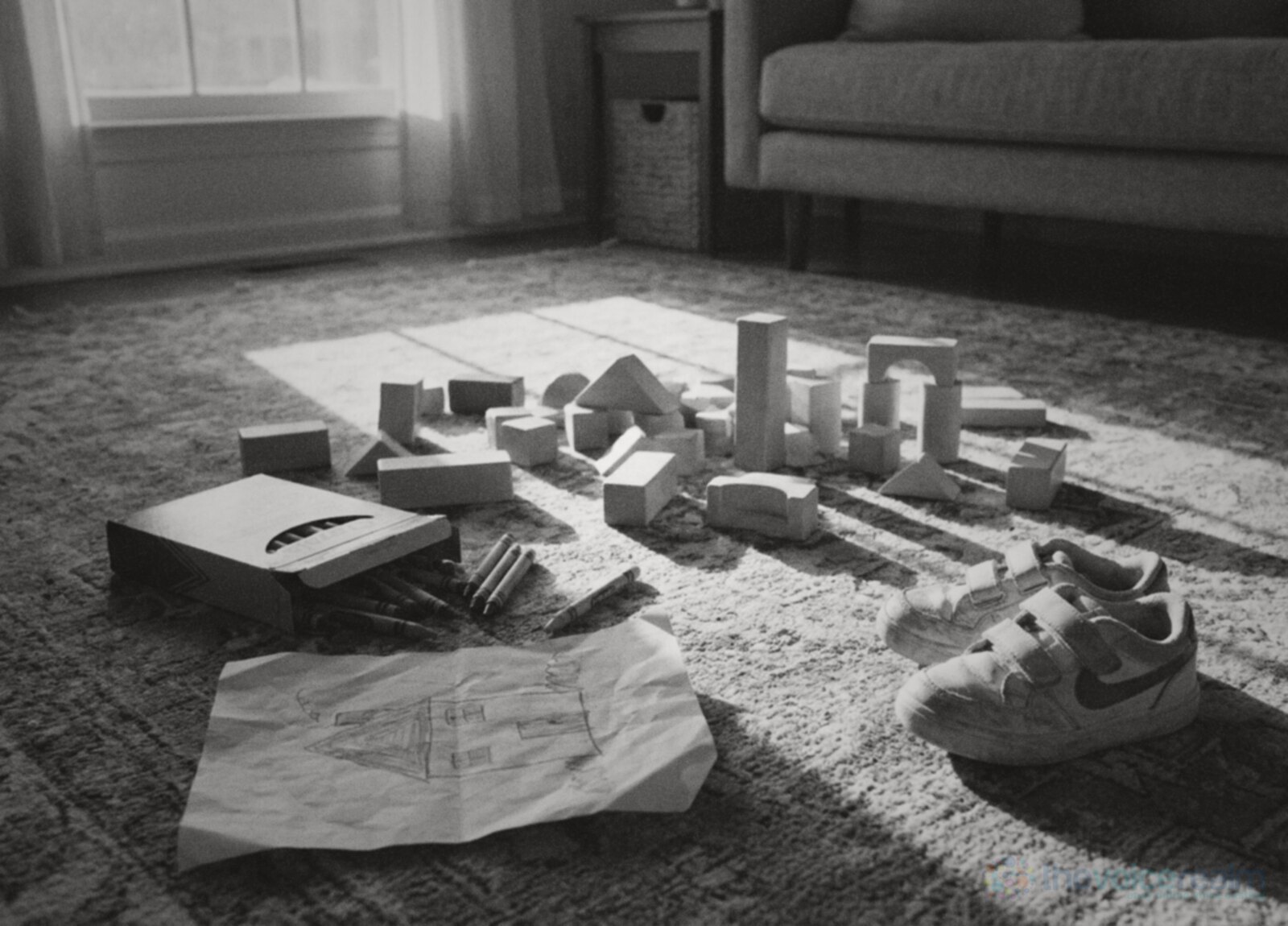
Children don’t hold back what they feel. They want things now. They jump between topics mid-sentence. They’re certain about things adults hedge over, and devastated by things adults would shrug off. Most of all they react, fully and fast, without checking whether the reaction is cool. That inner life is what makes a child voice believable, and it’s all acting.
Before you record, answer a few questions about your kid. How old exactly, and do they act older or younger than that? What do they want in this scene? Who are they talking to, a parent, a friend, a teacher, a sibling they’re annoyed with? Are they the leader in the playground or the one at the edge? Our guide to building a character from the person outwards walks through this in more detail, and every step applies to children.
© The Voice Realm
Four, eight and twelve are three different jobs
A casting note that just says “child” isn’t enough to work with, so ask for an age, or pick one yourself and commit. Here’s roughly how the read changes.
Around four. Simple words and big feelings. The rhythm is uneven: a rush of words, then a stop to think. Sounds that are tricky to say may still be a little soft, but go easy on it. One or two softened sounds says “little” far better than a full lisp, which quickly turns into a joke. Breath is short, so phrases are short.
Around eight. This is the classic animation kid. Lots of energy, a big sense of fairness (“that’s not fair!”), jokes they find hilarious and a habit of asking why. The speech is clear now. What sells the age is the attitude and the speed of the reactions.

 VoiceEditSuiteHow your room really sounds, measured.Read a 30-second script in your normal setup. Home Studio Analysis measures reverb, noise floor, hum and sibilance, then tells you what to fix first. Free.See how it worksYour recordings are never used to train AI.
Around twelve. Kids this age often want to sound older than they are. They try a little cool, then crack and sound eight again when they’re excited or upset. Pitch for boys may be close to an adult woman’s range before the voice changes, which is one reason so many boy characters are voiced by women. The best twelve year old reads play that tug between the kid and the teenager they’re trying to be.
If you’re voicing children’s audiobooks, you’ll often play every one of these in a single chapter. Our piece on narrating children’s audiobooks covers how to keep a cast of kids distinct without wearing yourself out.

© The Voice Realm
Listen to real kids, not to cartoons
The fastest way to a fake child voice is copying other adults’ child voices. You end up with an impression of an impression. Go to the source instead.
Listen to children wherever it’s natural and appropriate: your own family, friends’ kids at a barbecue, a busy park, a family restaurant, kids’ interviews and vlogs. Don’t record anyone, just listen. Notice how often they start a sentence and abandon it, how a question turns into a story, how a giggle sits in the middle of a word, how much they breathe in the wrong places. Notice what changes when they’re tired, bored or showing off.
Then steal the behaviour, not the voice. The tiny run of “um, um, and then” before a big announcement is worth more than any pitch trick.
Keep your throat out of it
Child characters are hard on the voice when they’re done the wrong way. A child often shouts, laughs, whines and cries in a single scene, and a high, squeezed sound makes all of that harder. If your throat feels tight, your neck muscles are working, or you’re tired after a short session, something’s wrong.
Voice clinicians take this seriously. The American Speech-Language-Hearing Association lists “abnormal pitch (too high, too low, pitch breaks, decreased pitch range)” and “decreased vocal endurance or onset of fatigue with prolonged voice use” among the signs of a voice disorder. Forcing your voice to sit too high, hour after hour, is a good way to end up with both. Our article on tight throats and muscle tension dysphonia explains what happens when the squeeze becomes a habit.
A few habits keep it safe:
- Brightness from the front, not the throat. Get the young sound from tongue position and a smile. If the only way to sound young is to squeeze, the pitch is too high.
- Stay on the breath. Kids’ lines are short and bursty, so take small, easy breaths often instead of pushing to the end of a long phrase.
- Fake the loud bits. Shouts and screams can be sold with energy and a little distance from the mic rather than full volume.
- Take breaks. Ten minutes of rest every hour on a child role pays back by the end of the day.
- Stop if it hurts. A sore throat or a voice that won’t recover by the next morning is a reason to rest and, if it lasts, to see a professional.

© The Voice Realm
Recording and direction tips for child roles
Sit a little closer to the mic than you would for a narrator, but not right on it, because a smaller voice benefits from some intimacy and squeals still need room. Move your body. Kids rarely stand still when they talk, and a little bounce in your knees or a gesture with your free hand comes through in the read.
Expect directors to ask for “more kid” or “younger”. Usually that means more reaction and less control, not a higher note. Try making the next take less polished: let a word tumble, laugh before the line, take a breath in the middle of a sentence. If they want older, pull the energy back and add a touch of cool.
Keep a reference. Once a child character works, record a short clip of a few lines and keep it with your notes, plus a written description of where your tongue sits and what the kid wants. Long-running characters can come back months later, and the client expects the same kid.
© The Voice Realm
Putting it on your demo
If child voices come easily to you, put a short clip on an animation or character demo. One believable kid beats three squeaky ones. Make it a real moment, with a want and a reaction, rather than a line of baby talk. Casting directors listen for whether you sound like a child with a life of your own, so the acting should be front and centre.
And if you’re new to all of this, a good beginner course is the quickest way to get the acting foundations Natochenny talks about. The lessons at Voice Master Academy start from reading copy and work up to character, at your own pace. Then go and listen to a playground. It’s the cheapest coaching you’ll ever get.
Sources: “The Science of Voice Acting,” Colette Feehan, Indiana University, Acoustical Society of America; “Artist Profile: Sarah Natochenny on Her Life Changing Career Voicing the Pokemon’s Ash Ketchum,” The Harvard Crimson; “Voice Disorders,” American Speech-Language-Hearing Association.
Ready to get booked?
See the jobs open right nowAbout Sarah Robbins
Sarah Robbins writes for The Voice Realm about finding voice over work, home studios, casting and the business side of voice acting.