Blog

Every voice over artist in Australia has had the moment. The script is clean, the read is warm, the client is happy, and then an email arrives from someone in the company asking, very politely, why the voice on their new video can’t say their name.
ABC sport commentator Andrew Moore has thought harder about that moment than most of us. In a conversation reported by Radio Today this week, he made the case that broadcasters don’t just try to get people’s names right. They have to. Here’s our read on why that matters for Australian voice over artists, and what to do about it before you press record.
The caller who made a pact
Moore was talking to Luke Bona on the Bonafide podcast, and Radio Today’s Sarah Patterson wrote up the first part of the chat. His view is plain. “I think the tide has definitely turned in how, as broadcasters, we have to deal with this,” he says.
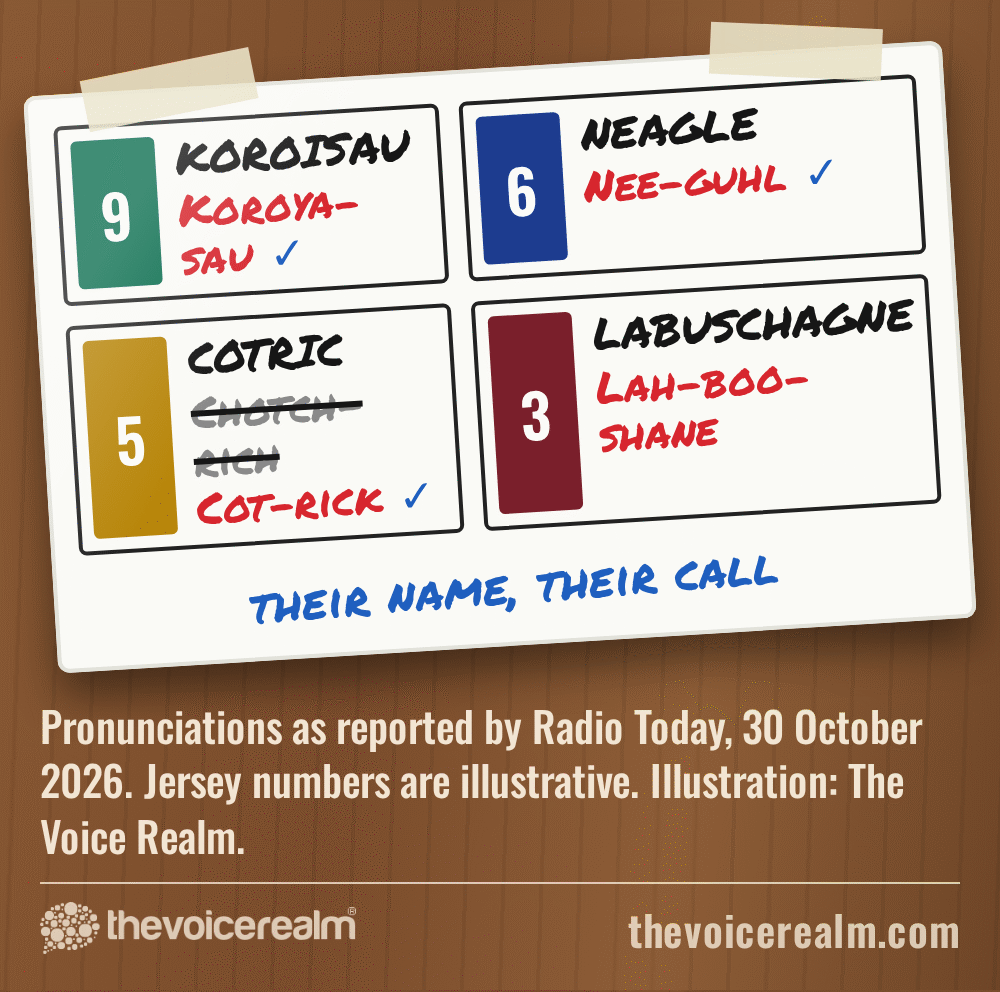
The turning point for him came in 2017, when he was calling televised World Cup games. Linguists from Fiji, Tonga and Samoa were brought in before the tournament to coach the commentary team on how the players’ names are really said, and one surname became a sticking point. Australian callers had been saying Api Koroisau’s name one way. “The Fijian (linguist) was adamant it’s Koroya-sau,” Moore says.
His co-commentator asked the obvious question: wouldn’t they sound silly being the only ones saying it that way? Then someone pointed out that the games were going into Koroisau’s family village in Fiji. That settled it. “I made the pact from that point on, we’re not just going to TRY to get them right. We HAVE to get them right.”
He’s honest that it doesn’t always work. “I don’t always get them right. But I try to. And if I’m uncertain and we end up interviewing someone, I get them to say it on air.” Then the clip goes round the team: “We subsequently record it and we’ll send it out to all our commentators.”

© The Voice Realm
Why this lands on voice over artists too
A sports caller says a name live, once, and moves on. A voice over artist says it once and it plays for years. The induction video, the awards night script, the podcast credits, the radio ad for a family business with the founder’s surname on the sign. If it’s wrong, it’s wrong every single time somebody presses play, and the person it belongs to will hear it more than anyone.
That’s the part that makes names a bigger deal in our world than in commentary. Most of the work Australian voices do for companies is heard by the very people being named. A sales team hears the conference opener. Staff hear the welcome module. The graduate hears their name read out at the ceremony. If you work as one of the corporate voice over artists companies book for that kind of job, the name on the script is often the name of someone in the room.
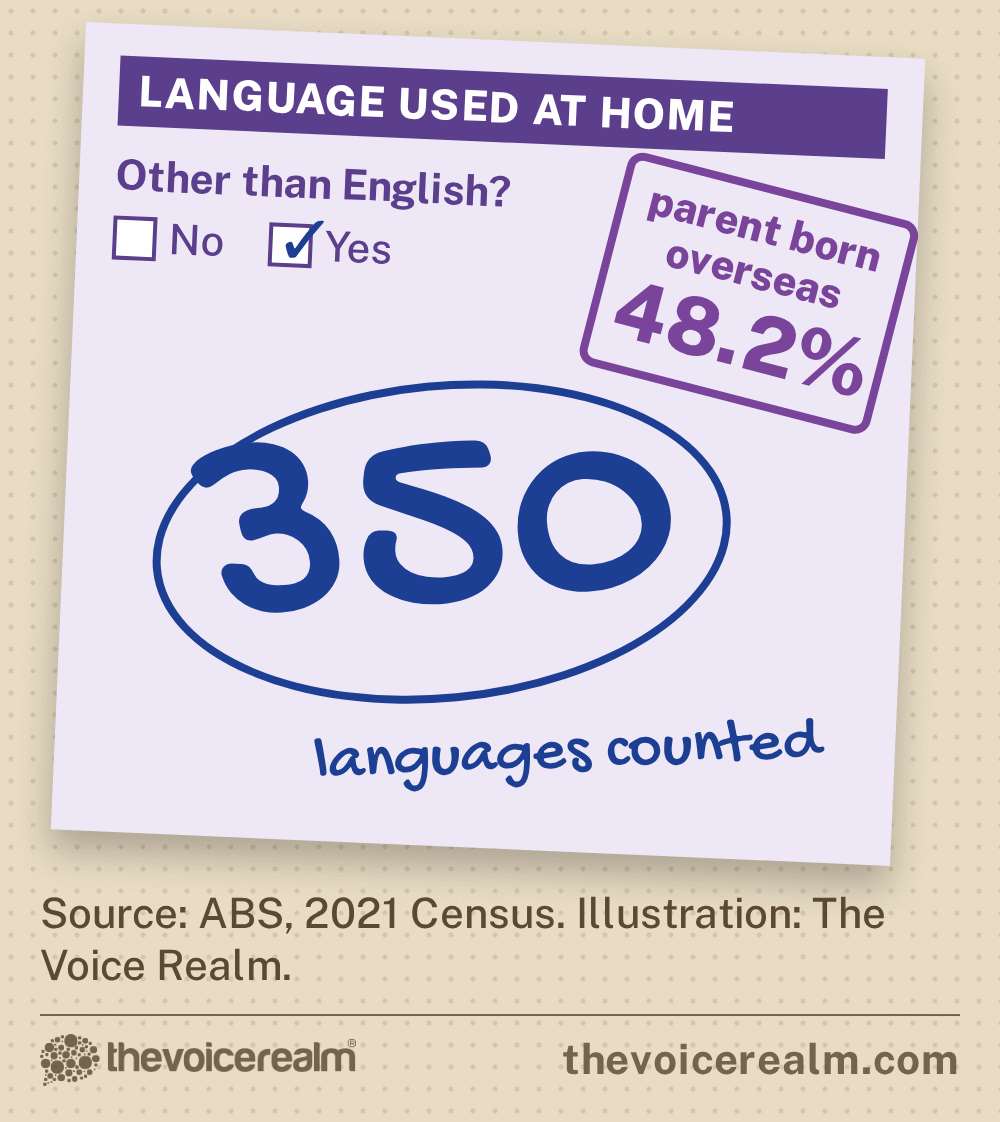
And this is Australia. The scripts that land in your inbox carry names from every corner of the world, because the people who write them and the people in them come from every corner of the world. The Census numbers make that point better than we can, and they’re the reason “just say it the Aussie way” stopped being a safe default a long time ago.
© The Voice Realm
Ask the person, then keep the recording
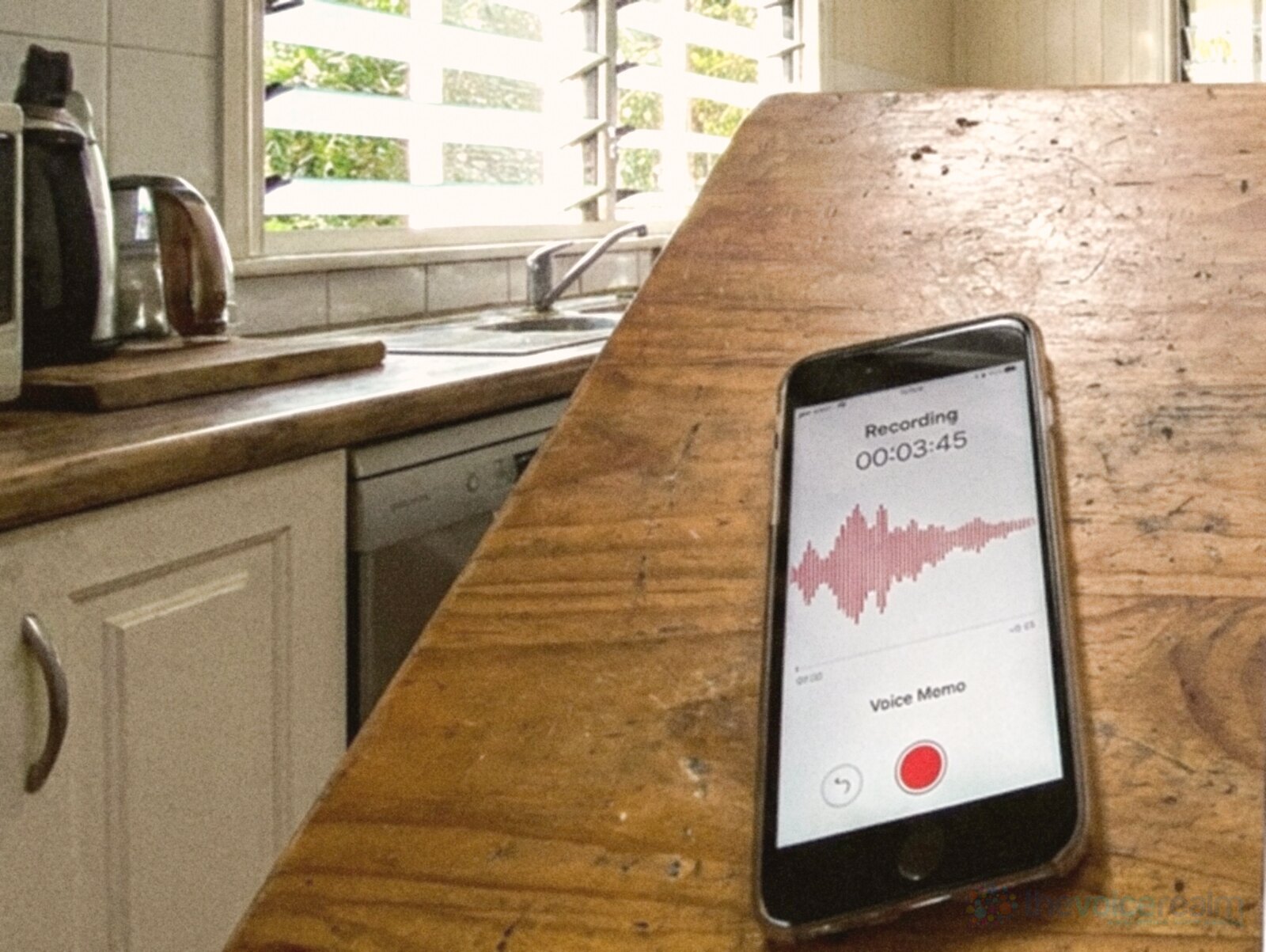
Moore’s method is simple enough to steal. When he isn’t sure, he gets the person to say it, records it, and shares it with everyone who needs it. Voice over artists can do exactly the same thing, and most clients are glad to be asked.
Here’s how that looks in a normal booking. When the script comes in, read it through once looking only for names: people, suburbs, streets, products, the business itself. Anything you can’t say with total confidence goes on a short list. Send that list back with a simple request: could someone record a quick voice memo of each name being said, ideally by the person themselves? It takes them two minutes on a phone and it saves everyone a pickup session.
A commenter on the Radio Today piece, who MCs graduation ceremonies, says they ask the booker to have everyone record their name in one file before the day. That’s the same idea at scale, and it works just as well for an awards night script or a long staff video with forty names in it. If nobody can record, ask for a phonetic spelling in plain English and a note on which syllable takes the weight.
We’ve written before about researching how a name is said when there’s nobody to ask, and the order there still holds: the person first, their own video or voicemail next, a reliable source after that, and your best guess never.
© The Voice Realm
When the Aussie version is the right one
Here’s where it gets interesting, and where Moore’s stories are more useful than a simple rule. Not everyone wants the original pronunciation.
Take former Canberra Raiders player Nick Cotric. Moore made a point of saying his Serbian surname the Serbian way, but the TV commentators didn’t follow, and in the end Cotric asked everyone to go back to the anglicised version because it was easier all round. Moore didn’t take it as a win. “This is what made me embarrassed about how we in the media have done this for so long,” he says.
Then there’s Marnus Labuschagne, who spent his early childhood in South Africa before his family moved to Brisbane. His surname has a traditional Afrikaans pronunciation, and Australian broadcasts use a very different one. According to the Radio Today piece, he has said publicly that he isn’t fussed, having lived with the Australian version since school.
 VOICEMASTERACADEMYTwenty modules, one at a time.Breath controlHome studioCommercial techniqueAuditionsStart module oneNo experience needed.
The lesson for voice over artists isn’t “always go native” or “always go local”. It’s that the person decides. If someone tells you they say their name the Australian way, that’s their name. If they tell you the original, that’s their name. Moore’s own rule is the right one: when he has a player “on tape, saying that’s how they want their name pronounced”, that’s how he says it, “whether I’ve heard it pronounced a million other ways or not.”
The same goes for local sound in general. A Queensland brand naming its own suburbs and streets in an ad wants someone who says them like a local, which is one good reason to look at voice over artists in Brisbane for that kind of spot. A local voice doesn’t need the memo to know how the suburb is said, because they’ve been saying it all their life.
© The Voice Realm
Place names are names too
Australians are touchy about their own places, and fair enough. Every town has a way it’s said by the people who live there and a way it’s said by everyone else, and listeners clock the difference in a second. Say Melbourne or Brisbane with every letter sounded out and you’ve told the whole state you’re from somewhere else.
A lot of Australian place names come from Aboriginal languages, and the local pronunciation can drift a long way from the spelling. Some councils and local land councils publish guidance on how their names are said, and community organisations are usually happy to help when a script names Country. Treat those names with the same care Moore gives a player’s surname. They belong to somebody.
Brand names and product names count as well. A company that has spent money on a name has almost always decided how it’s said, even if the spelling suggests something else. Ask. It’s the cheapest question in the whole job.
A quick routine before you hit record
None of this needs to slow a booking down. It just needs to happen at the start rather than after the client hears the first file. This is the routine we’d suggest for any script with names in it.
- Do a names pass. Read the script once for nothing but names: people, places, products and the business itself.
- Ask early. Send your short list back the same day, before you’ve recorded a word.
- Get it in their voice. A phone memo from the person beats any written guide, every time.
- Write it your way. Mark the script in your own plain phonetics, with the stressed syllable in capitals.
- Keep a file. Save every recording and note under the client’s name so the next job starts right.
That last step is the one people skip, and it’s the one that wins repeat work. When the same company comes back next year with a new video, and you already know how the managing director says her name, you look like you care. Because you do.
Long-form work raises the stakes. If you’re narrating an audiobook with a cast of characters from across the region, the author or publisher has usually decided how every name is said, and a good publisher will hand you a list. For non-fiction full of real people and places, it’s worth building that list yourself before chapter one. The same habit carries over to technical scripts, and anyone who has tackled drug names in medical narration knows the feeling of a word that has to be right first time.

© The Voice Realm
For the people writing the scripts
If you’re the one booking the voice, you can make this easy for everyone. Put a short pronunciation note at the top of the script for any name that isn’t obvious, and attach a quick recording if you can. Mention whether the person prefers the original pronunciation or an anglicised one. If the script names a place, say whether you want the local way or the way your national audience would expect.
It feels like a small thing. It isn’t. The person whose name is in your video is going to hear it, and so is their family, and a correct name is one of the few things in a script that people remember as a kindness. When you book Australian voices through The Voice Realm, the actor will often ask about names before you think to mention them, and that question is a good sign you’ve picked the right person.
Our take
Andrew Moore’s story works because it isn’t really about sport. It’s about respect, and about the gap between “close enough” and “right”. A commentator gets a few seconds and a roar from the crowd to cover a slip. A voice over artist gets no crowd at all, just a file that plays on loop in a reception area for three years.
So do what the best callers do. Ask, record, keep the recording, and let the person decide how their own name is said. When someone tells you it doesn’t matter, take a leaf out of Moore’s book and quietly disagree. As he told one player: “I said: it does matter. It should matter.”
It costs you a two-minute email at the start of the job. It earns you the client who says “you’re the first one who got my name right”, and that client books you again.
Sources: Radio Today, “We HAVE to get names right.” Andrew Moore on why correct pronunciation matters (30 October 2026); Australian Bureau of Statistics, “2021 Census: Nearly half of Australians have a parent born overseas”.
Ready to get booked?
See the jobs open right nowAbout Sarah Robbins
Sarah Robbins writes for The Voice Realm about finding voice over work, home studios, casting and the business side of voice acting.