Blog
Australian radio lost one of its oldest names this week, and most listeners won’t hear a thing. The stations stay the same. Triple M still calls the footy, the Hit Network still does drive, and LiSTNR still carries the podcasts. What changed is the company behind them, and the way it wants to sell the ads that run between them.
At its Upfront in Sydney on 22 October, Southern Cross Media Group officially became Seven Media Group, one business with television, radio, streaming, podcasts and newspapers under the same roof. For brands it’s a simpler way to buy. For Australian voice over artists, it’s a change in where a single read can end up, and that’s worth understanding before the summer campaigns start landing in your inbox.
A new name over familiar stations
The detail is in the trade press. Radio Today reported that the Upfront “marked the end of an era for the SCA and Austereo names”, as the radio group took the Seven name for the combined business. Mediaweek’s Natasha Lee put it neatly: “Television, radio, streaming, podcasts, and publishing share a floor.”
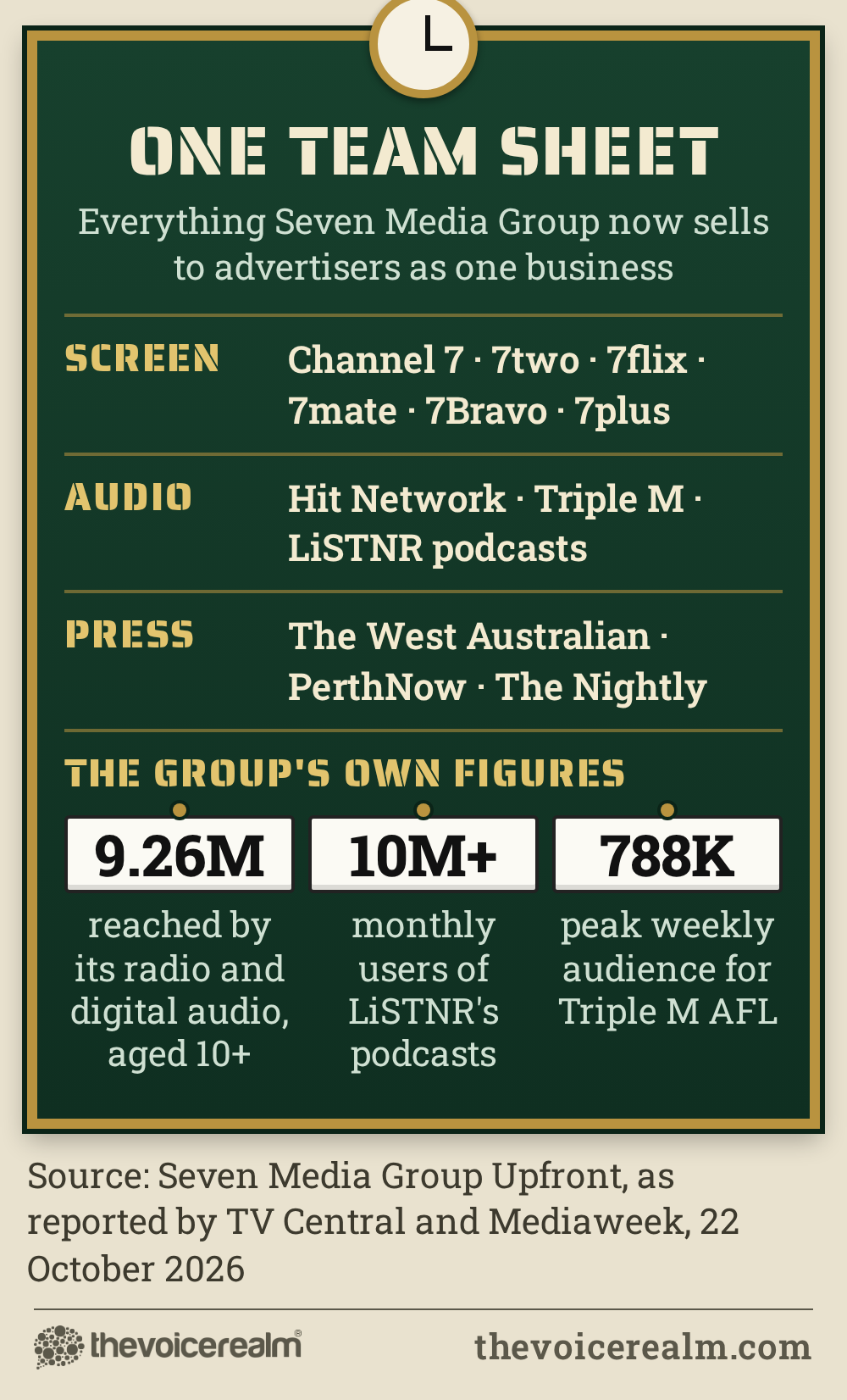
That floor is big. On the screen side there’s Channel 7, 7two, 7flix, 7mate, 7Bravo and 7plus. In audio, as TV Central’s report lays it out, “the Hit and Triple M networks sit alongside LiSTNR.” Then there’s The West Australian, PerthNow and The Nightly in print and online. Mediaweek is careful to point out that Seven Media Group is the umbrella business, not a new name for any station, and that the formal legal name change still goes to a shareholder vote.
Managing Director and CEO Rohan Lund summed up the pitch to agencies in one line: “Our job is to meet Australians where they are.” He also said the group’s strategy rests on a simple idea: “in a fragmented media landscape, Australians still come together because while the media has changed dramatically, people haven’t.”

© The Voice Realm
Goodbye, Austereo
It’s worth a moment of nostalgia. Austereo was founded in Adelaide in 1980 by broadcasting executive Paul Thompson, and in 2011 it merged with Southern Cross Media Group to form SCA. For more than four decades the name sat behind the stations that taught a lot of Australians what commercial radio sounds like: the station IDs, the big promo voices, the tight thirty second ads read by people who could land a phone number in their sleep.
It’s a nice reminder that a lot of what Australia hears nationally starts outside Sydney and Melbourne. Plenty of Adelaide voice over artists voice national work today from home studios, and a brand in Brisbane or Perth rarely knows or cares which city the read came from. A name being retired doesn’t change that. It does remind us that the business around the voice keeps moving, even when the voice itself doesn’t.

© The Voice Realm
One buy, many platforms
The heart of the Upfront was commercial, not on air. The group launched Seven iD, which joins up audience data from 7plus, LiSTNR and The West Australian, and Studio Seven, which Mediaweek describes as adding “an integrated strategy, creative and content partnership capability.” A third piece, Phoenix Exchange, is a planned trading system for buying across broadcast, streaming, podcasts and digital.
Chief Revenue Officer Natalie Harvey was blunt about the aim: “We are making it easier for brands to trade across our entire media ecosystem.” John Kelly, the group’s managing director of audio, said the radio side now has “a Total Audio focus designed to provide a simpler and streamlined buying solution for our commercial partners.”
Mediaweek’s summary of what advertisers get is the line we’d underline: “shared talent, connected audience data, content that travels between platforms and fewer complications when buying across them.” Read that as a voice over artist and one phrase jumps out. Content that travels between platforms. That content includes the voice.
© The Voice Realm
Where your voice ends up now
Picture a summer campaign for a hardware chain or a car dealer group. In the old world the TV agency booked a voice for the TV spot, and the radio side might book someone else for the radio ads, sometimes in a different city with a different brief. Now a single buy can put the same campaign on Seven, on 7plus before a stream, across Hit and Triple M, as a podcast pre-roll on LiSTNR and on a news site. Studio Seven can build the creative for all of it in one go.
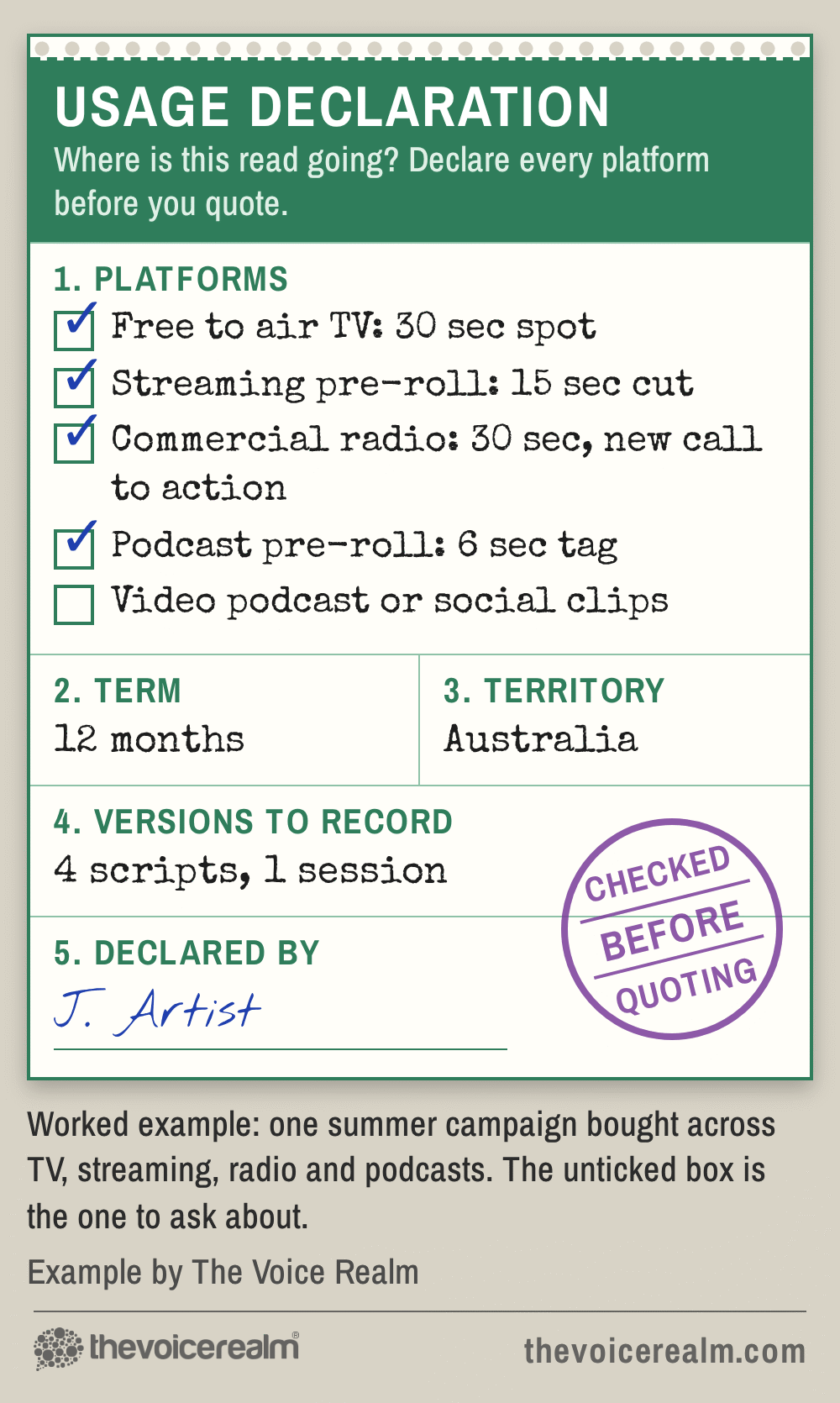
That’s good news in one obvious way. A brand that buys across every platform wants one consistent voice, and a consistent voice is a booked voice. It also means one session might produce a 30 second TV read, a 15 second cut for streaming, a 30 second radio version with a different call to action, and a short podcast tag. Four outputs, one booking, and a usage picture that’s much wider than a single radio spot.
This is exactly where artists can lose money without noticing. Usage is what the client pays for: where the voice runs, for how long and in which territory. A brief that says “radio” and quietly turns into radio, TV, streaming and podcast is a brief that has changed. If you haven’t brushed up on how usage rights work lately, now’s the time, because integrated buying makes the conversation more important, not less.
 VoiceEditSuiteYour breath. Your pace. Your edit.Auto Clean Up learns your pace from every file and puts your own pause back wherever it cuts a mistake.See how it worksLearns from numbers, never your audio. Never used to train AI.
Clients aren’t being sneaky when this happens. Often the person writing the brief genuinely doesn’t know every place the media team will run the finished spot, because the media plan gets settled after the voice is booked. The fix is a plain question at the start: where is this going to run, and for how long? It’s also why we publish our voice over rates on a public rate card, so a brand can see up front what a read costs for each kind of use and nobody has to argue about it after the files are delivered.
© The Voice Realm
The summer of sport is a voice job too
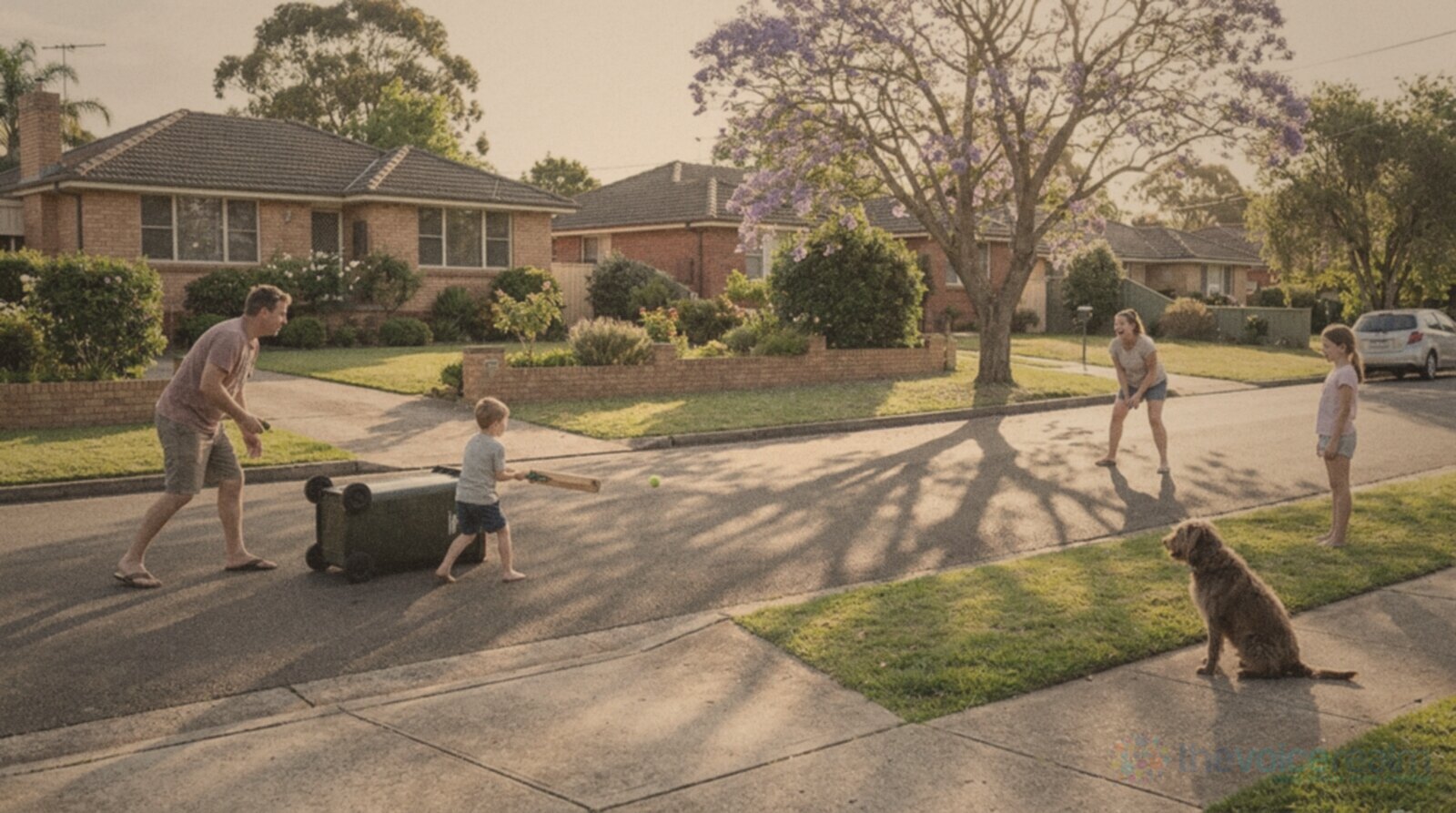
The Upfront leaned hard on sport, and that’s no accident. Chris Jones, the group’s director of sport, described how a fan moves through the day: “They might watch the game live on Seven, stream on 7plus, listen to the expert analysis on Triple M or LiSTNR, follow the conversation across digital and social.”
Every one of those touchpoints carries voice work beyond the commentators. Promos for the Test, sponsor billboards (“this over brought to you by”), stings into the ad breaks, podcast intros, and the commercial ads that sit around all of it. Mediaweek reports that former England coach and New Zealand captain Brendon McCullum will join Seven for the Australia and New Zealand Test series in December while making his Triple M Cricket debut, with Ricky Ponting joining Triple M alongside his TV work.
A trans-Tasman summer also opens a small door for Kiwi voice over artists. Brands that sponsor both sides of a series sometimes want a read that sounds at home on either side of the ditch, or a second version for New Zealand audiences. It’s a niche, but it’s the kind of niche that gets booked quickly when the match schedule lands.
© The Voice Realm
Podcasts with the camera on
One more detail from the Upfront matters for anyone who reads ads on podcasts. Mediaweek reports that “LiSTNR is expanding further into video”, with full video episodes planned across key titles including Hamish & Andy, Life Uncut and The Imperfects.
Video podcasts change the host read. A read that was audio only can now be seen, clipped and shared on social, which pushes the usage question again. It also changes what brands ask for. Some will want the host on camera; others will want a produced ad with a professional voice that drops cleanly into both the audio and the video version. Our guide to reading a podcast ad covers the delivery; the business side is simple. If a podcast read is going to be seen as well as heard, say so in the quote.
What to do before the summer briefs arrive
None of this needs a panic. It needs a slightly sharper habit at the start of every job. Here’s what we’d do this week if we were booking or being booked for summer campaigns.
- Ask where it runs. TV, streaming, radio, podcast, social, in store. Ask for the list in writing, and ask again if the brief changes.
- Quote every version. A 30, a 15, a 6 second cut and a radio tag are different deliverables. Name each one so the client knows what they’re getting.
- Keep your tone portable. A read that works on a TV mix and through a ute’s dashboard speaker is gold. Check your demo on both.
- Make it easy to rebook. When a brand runs one voice across every platform, the artist who’s quick, clear and consistent gets the next campaign too.
For brands and agencies reading this, the mirror image is just as simple. Decide where the work will run before you book the voice, and tell the artist. You’ll get a fair quote, a read built for the platforms you’re actually buying, and no awkward conversation in February when the campaign turns up somewhere nobody mentioned.
Our take
Here’s our read. Seven Media Group is a bet that Australians still gather around big moments, the Test, the Cup, the breakfast show, and that brands will pay to follow them from the lounge room to the car to the phone. We think the bet is right. People haven’t stopped listening to radio; they’ve just added more places to listen.
For voice over artists, that’s an opportunity hidden inside an admin problem. More platforms means more places for your voice to be heard, and more reasons for a brand to keep the voice it already trusts. It also means more chances for a read to drift into places nobody paid for. The artists who do well out of integrated buying will be the ones who ask the boring questions early and cheerfully.
And to the old Austereo name, thanks for the station IDs. A few of us learned to read a phone number properly because of you.
Sources: Radio Today, “End of an era as SCA rebrands to Seven Media Group”, October 2026; Natasha Lee, Mediaweek, “Seven’s dance partners are chosen. Now the music starts”, 22 October 2026; Aaron Ryan, TV Central, “2027 Channel 7 Upfront: Seven Media Group unites TV, radio and publishing”, 22 October 2026.
Ready to get booked?
See the jobs open right nowAbout Sarah Robbins
Sarah Robbins writes for The Voice Realm about finding voice over work, home studios, casting and the business side of voice acting.