Blog
Blog
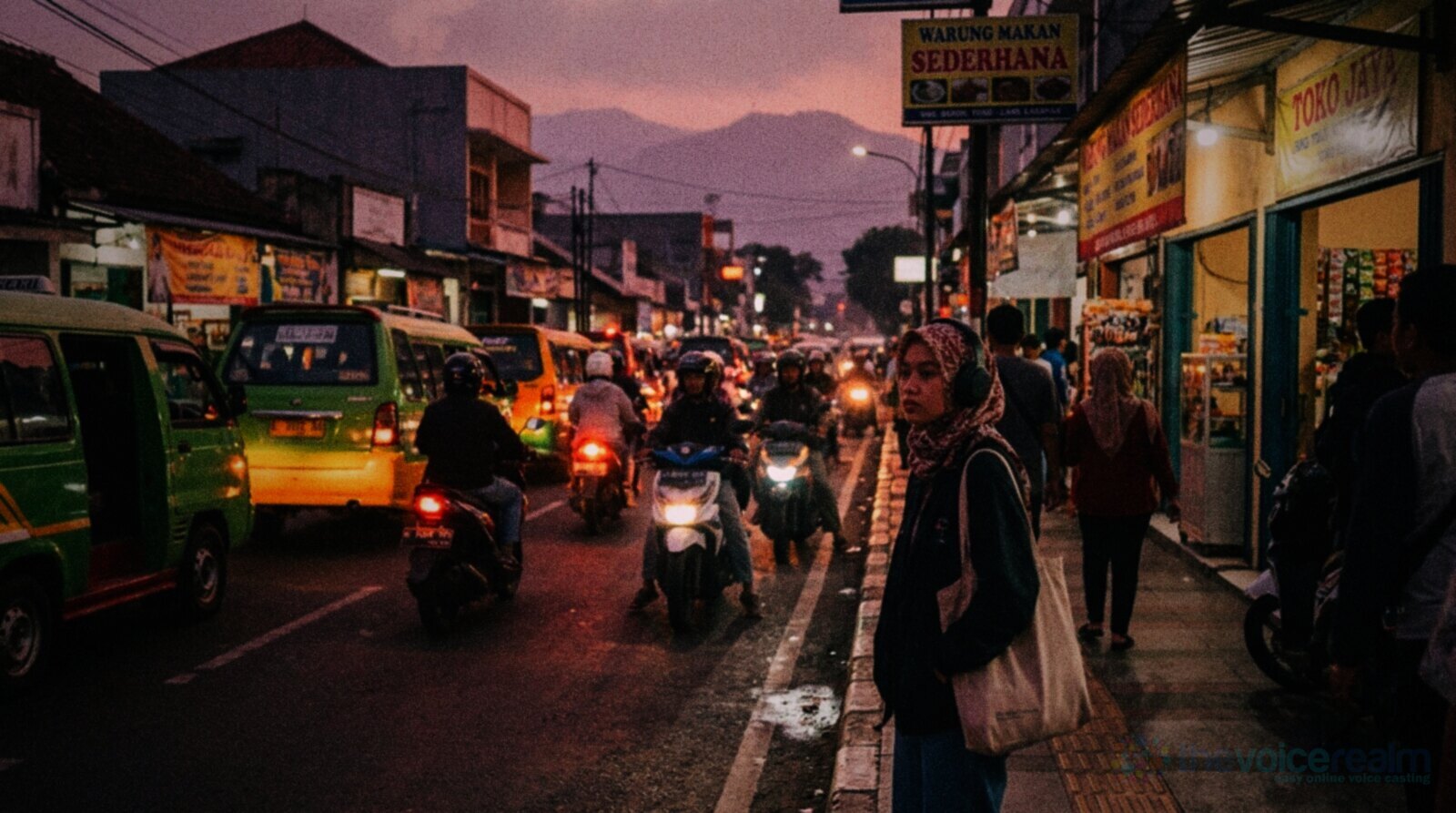
Most governments don’t know voice over exists as a job. Indonesia’s does, and this week its creative economy minister said so out loud. Speaking in Bandung on 15 October, Teuku Riefky Harsya confirmed that voice over is now one of the country’s official creative economy subsectors, written into the national plan alongside film, music, games and fashion. This piece is for voice actors anywhere who want to know what that kind of recognition means, and for anyone who works in Indonesian.
Here’s the short version. Indonesia has added voice over to the list of creative industries the state plans for, trains people for and measures. A talent programme run with a voice training school has already placed its graduates with more than 300 companies. And the government has spent the last two years talking with voice actors about royalties, certification and AI. Below is what was said, where it came from, and our read on why it matters well beyond Jakarta.
What the minister said in Bandung
The occasion was the kick-off of Road to Wonderful Voice of Indonesia 2026, held in the Damar auditorium at Telkom University in Bandung, West Java. The programme is run by Voice Institute Indonesia with the university, and the Ministry of Creative Economy backs it.
Riefky, who is both Minister of Creative Economy and head of the Creative Economy Agency, put the change in a single sentence. “So there are subsectors from fashion, culinary, crafts, games, apps, music, film, and now the addition is voice over,” he said, as reported by the national news agency ANTARA. The aim, he added, is “the expansion of opportunities for the voice over profession in industry.”
He also explained the event itself: “This activity is a space for developing voice over talent, dubbing, the creative industry ecosystem in Indonesia,” he told JPNN. Both quotations are our translations from Indonesian.
© The Voice Realm
Seventeen subsectors became twenty one
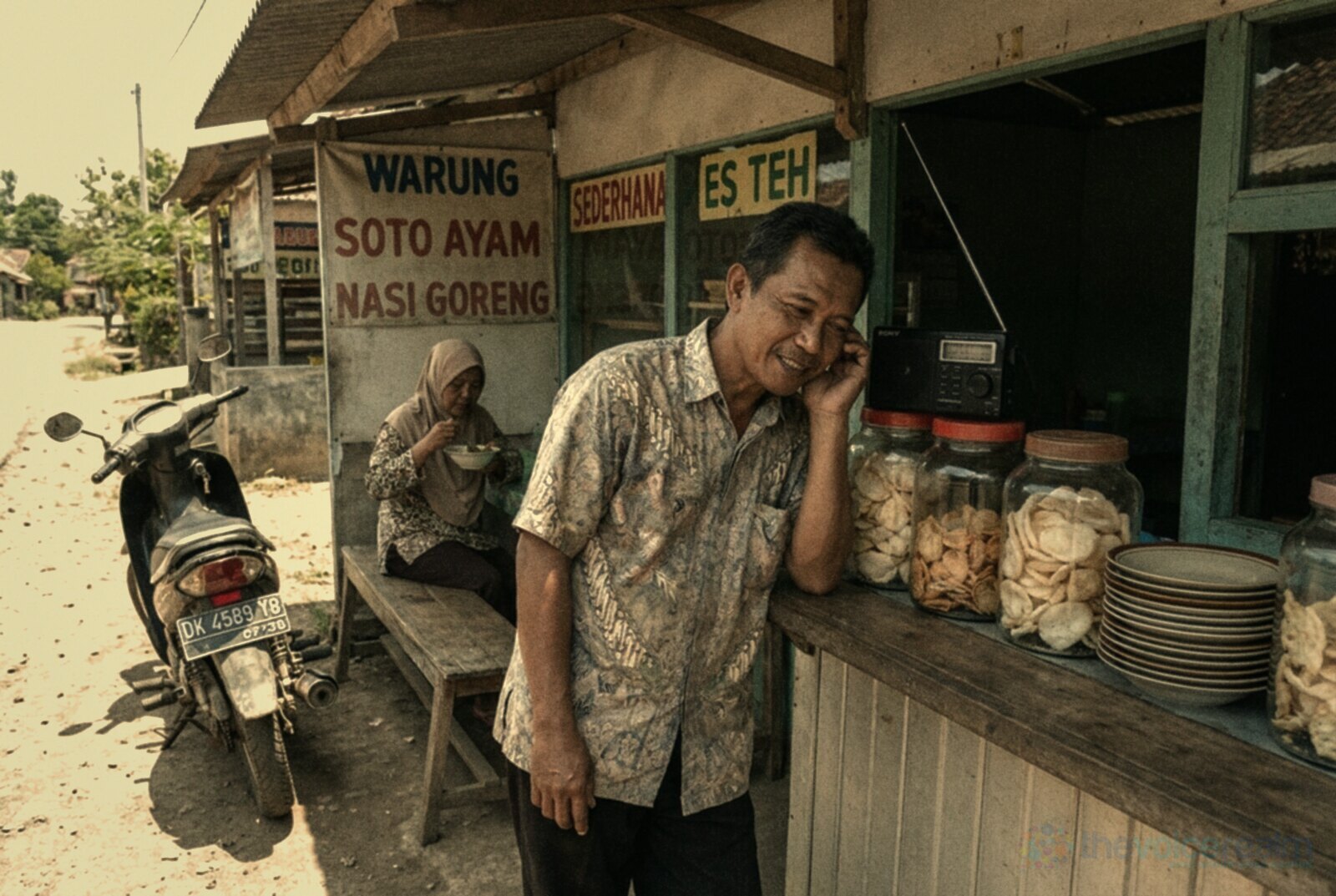
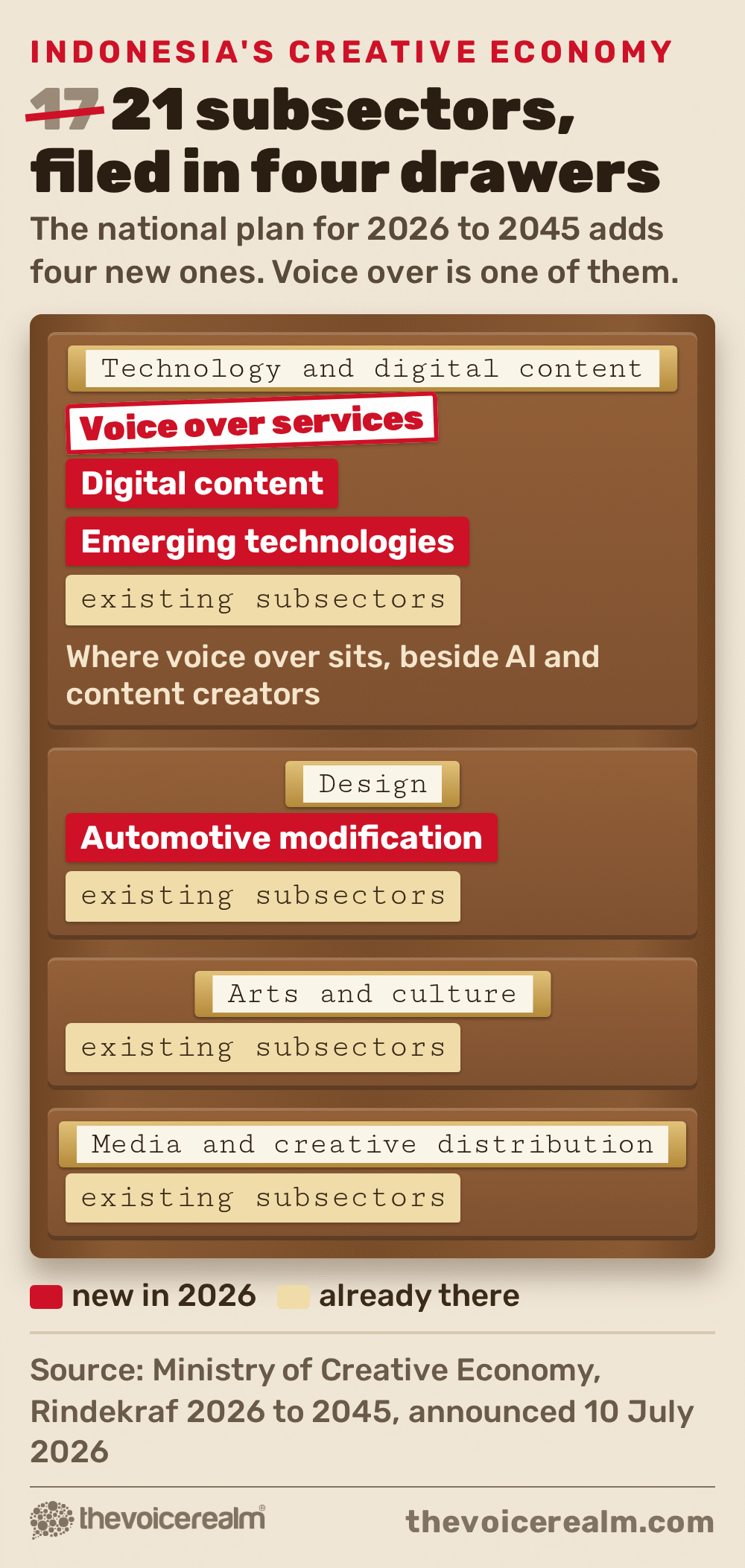
The recognition itself isn’t brand new; Bandung was where the minister put it in front of the people it’s for. It comes from the Creative Economy Master Plan for 2026 to 2045, known as Rindekraf, set out in a presidential regulation. When the ministry presented the plan in Jakarta on 10 July, it said Indonesia’s creative economy would grow from 17 subsectors to 21, with four newcomers: emerging technologies, digital content, voice over services and automotive modification.
Voice over sits in a cluster called technology and digital content, next to AI, digital media and content creation. The ministry’s own English summary says the voice over subsector “recognizes the increasing demand for professional voice talent across the audiovisual creative industry.” That’s a government using the phrase “professional voice talent” in a national economic plan, and it’s worth noticing.
© The Voice Realm
A talent pipeline that’s already running
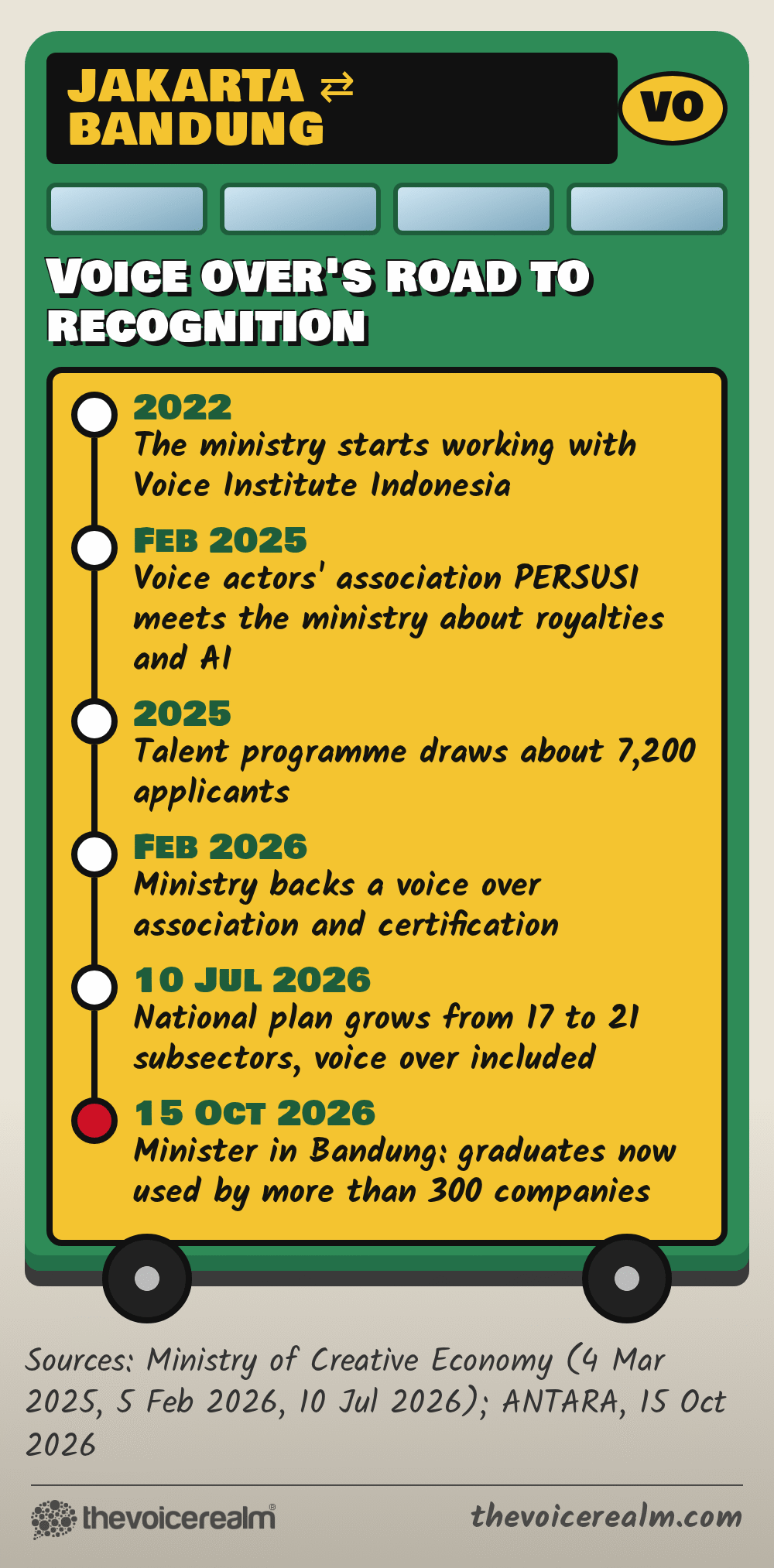
The minister was keen to show this isn’t only paperwork. He said the ministry has worked with Voice Institute Indonesia since 2022, and that Wonderful Voice of Indonesia recruits and trains new talent for industry. Graduates of the programme have been used by more than 300 companies for products and services, he said, and in 2025 the programme had about 7,200 applicants, who were then whittled down by curation.
- A line in the plan. Subsectors in Rindekraf get their own policy attention through to 2045, not a passing mention.
- Numbers. A subsector can be measured on its own, and work that’s measured is easier to fund and defend.
- Training with a route to work. The Bandung programme recruits, trains and connects people to companies that need voices.
- A seat at the table on pay and AI. The ministry has already met voice actors about royalties, contracts and the impact of AI.
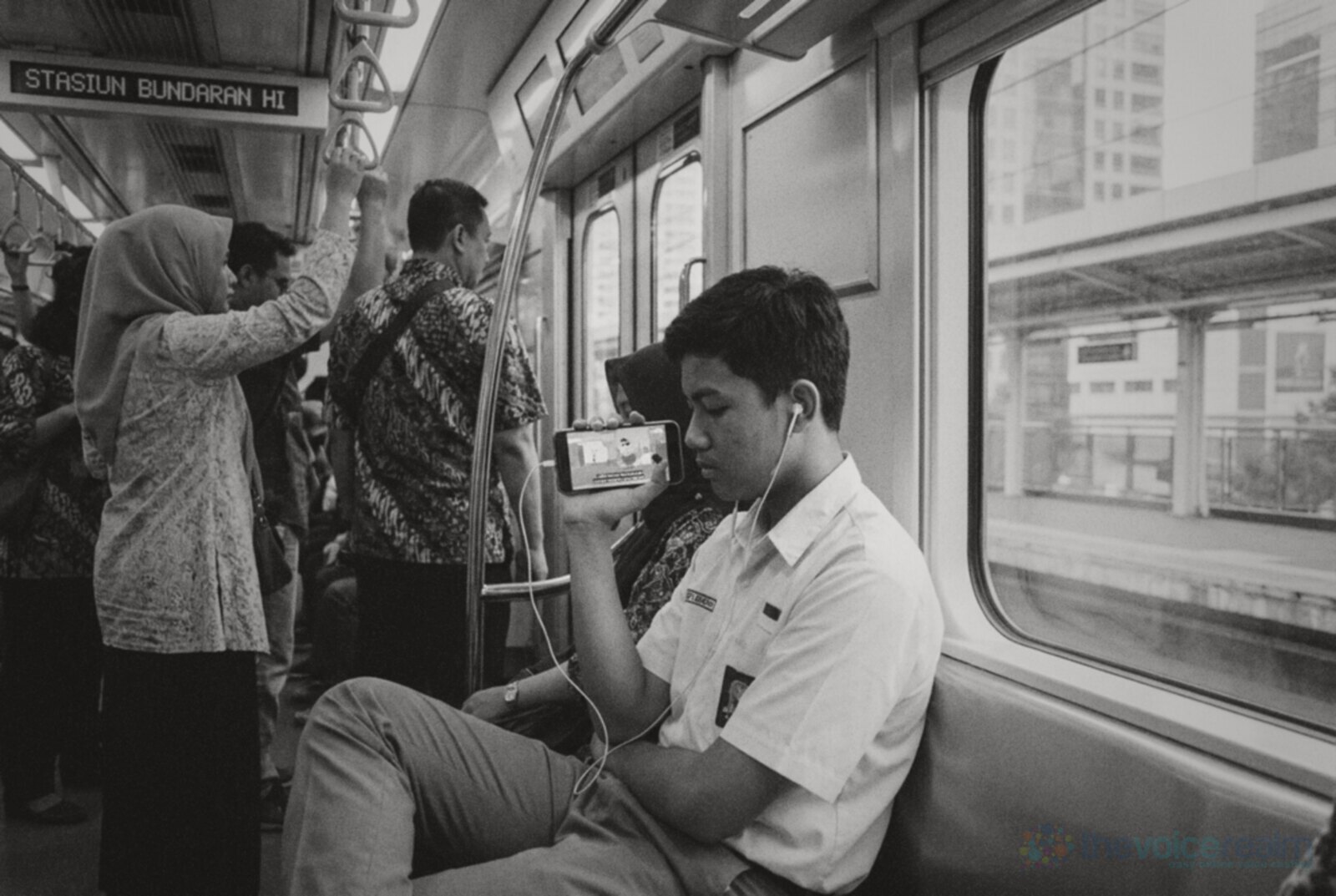
Earlier this year the ministry described where some of those voices went. In a February statement it named the Ministry of Trade, the state insurer Jasa Raharja and AirAsia among the organisations that had taken on alumni. At the same meeting, Deputy Minister Irene Umar backed the idea of a professional voice over association and talked about certification and access to “both national and global markets.”
© The Voice Realm
Royalties and AI were on the table first
This didn’t come out of nowhere. In February 2025 Deputy Minister Irene Umar met PERSUSI, the Indonesian voice over association, to talk about royalties and protections for dubbers. Her words then were unusually direct for a government statement: “We want to ensure that voice-over artists receive their rightful compensation, including fair royalties. Dubbers play a crucial role in the film and music industries, and they should be treated equally, just like background music or soundtracks in a production.”
 VOICEMASTERACADEMYFirst read to first booking.Twenty modules. The first one is free.Start free
At the same meeting, Agustini Rahayu, the ministry’s deputy for media creativity, said the government would look at how AI affects the industry and how rules could protect the people in it. “We will establish regulations on dubber earnings and anticipate the impact of AI in the industry,” she said.
None of that is law yet, and we’d be careful about reading too much into a meeting. But put the pieces in order and a pattern shows: talk about pay and AI in 2025, a training partnership that grows each year, recognition in the national plan in July, and the minister opening a university talent programme in October with the stated aim of widening the profession’s opportunities in industry.
© The Voice Realm
What it means for voice actors outside Indonesia
Everything from apps and e-learning to animation and streaming needs Indonesian voices, and the ministry’s own plan talks about increasing demand for professional voice talent. If you’re a native Indonesian speaker living abroad, this is a market with official backing and companies already used to hiring voices. Our rule of thumb never changes, though: clients want native speakers for their own language, so play to the language you grew up with.
For everyone else, the bigger story is the model. Most countries treat voice over as invisible, folded somewhere inside film or advertising. Indonesia has given it its own name in a national plan, tied it to training and jobs, and connected it to conversations about royalties and AI. That’s a template voice actors in other countries can point to when they talk to their own governments, unions and arts bodies.
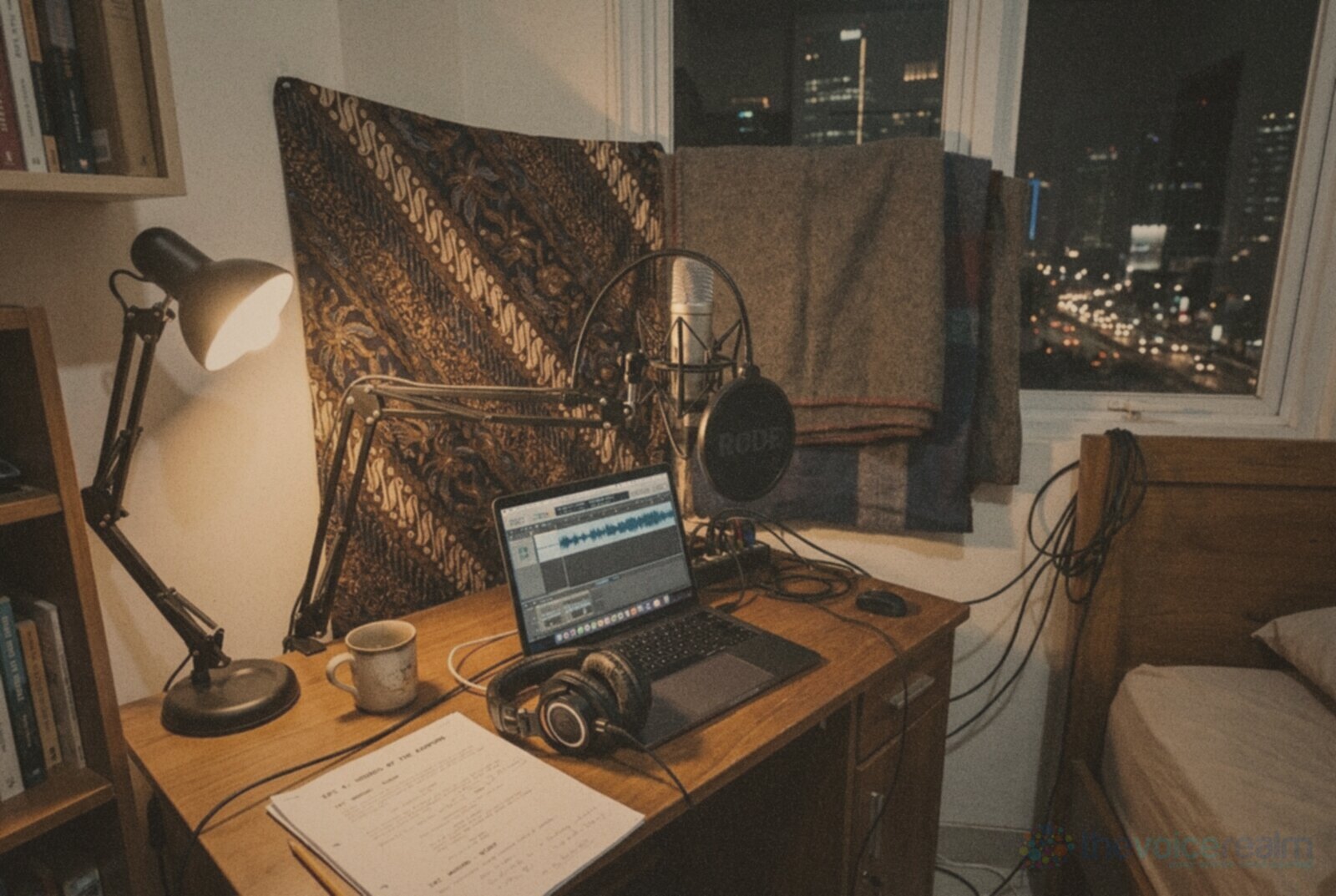
There’s a practical side too. A country that’s training thousands of new voices will produce a lot of beginners, and beginners all need the same things: a quiet room, decent technique and somebody to tell them the truth about their demo. If that’s you, wherever you are, start with our guide to treating a room on any budget and then where to sit at the microphone. Clients looking for a specific language can already browse voices by accent and language on our main site, and that’s where native voices tend to get found.
© The Voice Realm
Our take
We think this is quietly one of the most hopeful pieces of voice over news of the year. In a season full of stories about AI copies and disappearing jobs, a government of a very large country has done the opposite. It has looked at the people who voice its ads, apps and cartoons and said: this is a profession, we’ll plan for it, and we’ll train people for it.
Recognition isn’t the same as rates, and the hard parts are still ahead: royalties, contracts and rules on AI. But it’s a lot easier to fight for fair pay in a profession your government has already written into its plans. We’ll be watching what Indonesia does with the next nineteen years of Rindekraf, and we hope other countries are watching too.
Sources: “Kementerian Ekraf masukkan voice over dalam subsektor ekonomi kreatif”, ANTARA, 15 October 2026; “Kemenekraf Dorong Talenta Muda Menangkap Peluang Ekonomi Voice Over”, JPNN, 15 October 2026 (quotations translated from Indonesian); “Rindekraf Expands Indonesia’s Creative Economy to 21 Subsectors”, Ministry of Creative Economy, 10 July 2026; “Discusses Collaboration to Strengthen the Voice-Over Ecosystem”, Ministry of Creative Economy, 5 February 2026; “Deputy Minister of Creative Economy Receives PERSUSI Visit”, Ministry of Creative Economy, 4 March 2025.
Ready to get booked?
See the jobs open right nowAbout Sarah Robbins
Sarah Robbins writes for The Voice Realm about finding voice over work, home studios, casting and the business side of voice acting.