Blog

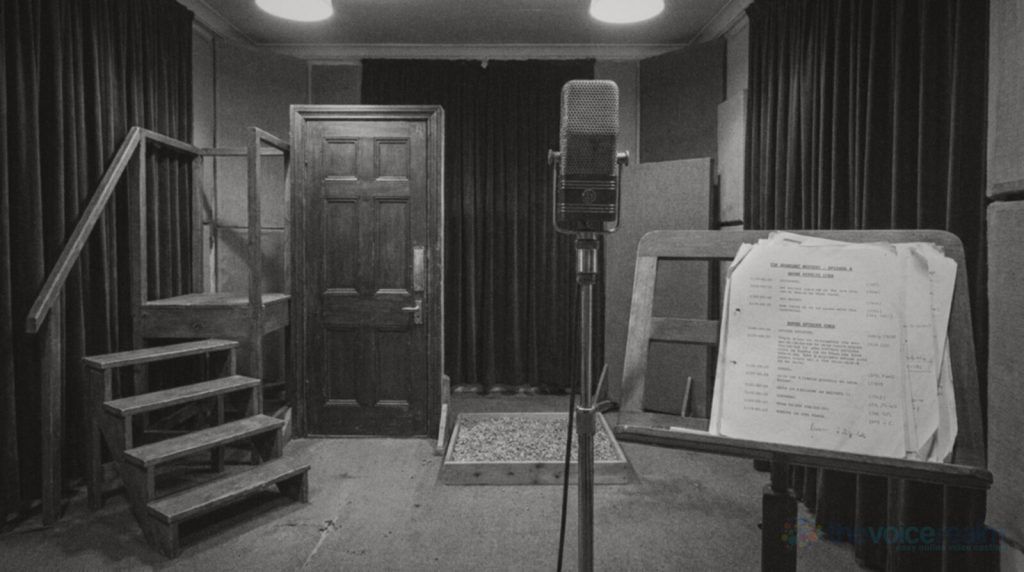
Voice actors whisper for a living more often than anyone outside the booth would guess. The horror narrator leaning in on the last line. The ASMR channel that runs for forty minutes. The game character crouched behind a crate. The bedtime story, the intimate perfume ad, the confession scene in chapter twelve of an audiobook.
So it’s worth asking a plain question: is whispering bad for your voice? Plenty of singers and actors have heard that it is. Others have been told to whisper instead of talking when they’re sick. This guide sorts out what voice doctors actually say, why the answer depends on the kind of whisper you use, and how to record whispered reads without paying for them the next morning.
A whisper feels gentle. Your larynx might disagree
When you speak normally, your vocal folds come together and vibrate as air passes between them. That vibration is your voice. A whisper is different. The folds don’t vibrate; air rushes through a partly open gap and the hiss you hear is turbulence, shaped into words by your mouth and tongue.
That sounds restful, and some whispers are. The trouble is that there are two ways to do it. A soft, breathy, low effort whisper keeps everything loose. A pushed whisper, the kind you use to reach the back row or to sound urgent, tends to bring the muscles around the larynx into the act. The space above the vocal folds squeezes in, and the whole structure works hard to make a sound that never gets very loud.
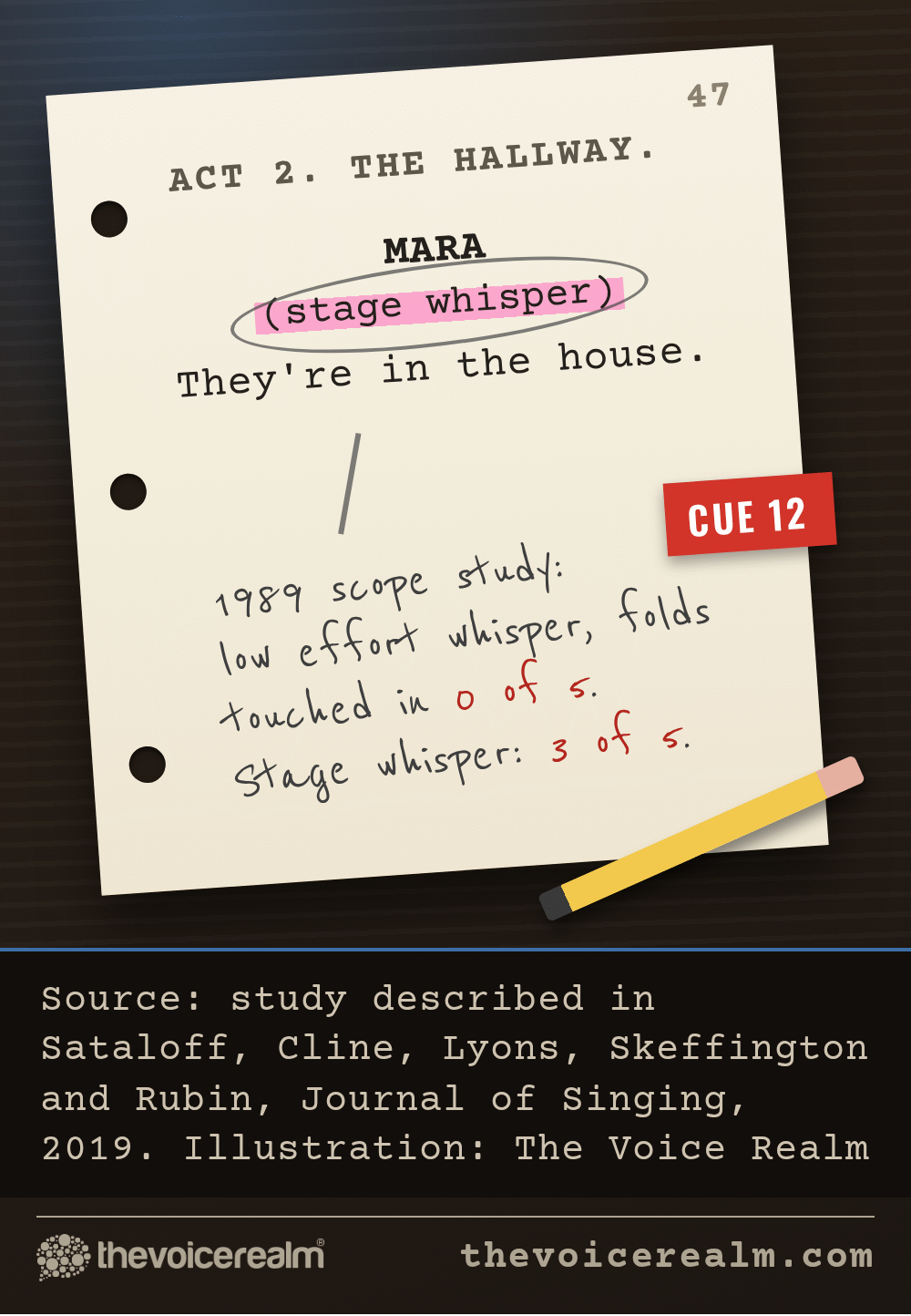
Voice specialists Robert T. Sataloff, Susan E. Cline, Karen M. Lyons, Jean Skeffington and Adam D. Rubin describe this in a review of voice rest for the Journal of Singing. Looking back at an earlier study of quiet whispering and stage whispering, they note that “subjects intermittently switched between the two modes of whispering without being conscious of their behavior.”
That last part is the real issue for voice actors. Nobody decides to push. You start soft, the director asks for a bit more urgency, and twenty takes later you’re stage whispering without having noticed the change.
© The Voice Realm
What voice clinics tell their patients
If you look up the standard advice, it’s fairly blunt. Cleveland Clinic’s page on laryngitis lists, among the things you can do to feel better: “Don’t whisper, as even that can aggravate your symptoms.”
After vocal fold surgery the rules get stricter still. UT Health San Antonio’s voice service explains that the usual prescription is a few days of complete voice rest and spells out what that means: “absolutely no talking, throat clearing, whispering, or coughing (if you can avoid it).”
The same Sataloff review goes further on the risk: patients on absolute voice rest “should be aware that whispering may result in vocal fold contact and is not an acceptable alternative to silence or soft verbal communication.”
Here’s the interesting bit, though. That review also reports what happened when the team examined a large group of patients with a flexible scope while they whispered. In most of them, whispering looked harder on the folds than ordinary speech. In some it didn’t, and in a few it looked healthier. Their conclusion is careful: “we are less certain than we used to be that whispering is contraindicated for all patients on voice rest.”
So the honest summary is this. A relaxed whisper isn’t automatically harmful. A pushed whisper often is the harder option, and you can slide into one without noticing. And when your voice is already sore, swollen or healing, the clinics’ answer is silence, not a whisper.
© The Voice Realm
Where voice actors whisper for a living
Whispered work turns up across almost every genre, and each one pulls you toward a different kind of whisper.
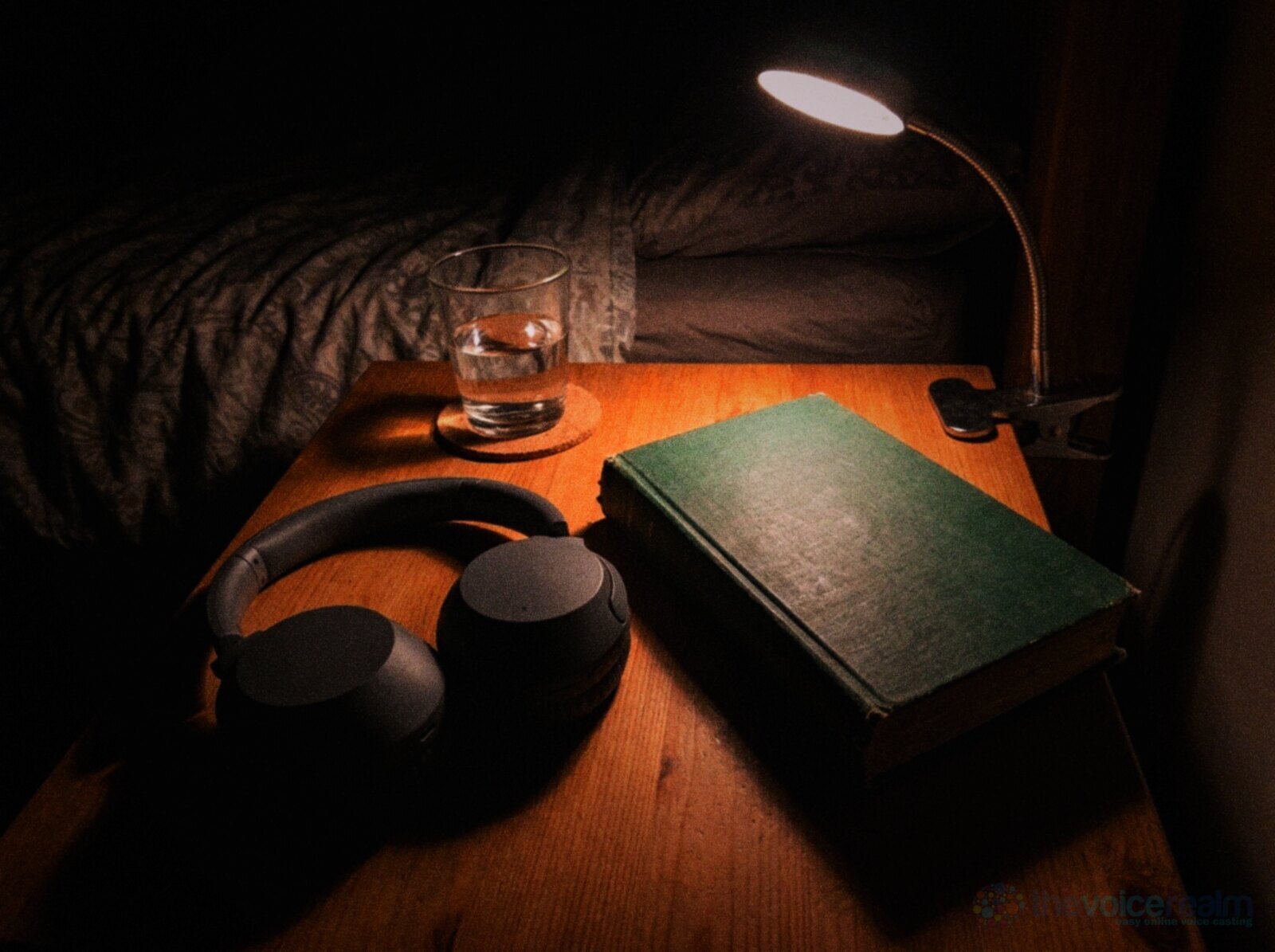
ASMR and sleep content is the gentlest in sound but the longest in duration. The read is soft and close, often for half an hour or more, and the temptation is to keep the mouth noises crisp by tightening up.
Horror, thriller and audiobook scenes ask for tension. A character hissing a warning in a dark hallway wants bite, and bite is where the push creeps in.
Video games give you stealth lines, wounded lines and breathy efforts, sometimes hundreds of them in one session, often straight after combat shouts.
Commercials and trailers use the close, confiding tone for perfume, cars, luxury goods and that last quiet line before the title card.
The stage whisper
Built to carry to the back row with no help. Lots of air, lots of effort, consonants hit hard. It’s the version that tends to squeeze the throat, and you don’t need it in front of a microphone.
The microphone whisper
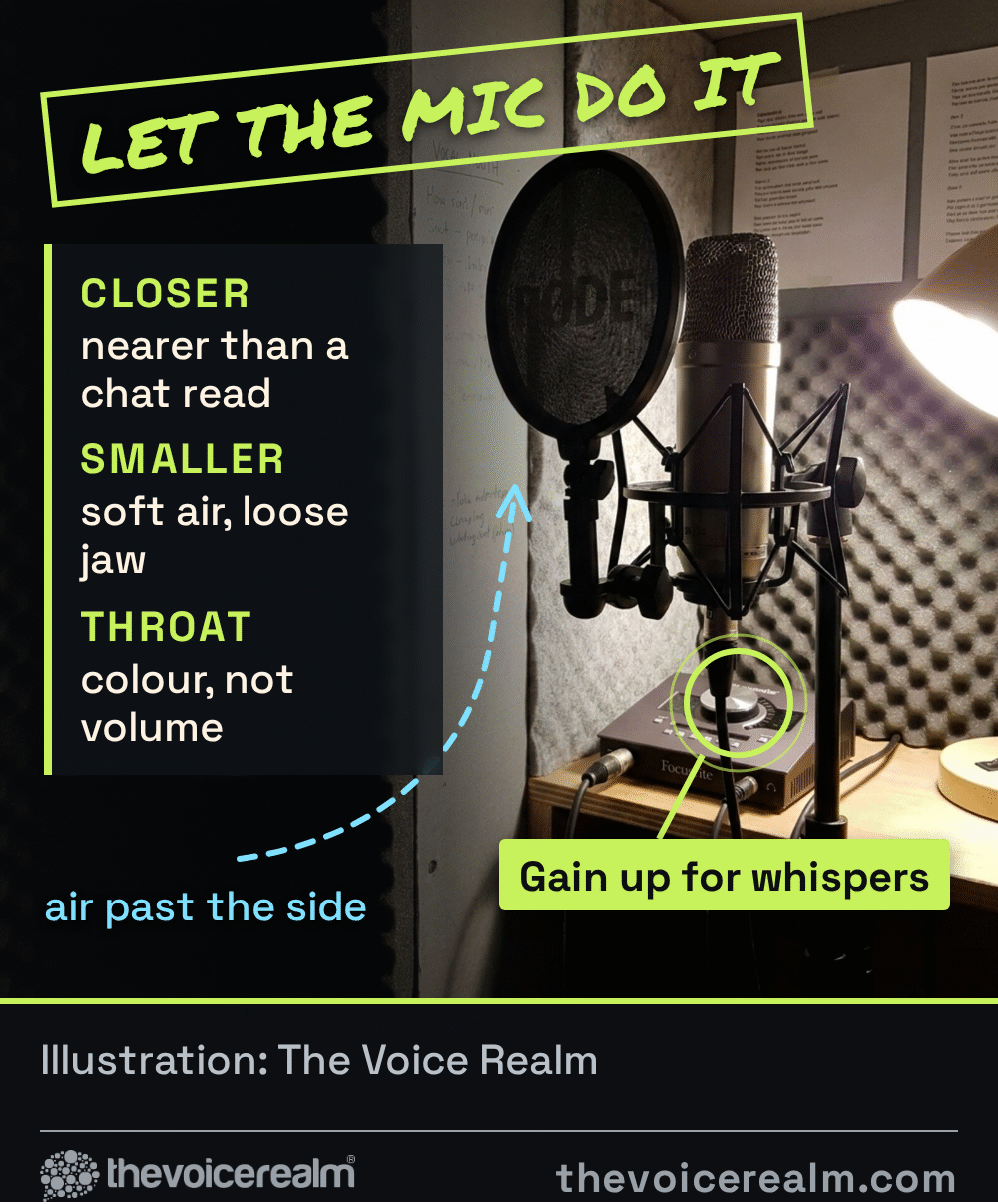
Small, loose and close. The microphone and the gain knob supply the size, so your throat only has to supply the colour. Same feeling for the listener, a fraction of the work for you.
The common thread is that a microphone changes the job. On stage, a whisper has to travel. In the booth, it only has to travel a few inches.
Let the microphone do the whispering
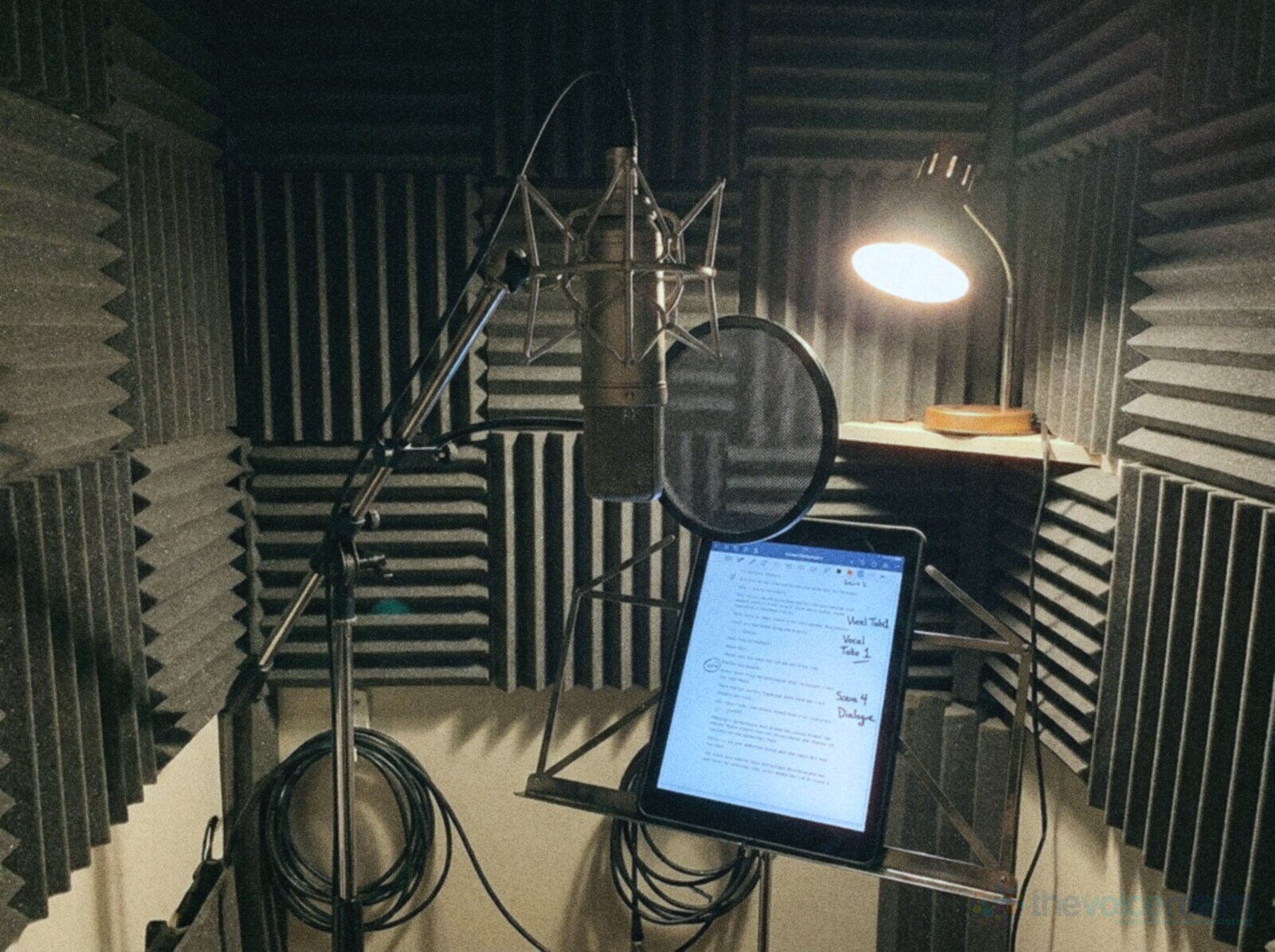
The single most useful habit is to stop asking your throat for volume. If a whispered read sounds too quiet, the fix is on the interface, not in your neck. Bring the gain up for the whispered scenes, and keep a separate, lower setting written down for your normal reads so you don’t clip the next loud line.
© The Voice Realm
Come in a little closer than you would for a conversational read, and angle your mouth so the stream of air passes the side of the capsule rather than hitting it straight on. Whispers are almost all air, and a direct blast turns every P and T into a thump. A pop filter helps, and so does turning your head a few degrees. If you want a refresher on distance and angle, our guide to working the mic at different distances walks through it.
 VOICEMASTERACADEMYLearn the craft in order.Module one is freeStart module oneTwenty modules, start to finish.
Check what the director really wants. A lot of scripts that say “whispered” are happy with a soft, breathy voice that still has a little tone under it. That’s often easier on you than a pure, unvoiced whisper held for a whole scene, and it cuts through music better too. Offer both and let them choose.
Keep the effort low and the face loose. Notice your jaw, tongue and shoulders between takes. If you can feel your neck working, you’ve drifted into the stage whisper. Reset with a yawn or a gentle sigh, then go again smaller.
And leave the polish for the edit. Whispers are full of S sounds, and a gentle de-esser will tame them far more kindly than trying to whisper “around” every sibilant.
Pacing a session full of whispers
A short whispered tag at the end of a spot won’t trouble anyone. A whole afternoon of whispered dialogue is different, and it pays to plan it like any other demanding session.
Group the whispered material where you can, and don’t stack it straight after a run of shouting or screaming. A tired, swollen voice is exactly the one the clinics want you to rest, so it’s the worst possible moment to start pushing air through it.
Take short breaks of real silence between blocks. Not chatting with the engineer in a whisper, not humming along to the playback. Silence. Keep water in the booth and sip it between takes. Whispers show off every click and smack, and a dry mouth makes far more of them.
Watch the take count. Twenty versions of a stage whispered line is a lot of high effort air. If a line isn’t landing after a handful of tries, ask for a note rather than grinding through more takes, or record it later in the session when you’re fresh.
For long ASMR or sleep recordings, set a timer and stop on it, even if the read is going well. It’s far easier to split one long piece into two recordings than to recover a voice you’ve squeezed for an hour.
© The Voice Realm
Hoarse already? Choose silence over a whisper
This is where the advice is clearest. If you wake up croaky, with laryngitis or the tail end of a cold, whispering to save your voice is the wrong instinct. Cleveland Clinic’s line is plain, and so is the reasoning: when the folds are already irritated, a pushed whisper can make them work harder, not less.
On a rest day, use a notepad, your phone’s notes app or text messages. Tell the people you live with in advance so they don’t keep asking you questions. If you must speak, a quiet, easy, natural voice at a short distance is generally kinder than a forced whisper across a room.
For bookings on a sick day, talk to the client early. Most would rather move a session than receive a strained read they have to replace. Our guide to recording when you’re under the weather helps you decide when to push on and when to reschedule.

© The Voice Realm
When to get your voice checked
Most hoarseness clears up on its own. But Cleveland Clinic advises talking to a healthcare provider if your voice stays hoarse for three weeks or longer, or if it’s getting worse despite treatment. The specialists who look after voices are ear, nose and throat doctors, and many voice clinics pair them with speech and language therapists who can teach you an easier whisper.
For voice actors, a few signs deserve attention sooner: your whispered reads used to feel easy and now leave your throat tight or aching, your speaking voice goes husky after whisper heavy sessions and takes a day to come back, or you’ve lost range at the top. Muscle tension in the neck is a common culprit for working voices, and our article on that tight, tired throat feeling explains what a voice clinic looks for.
The short version for the booth: whisper small, let the gear supply the volume, stop when it starts to feel like work, and when your voice is already hurting, say nothing at all.
Sources: Cleveland Clinic, “Laryngitis” and “Hoarseness”; UT Health San Antonio, “Post-Surgery Care: Vocal Rest”; Robert T. Sataloff, Susan E. Cline, Karen M. Lyons, Jean Skeffington and Adam D. Rubin, “Voice Rest”, Journal of Singing, May/June 2019.
Ready to get booked?
See the jobs open right nowAbout Sarah Robbins
Sarah Robbins writes for The Voice Realm about finding voice over work, home studios, casting and the business side of voice acting.