Blog

The John Lewis Christmas advert landed on Tuesday, and for once the line everybody is quoting doesn’t come from a famous face. It comes from a wooden toy. In “Gloria and Pickles”, the retailer’s 20th Christmas advert, a vintage pull-along dog springs to life and tells Dame Kristin Scott Thomas’s character exactly what he thinks of the cash she’s tucked into her grandchildren’s cards: “You can do better than cash”.
Pickles is voiced by Paul Whitehouse. This piece is for UK voiceover artists, and for the brands and agencies who book them, because a talking toy at the heart of a Christmas advert people genuinely look forward to is going to shape a lot of briefs between now and next December. Here’s our read on why it works, and what to do about it.
For once, the character gets the line
John Lewis has leaned on a cute character before. The Irish Times noted that this year’s advert “returns to a formula of using a cute character”, naming Monty the penguin in 2014 and Buster the boxer in 2016. Both of them told their stories without saying a word. Monty had music and a little boy; Buster had a trampoline and some very surprised foxes.
Pickles is different. The story turns on a spoken line. Gloria is writing her Christmas cards, slipping notes inside because she isn’t confident she’ll choose the right present, and it’s the toy’s voice, not a look or a song, that pushes her out of the door on a last-minute hunt through London. In the release’s words, he “berates her lack of effort”. The whole plot hinges on how that telling-off sounds. Too harsh and he’s a bully; too soft and nobody moves.
That’s a big job for a few seconds of audio, and it’s the kind of job voiceover artists do every day: one line, one character, and the audience has to believe it instantly.
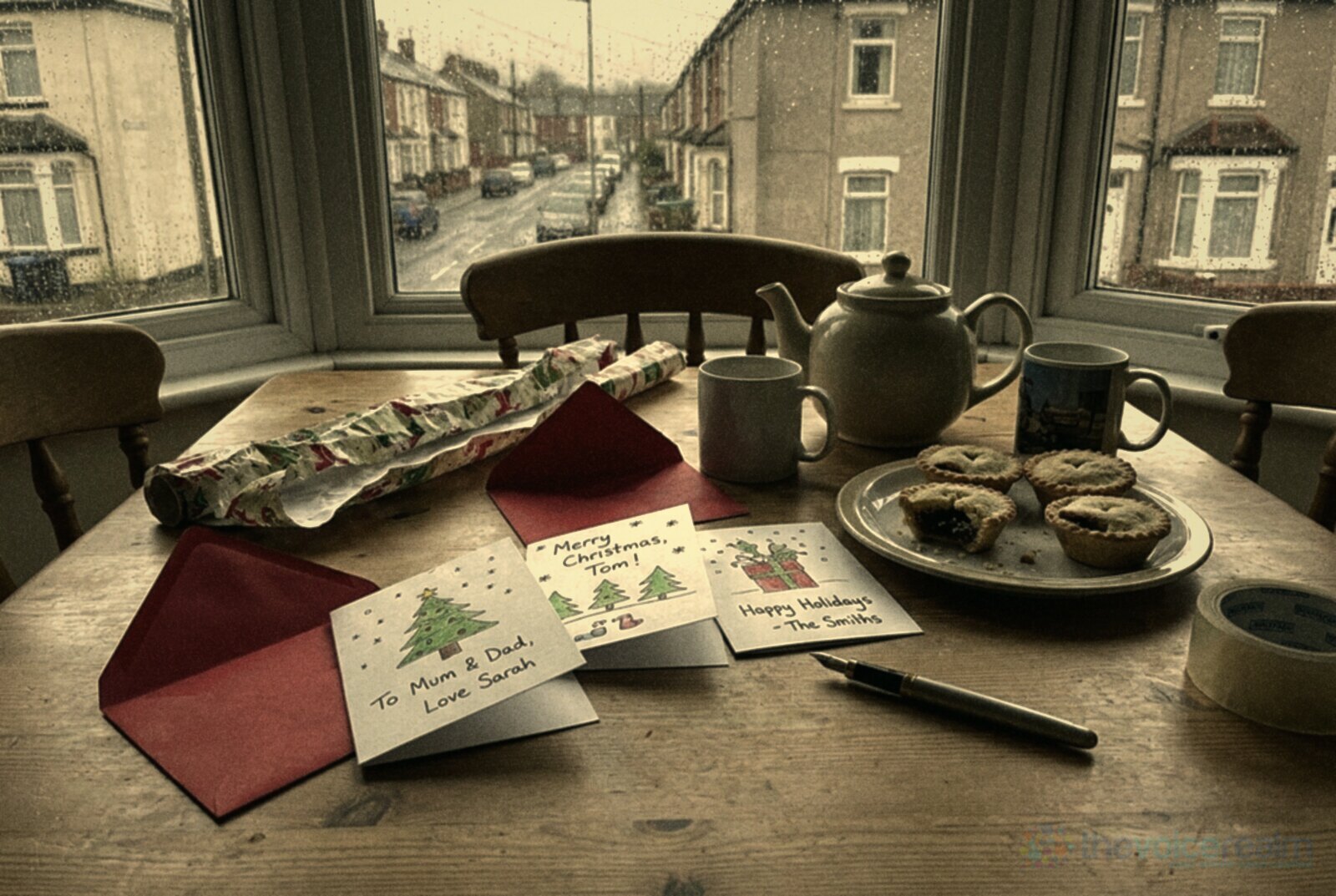
© The Voice Realm
A wooden face can’t act, so the voice has to
Here’s the technical problem with a talking toy. It has painted eyes and a carved snout. It can’t raise an eyebrow, it can’t soften its gaze, and it can’t give you a sideways look to let you know it’s joking. Everything an actor’s face normally does has to move into the voice.
That’s why casting a comic performer with a long history of characters makes sense. Saatchi & Saatchi’s chief creative officer, Franki Goodwin, described the cast as “a Dame, a record-breaking artist, and an enduring wooden toy”. The toy only gets to be one of those icons if the voice gives it an age, a temper and a heart in the space of a sentence.
The trap with any talking toy is to play it as a cartoon. A pull-along dog that has sat in an attic for decades should sound like it has opinions about that. Grumpy, fond, a bit put out, and absolutely sure it knows best.
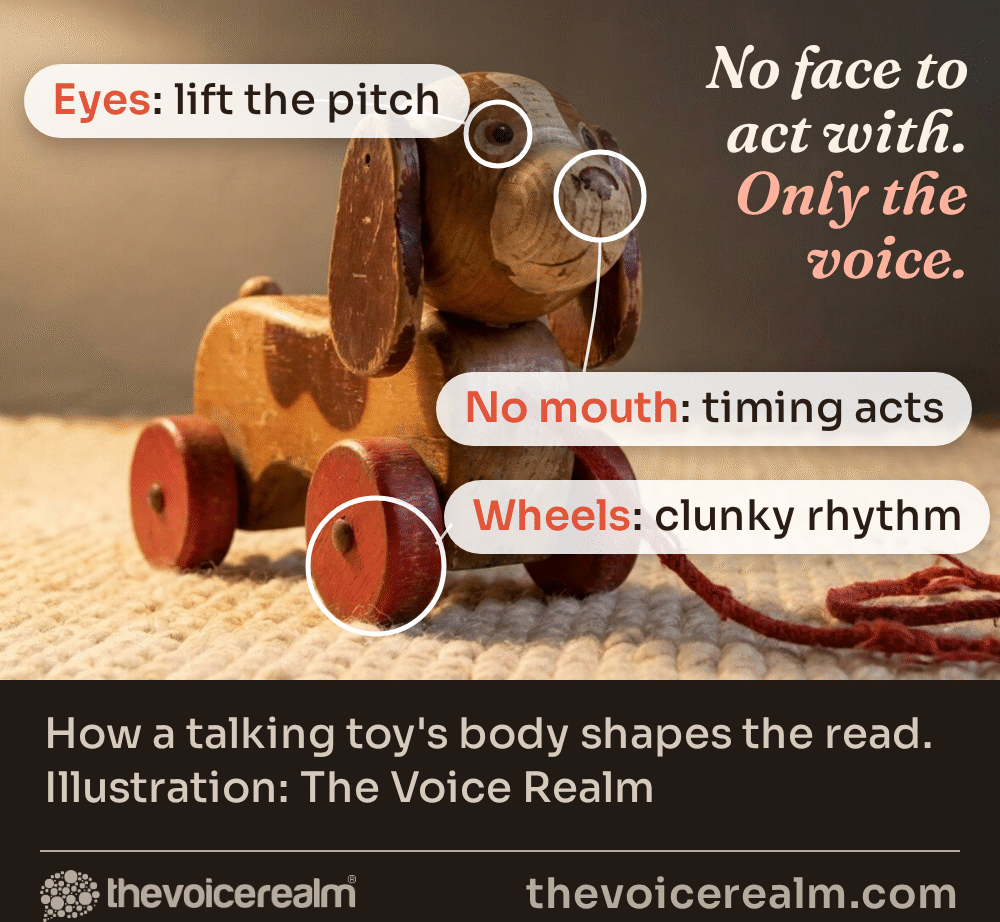
© The Voice Realm
Twenty years of adverts, and a very long tail
The three-minute film went out on John Lewis’s social channels at 7.30am on Tuesday, before a 60-second version had its TV premiere in the ad breaks during Coronation Street on ITV and The Great British Bake Off on Channel 4, according to the Irish Times. From there, the release lists a long run across streaming TV, video platforms and social, “supported by a fully integrated mix of social and digital activity”, including behind-the-scenes content and interviews with the cast. Pickles included.
That last part matters. A character who talks doesn’t stop talking after launch night. There are shorter cuts to voice, social clips, in-store moments, maybe radio. Once a brand has a speaking mascot, it needs that voice again and again, often at short notice and in lengths that never make the press release.
There’s a craft point hiding in that 60-second cut, too. A story that breathes over three minutes has to be squeezed into one for television, and the lines that survive the edit are the ones that do the most work in the fewest words. “You can do better than cash” is five words. It sets up the problem, the character and the joke at once. Writers love a line like that, and so do editors, but it only survives if the read lands it the first time you hear it.
“I’ve definitely resorted to putting cash in an envelope for fear of getting it wrong.”
Rosie Hanley, Marketing & Loyalty Director, John LewisPost this quote
The retailer’s marketing director, quoted in the Irish Times, said the company wanted the advert “to be more joyful” this year because “things are tough for lots of families”. Joy is a sound before it’s a picture. You hear it in the timing of a line, the little lift at the end of a word, the pause before the punchline. That’s voice work, whoever’s doing it.

© The Voice Realm
The briefs that will follow
Every big Christmas advert sets off a wave of imitators, and they rarely land in the same year. They land in the next round of briefs: a building society wants its piggy bank to talk, a garden centre gives a gnome a personality, a regional bakery chain decides its gingerbread man has things to say. Smaller brands can’t hire a household name, so they go looking for someone who can do the same job.
 VOICEMASTERACADEMYLearn the craft in order.Module one is freeStart module oneTwenty modules, start to finish.
The advert has a regional lesson in it as well. Sam Fender recorded the soundtrack’s children’s choir, in his words, “with the kids from my old school, John Spence Community High School”, and “arranged a brass section with the Easington Colliery Band”. That’s a national retailer choosing a sound with a real place behind it. Expect the copycats to notice. A brand in Newcastle, Cardiff or Belfast that wants its talking mascot to sound like home will be asking for exactly that, and a local accent with good comic timing is a hard thing to fake.
That’s where character voices for adverts come in, and where a lot of UK voiceover artists will find extra work over the next year. The brief will rarely say “do a Pickles”. It’ll say “warm but cheeky”, “older, a bit grumpy, lovable”, “a toy with attitude”. Some will want the gravel and comic timing that male voiceover artists with years of character work bring; plenty of others will be cast against type, because a bossy teapot or a sarcastic snow globe works just as well in a woman’s voice.
Here’s roughly what one of those briefs tends to look like once an agency has written it up.
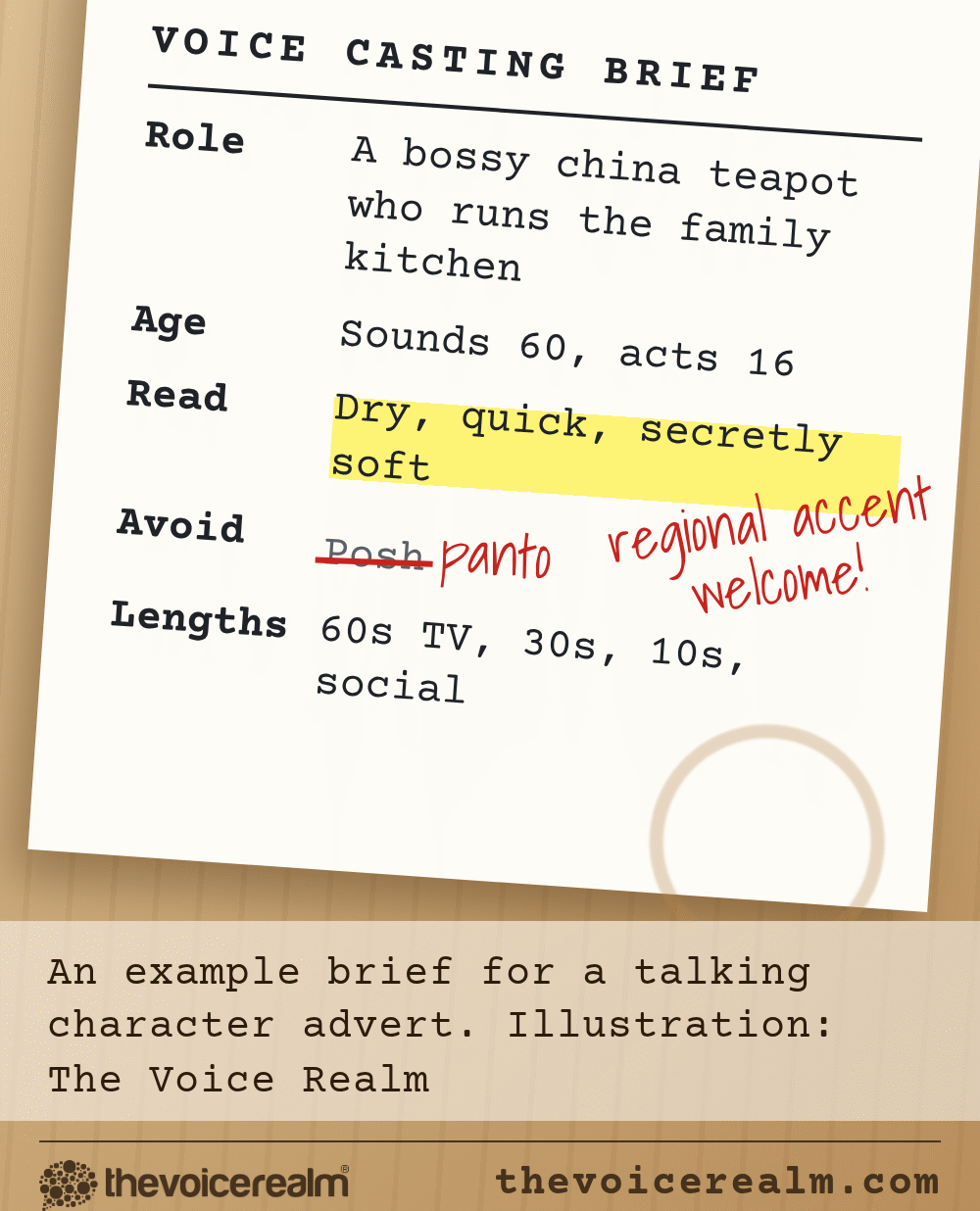
© The Voice Realm
How to build a voice for an object
If you want to be ready for those auditions, start practising now. Give yourself an object from around the house and build it a voice properly, rather than reaching for a funny squeak. We’ve covered the basics in our guide to building character voices, but objects have a few quirks of their own.
- Start with what it’s made of. Wood, china, tin and plush all suggest something different. A heavy object might speak slowly; a wind-up one might rattle along in bursts.
- Decide how old it is and how it feels about that. A toy that’s been in an attic for fifty years has a grievance. One fresh out of the box is excited about everything.
- Work out who’s in charge. Pickles bosses a grown woman about. Status is the quickest way to make a character funny, and it lives in the pitch and the pace, not the accent.
- Keep it truthful. The best character reads still sound like a person thinking. Our piece on voicing characters without doing a cartoon applies just as much to a talking toy as to a novel.
- Record three takes and pick the quietest. The instinct with comedy is to push. Nine times out of ten, the take where you trusted the line is the one a director keeps.
Then put the best one on your website and your demo. Clients buying a character voice want to hear a character, not be told you can do one.

© The Voice Realm
For brands booking a talking character
A few practical notes for anyone writing a brief like this. Cast the voice before you finalise the animation or the puppet, because a good character voice will change how the object should move. Ask for a couple of different directions in the audition, cheeky and gentle, so you can hear the range. And think about the long tail from the start: if the character works, you’ll want the same voice for next year’s spots, in-store audio and social clips, so agree the usage up front.
Many agencies still like to sit in on a session, and working with voiceover artists based in London makes that easy, although most character sessions now run perfectly well with the director on a call and the artist in their own booth anywhere in the country.
Our take
It’s easy to watch a Christmas advert like this and see the stars: a Dame, a chart-topping singer, a director with a BAFTA. All deserved. But the moment that turns the story is a wooden dog with a grumpy line, and that moment is pure voice acting. No face, no costume, just timing and character.
For UK voiceover artists, the lesson isn’t to imitate it. It’s to notice what the brands are buying. They want warmth, a bit of mischief, and a voice that can make an object feel like a member of the family. That’s a skill you can practise this week with a teapot and a phone. By the time next year’s briefs arrive, you could have the read they’re looking for, and a demo that proves it.
Sources: “‘Don’t give up on giving’: John Lewis unveils its 2026 Christmas advert”, John Lewis Partnership, 3 November 2026; “John Lewis Christmas advert 2026 stars Kristin Scott Thomas as glamorous granny on a gift hunt”, The Irish Times, 3 November 2026.
Ready to get booked?
See the jobs open right nowAbout Sarah Robbins
Sarah Robbins writes for The Voice Realm about finding voice over work, home studios, casting and the business side of voice acting.