Blog
Voice acting
Gravel Before Breakfast: Getting Past Morning Voice Before a Session
Why your voice sounds rough first thing, what the research really says about it, and a first hour that gets you to the mic sounding awake.
Why your voice sounds rough first thing, what the research really says about it, and a first hour that gets you to the mic sounding awake.
What straw phonation does for a tired voice, which straw to pick, the straw in water version, and a five-minute routine that fits around a recording day.

Why good readers go flat in the booth, why the shape of a line matters more than how high you pitch it, and five drills that bring a read back to life.
Why improv training helps voice actors in real sessions, what research says about nerves, how to pick a class, and drills to try alone.
What the research says about vaping and your vocal folds, from lab tissue to a survey of teens, and a practical plan for voice actors who vape.
What voice clinics say about whispering, why a stage whisper strains more than a soft one, and how to record whispered reads without paying for it later.
Why a voice actor's throat goes tight and tired, the signs of muscle tension dysphonia, when to see a voice clinic and what voice therapy involves.
Most voice actors warm up and hardly any cool down. What the research says a vocal cool-down does, and a five minute routine to end every session.
Mic positions, moves, spot effects, script mark-up and listening: how voice actors play a scene in audio drama, radio plays and fiction podcasts.
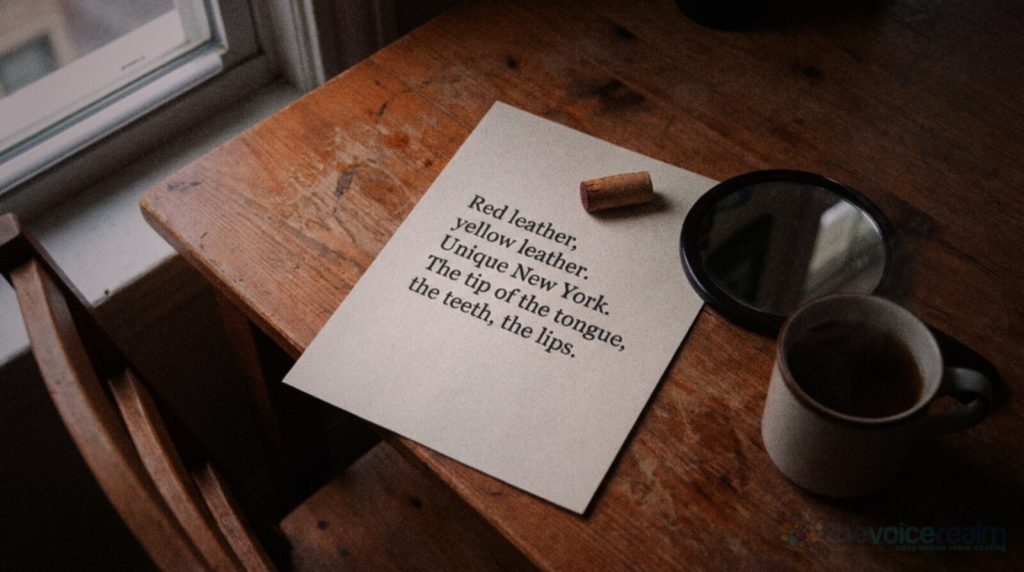
Clearer voice over without the robot: loosen the jaw, tongue and lips, the drawl drill, tongue twisters done right, the cork, and finishing your endings.