Blog
Voice Over Studio
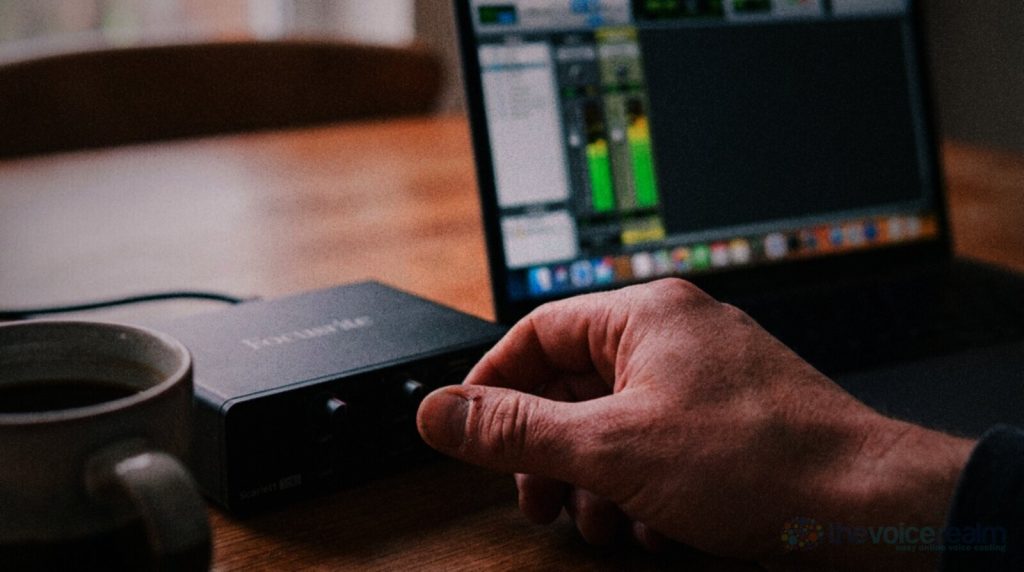
Record Quieter Than You Think: Gain and Levels for Voice Over
Where your gain knob should sit, what the meter colours mean, why peaking at minus six beats chasing zero, and what to do with a take that clipped.
Where your gain knob should sit, what the meter colours mean, why peaking at minus six beats chasing zero, and what to do with a take that clipped.
Shaky voice, dry mouth, racing heart? What audition nerves do to your sound, and the simple, research backed tricks that turn them into energy.

Tripped on a line? Punch and roll lets you back up, read along and carry on in one clean take. How to set it up and make the joins disappear.
Listeners really can hear a smile, and their own faces answer it. What a smile does to your sound, how to make it real and how much each job wants.
Real speakers, word families, the tune and the mouth shape: a four week home plan for an accent that holds up through a whole voice over session.
What vocal fry is, how listeners judge it, whether it harms your voice, and how to lift the ends of your lines or keep the creak on purpose.
Medical narration and pharma ads: how drug names are built, how to prep a pronunciation sheet, and what US rules say about the side effects read.
Handed a script you've never seen? How cold reading works, drills that keep your eyes a phrase ahead, and how to recover from a stumble.
Explainer videos need a voice that makes the complicated sound simple. How to pace, mark up and deliver the read clients keep booking.
Harsh S sounds in your recordings? Fix sibilance at the mouth, then the mic, then the edit, in that order, and never end up with a lisp.