Blog

Voice acting
That Creak at the End of Your Lines Is Vocal Fry
What vocal fry is, how listeners judge it, whether it harms your voice, and how to lift the ends of your lines or keep the creak on purpose.
What vocal fry is, how listeners judge it, whether it harms your voice, and how to lift the ends of your lines or keep the creak on purpose.
Medical narration and pharma ads: how drug names are built, how to prep a pronunciation sheet, and what US rules say about the side effects read.

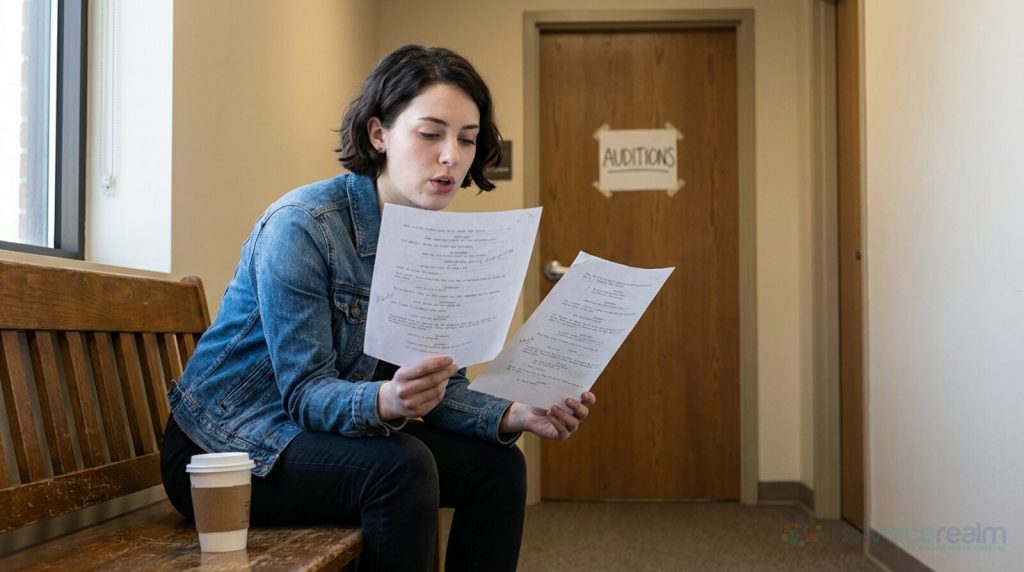
Handed a script you've never seen? How cold reading works, drills that keep your eyes a phrase ahead, and how to recover from a stumble.
Explainer videos need a voice that makes the complicated sound simple. How to pace, mark up and deliver the read clients keep booking.
Harsh S sounds in your recordings? Fix sibilance at the mouth, then the mic, then the edit, in that order, and never end up with a lisp.
Phone menus, on-hold messages and stitched numbers: how to read, record and deliver IVR prompts that still sound right on a real phone line.
Sample rate, bit depth, WAV or MP3, peaks and LUFS: what a voice over spec sheet means, and the safe settings to send when the client gives none.
A ten-minute vocal warm-up for voice actors: body, breath, straw bubbles, lip trills, sirens and diction, plus what voice clinics say about each step.
Where to look when a name stumps you, which sources to trust, how to write a pronouncer you can read at speed, and how to keep a pronunciation log.
How many words fit in a 30 or 60 second spot, why pace changes from job to job, and what to do when a script runs long. With a worked example.