Blog
Blog

If you’re a working voice actor, you’ve probably paid for at least one voice over marketplace, and wondered whether it was money well spent. Three sites come up in nearly every conversation about online casting: Voices.com, Voice123 and The Voice Realm. Call them the big three. They look alike from a distance. Up close, they’re built on very different ideas about who should get in, who sets the price, who chases the payment and, lately, what the business is even for.
We run one of the three, so read this knowing where we sit. Everything we say about the other two is taken from their own pages, their press releases and the Internet Archive, dated and listed in the Sources at the end, so you can check every word.
The big three at a glance
Here’s the short version. The detail, and the evidence, follows.
Who gets in, and why clients care
Both of the other two let anyone join. Voices.com’s talent page invites you to “create a free, search-optimized Voices profile” and calls its free tier “a risk free way to get started on the platform” with “a zero dollar entry fee”. Voice123’s own guide says actors “can sign up on Voice123 by creating a free voice actor profile”, and its membership page puts it plainly: “All voice actors start with a Free membership.” Neither describes any check on the voice or the studio before you’re in.
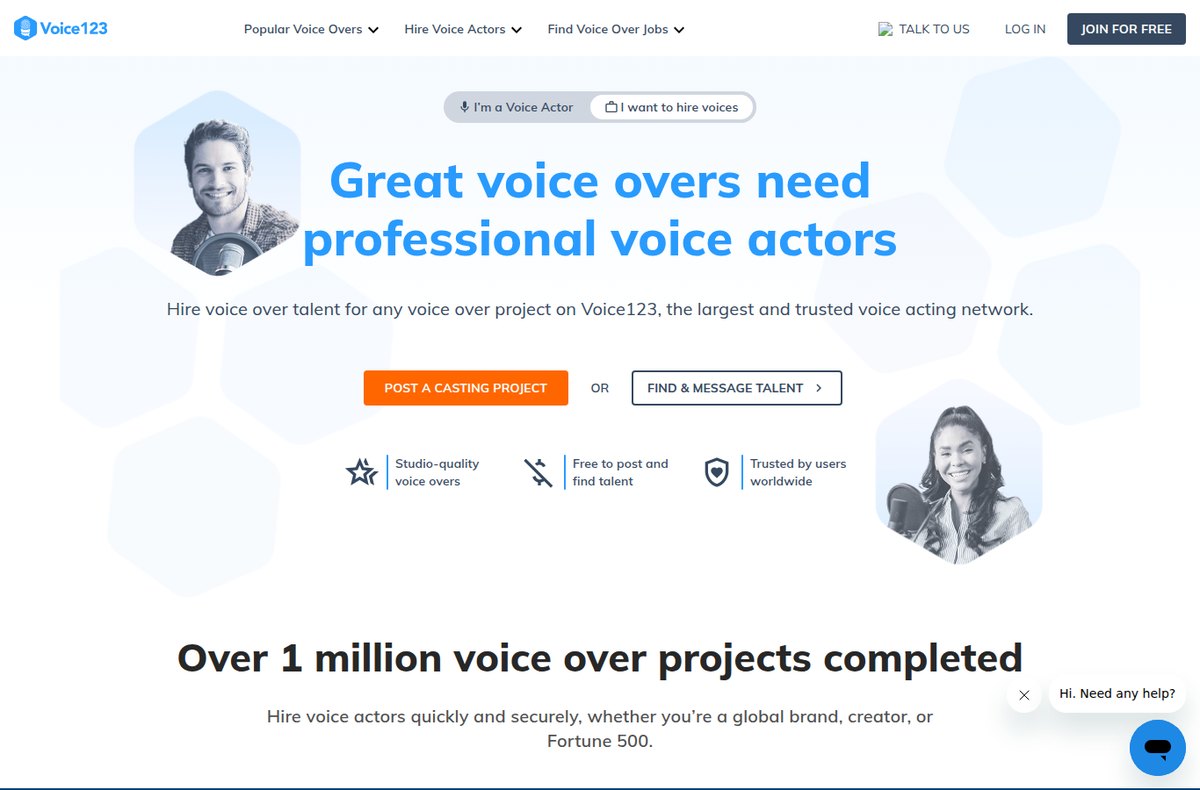
Voice123’s homepage today, with “Join for free” top right. Screenshot: Internet Archive, 25 Sep 2026.
That sounds generous to actors, and it is, on the way in. The trouble lands on the client. When anyone with an email address or a credit card can join, a single job can draw a flood of auditions, and the client has to wade through all of them to find the few that are usable. Some of those auditions come from untreated rooms. Some come from people who have never taken direction. Every one costs the client time, and clients don’t stay where hiring a voice is hard work.
The Voice Realm works the other way round. You send a dry demo, a person listens, and we turn a lot of applicants down, usually for sound quality, a lack of real booked experience, or not taking direction. Only then do you join. The result is a shorter list that a producer can book from with confidence, and that’s what keeps clients coming back to the actors on it. If you want the longer version of that argument, we laid it out in how to choose a marketplace before you join.
How many of the jobs that match you actually reach you
This is the difference most actors don’t see until they’ve paid. When a site lets anyone join, it ends up with far more people calling themselves voice actors than any client could ever listen to. So the site rations the jobs, and an algorithm decides which of the actors who match a casting actually hear about it.
Voice123 is open about this. Its plans page sells access to “50% of matching projects” on its Pro plan, 65% on the next plan up and 80% on Elite, and adds that the “percentages are based on averages from the past 12 months and cannot be guaranteed.” Its help page tells free members they’ll be invited “after paying members have been invited and if the project still requires more auditions.” Invitations go out in stages, and the second stage is decided by “a combination of a voice actor’s membership level and ranking score”.
Put that into a working day. Say 20 castings come in that match your gender, age and language. On a Pro plan, Voice123’s own average says you’d see about 10 of them. On Elite, its most expensive plan, about 16. On a free account, whatever is left once the paying members have had their turn.
Voices.com draws the line at the door. Its free Guest membership gets “private invitations to jobs from clients who find you while searching the Voices website”, and no matched jobs at all. Premium offers to “access and reply to jobs that best match your profile”. Which jobs count as your best match is the site’s call, not yours.
At The Voice Realm, there’s no ration. Every voice actor on the roster gets every casting that matches their age, gender and language. Twenty matching castings today means twenty in your inbox. That only works because we screen who joins: a list of professionals can hear about every job without burying the client in auditions.
Voices.com’s front page tells you where it’s heading
A homepage is where a company puts what it most wants to sell. In October 2024, the Internet Archive’s copy of voices.com had the title “#1 Voice Over Marketplace to Hire Voice Actors” and the headline “#1 Marketplace For Voice Over”. The first sections were about finding and hiring a voice actor. AI voices came third. About a third of the way down sat “Browse Top Talent”, a showcase of named voice actors with their star ratings, review counts and demos, and it ran for well over a third of the page.
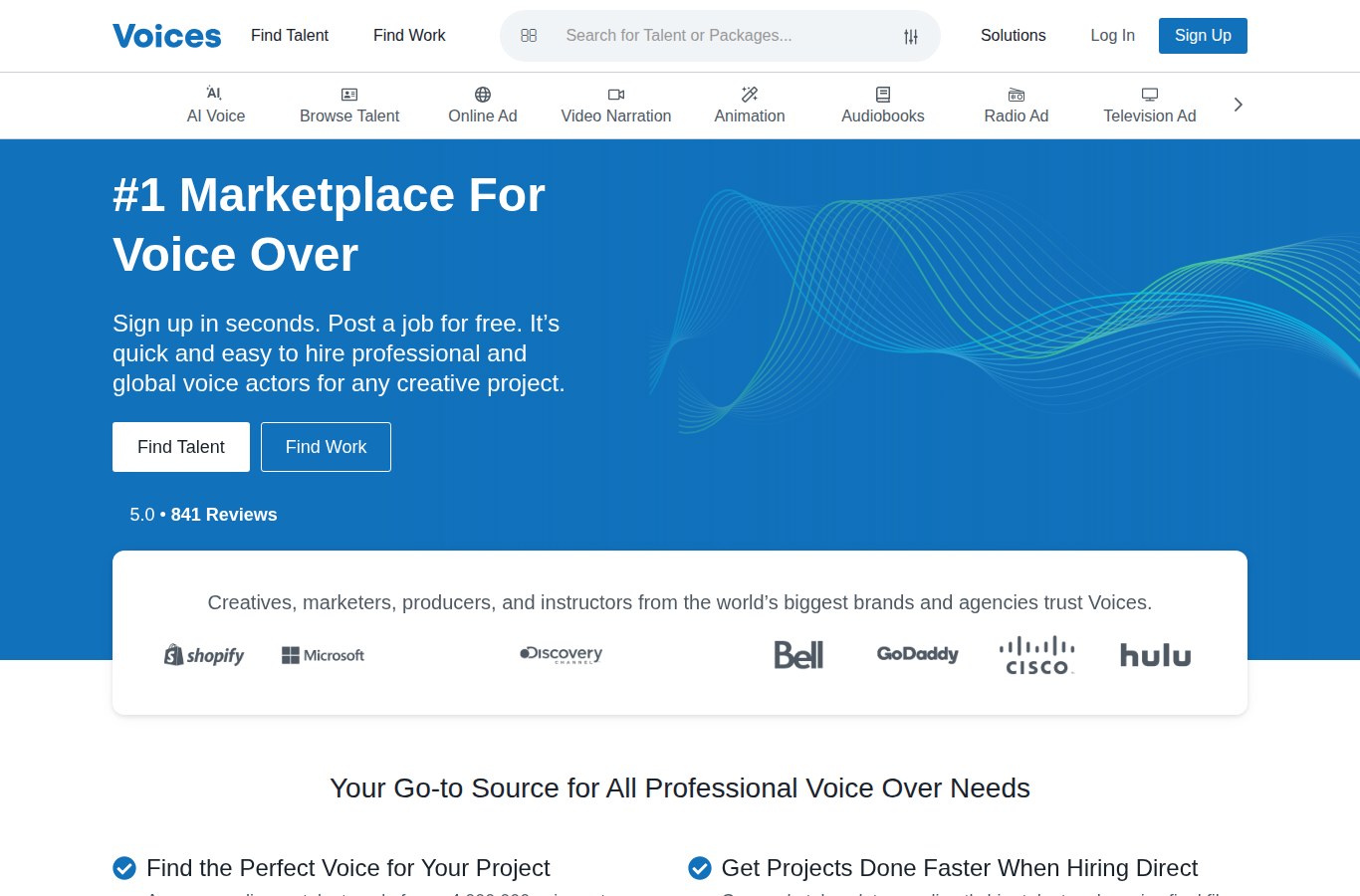
voices.com in October 2024: “#1 Marketplace For Voice Over”. Screenshot: Internet Archive, 13 Oct 2024.
Today the title reads “World’s Leading Actor-Powered Voice Solutions”, and the headline is three lines: “Get Voice Data. Craft a Branded AI Voice. Hire Voice Over Talent.” The menu now opens with Voice Data, then AI Voice, then Voice Over. The second button under the headline says “Learn about our AI solutions”. Voice actors looking for work get one section near the bottom of the page.
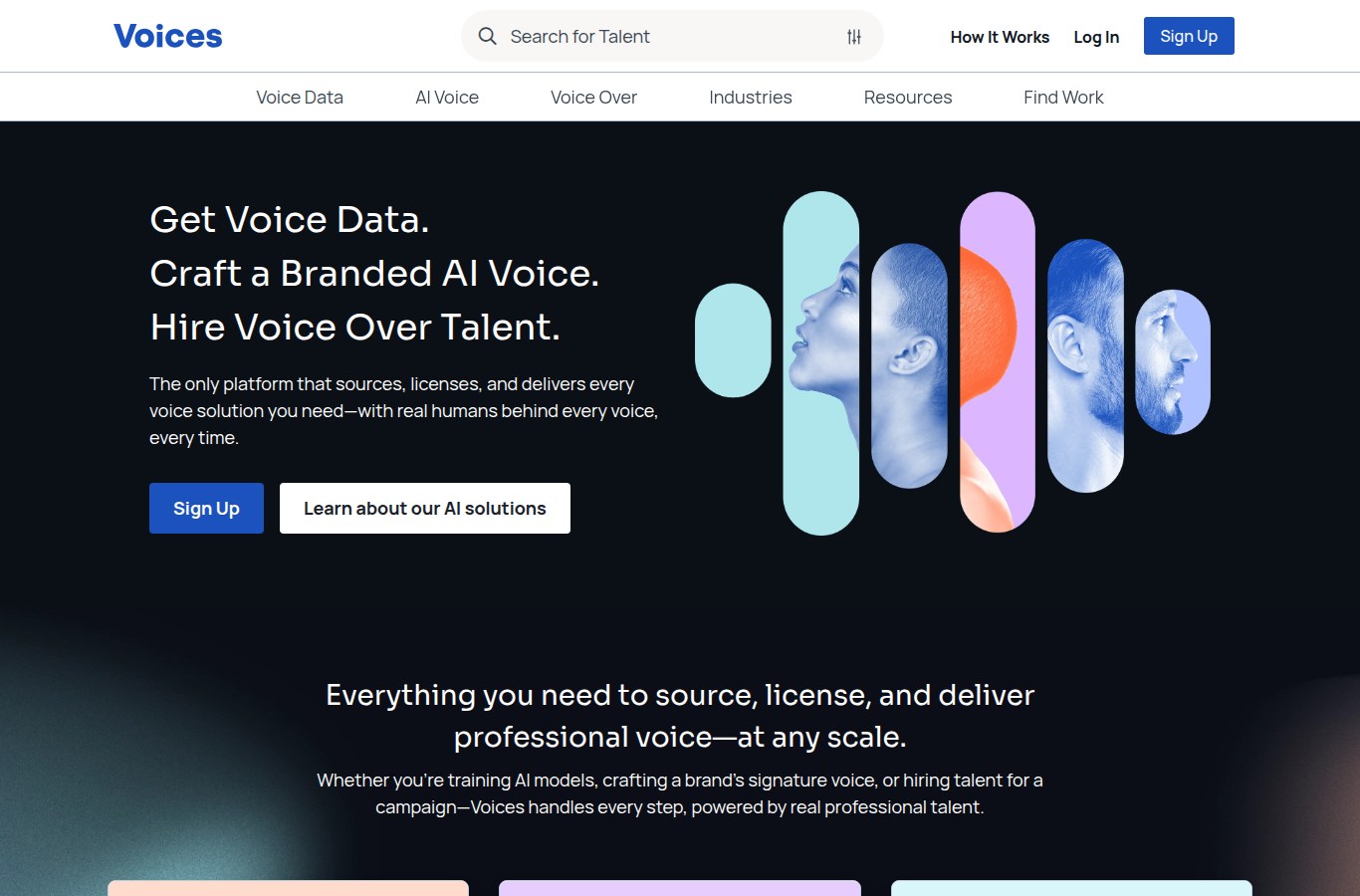
voices.com today: voice data first, voice over talent third. Screenshot: voices.com, 1 Oct 2026.
There’s no showcase of voice actors for a client to browse any more. The people in the opening artwork are stylised faces, and the only actor profile on the page is a single example card in that section for talent looking for work, about 60% of the way down.
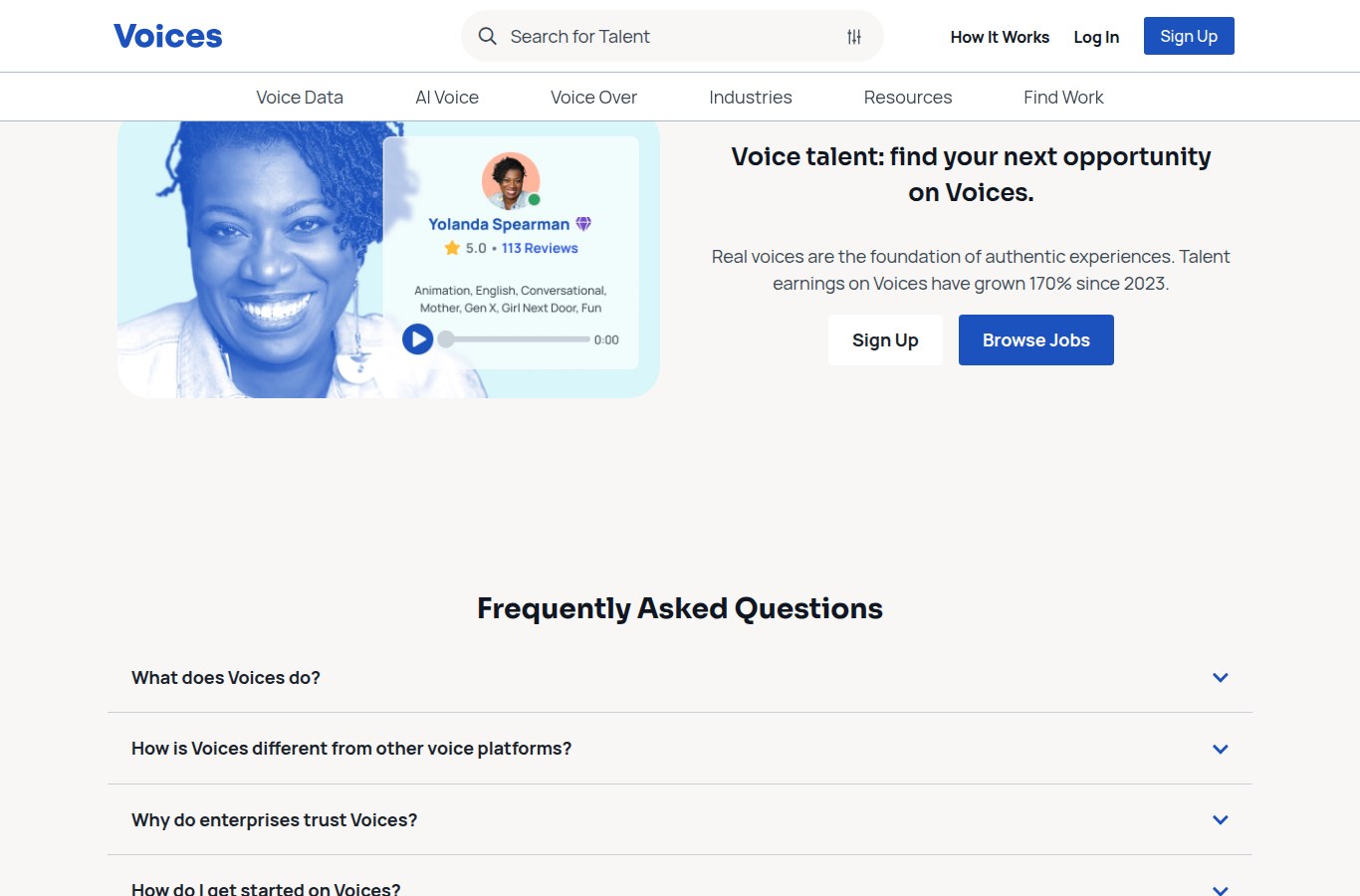
The only actor profile on voices.com’s homepage today, about 60% of the way down, in the section for talent looking for work. Screenshot: voices.com, 1 Oct 2026.
The press releases tell the same story. Voices.com bought Voices.ai in April 2023, launched an AI Studio built on clones of real actors’ voices in June 2024, announced a voice data product for AI training in July 2025, and in 2026 launched Voices for Games, Voices for Customer Experience and Voices for Agencies, each built around AI voices or licensed voice data. The Customer Experience release promises AI agent platforms “fully consented, studio-grade voice recordings from professional talent”, ready “to clone and deploy across their products for enterprise clients”. Its chief executive told The Logic in 2024 that AI “simultaneously poses both a threat and a massive opportunity”.

 VoiceEditSuiteClean it up, check it, send it.Loudness NormalizerScript AccuracyRate CalculatorSee the suiteThe studio check is free to try.
To be fair to them, the site still says its AI is “powered by professional talent”, and it signed the National Association of Voice Actors’ fAIr Voices pledge, as did Voice123. But if you’re paying a membership to be cast in human voice over jobs, it’s worth noticing that human voice over is now the third thing the homepage offers.
Compare that with The Voice Realm’s homepage today. The first line a client reads is “Hear your script read by hand-picked voices for free”, and straight after the three steps to post a job come real, named voice actors from the visitor’s own country, each with a demo to play.
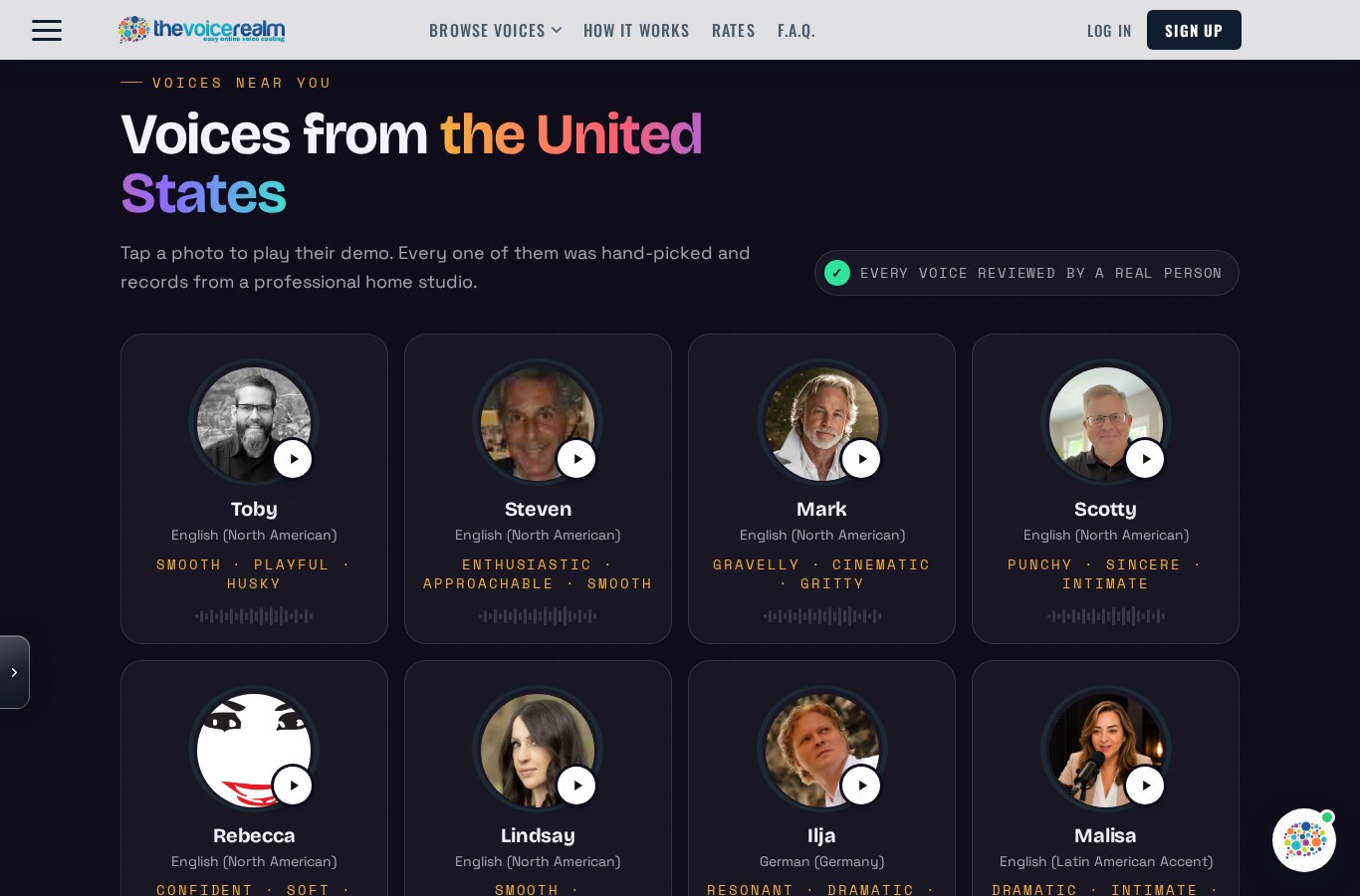
The Voice Realm’s homepage today: real voice actors from the visitor’s country, each with a demo. Screenshot: thevoicerealm.com, 1 Oct 2026.
Voice123’s homepage has moved less. In 2024 it led with “Great ideas need great voice overs.” Today it leads with “Great voice overs need professional voice actors”, with AI voices, which it says are “made and owned by voice actors”, in the third section.
Who sets the price
On Voices.com, you quote for the job, and the site’s own help page explains that “The Platform Fee is a 20% fee calculated against the talent quote”. Its worked example takes a $500 quote down to $400 for the actor. On Voice123, actors “set their own rates” and negotiate, and Voice123 says it doesn’t take a commission from them.
Set-your-own-rate sounds like freedom. In practice, with an open door, it means thousands of actors quoting thousands of different prices for the same job. That’s hard on you, because someone is always willing to go lower. And it’s hard on the client, who often has to give their own client a firm quote and a budget before anything is recorded. When every voice they like costs something different, they can’t.
The Voice Realm uses one published rate card, set by the length of the script and where the recording will run. The price is fixed before anyone auditions. Nobody bids and nobody undercuts. Someone who started last year can’t win a job by quoting under a professional who’s been booked for thirty years, so the client chooses on the performance, not on who’ll do it cheapest. It’s a level playing field for talent, and it stops the slow slide in rates that bidding causes, where every job goes a little lower than the last. Union work runs on the same principle, which is why we built a calculator for current SAG-AFTRA scale too.
Who chases the money
This is where the three differ most in daily life. Voices.com holds the client’s payment in its SurePay escrow while you record, and releases it when the work is approved, or automatically 14 days after the delivery date.
Voice123 offers a similar service, called Secure Payment, but it’s optional. Its own page says “while it’s not a requirement, it does have numerous benefits”, and its guide for actors says they “are free to communicate and negotiate with clients off-platform”. When a client uses Secure Payment, Voice123 adds a service fee of 15% of the project cost to the client’s bill. When a deal is done directly, there’s no escrow at all, so if the client is slow to pay, or never pays, the invoice, the reminders and the awkward emails are yours.
At The Voice Realm, there’s no choice to make. The client pays us before you record, we raise the invoice, and we collect it. You don’t send a reminder, ever.

© The Voice Realm
Paying to be seen
On both of the other sites, what you pay also changes where you sit when a client searches. Voices.com’s Premium membership promises “higher visibility in search results”, and Voices says that “to have job opportunities matched with your profile and to reply to those jobs, a Premium membership is required”. Voice123’s top plans sell “higher visibility in search results” too, and its search results are, all else equal, “sorted by the membership level”.
Cost follows the same ladder. We’re not going to turn this into a price list, but the gap is worth knowing: Voices.com’s paid plan costs about twice our highest membership, and the Voice123 plans that promise access to at least half the matching projects start at about twice it and run to almost nine times.
The Voice Realm has a yearly membership too. What it doesn’t have is a tier that buys a better spot. Every member gets the castings that match their voice, unlimited free auditions, private audition requests and direct bookings, and every profile sits equal in search.
So which one is right for you?
If you’re just starting out, an open site will let you in, and there’s something to be said for learning in public. You’ll compete with everyone, on price, and you’ll pay more for a better seat.
If you’re a working professional with a treated room and real bookings behind you, the question is different. Do you want to be one voice in a crowd that anyone can join, quoting against strangers and chasing invoices? Or one of a screened list that clients trust enough to book straight off the page, at a rate set before you press record, with the money collected for you?
That’s the choice we made when we built The Voice Realm. If it sounds like yours, here’s how to send us your demo.
Sources: Internet Archive captures of “voices.com”, 13 Oct 2024 and “voice123.com”, 16 Oct 2024; “voices.com” and “thevoicerealm.com” homepages, seen 1 Oct 2026; “voice123.com”, 25 Sep 2026; Voices, “How it works for talent”, “Memberships”, “What is the Platform Fee?”, “SurePay” (seen 1 Oct 2026); Voices press releases on “the Voices.ai acquisition” (24 Apr 2023), “AI Studio” (6 Jun 2024), “voice data” (10 Jul 2025), “Voices for Games” (2 Jun 2026), “Voices for Customer Experience” (23 Jun 2026), “Voices for Agencies” (4 Aug 2026); “The Logic, 13 Sep 2024”; NAVA, “fAIr Voices”; Voice123, “Voice over jobs guide for voice actors”, “Membership options”, “Plans” (English, USA and Canada, seen 1 Oct 2026), “Secure Payment service”, “Secure Payment pricing”, “How Voice123’s algorithms work”.
Ready to get booked?
See the jobs open right nowAbout Sarah Robbins
Sarah Robbins writes for The Voice Realm about finding voice over work, home studios, casting and the business side of voice acting.