Blog
This guide is for voice actors who’d like a slice of the work coming out of YouTube: narrating documentary and explainer channels, voicing a creator’s series every week, or dubbing a channel into another language. It’s steady, it’s remote by nature, and a lot of voice actors still overlook it because it doesn’t look like a traditional booking.
Below you’ll find why channels hire narrators at all, the two rules on YouTube’s own help pages that shape this work, what a typical job looks like, how to price a channel rather than a single video, and how to find the people who need you.
Why YouTube channels pay for a voice
Plenty of successful channels never show their creator’s face. History deep dives, true crime, science explainers, travel stories, product breakdowns, sleep stories. The pictures carry the eye, but the narrator carries the channel. Viewers come back for a voice they trust, and the creator often isn’t the best person to provide it.
There’s also a money reason, and it’s written in YouTube’s rules. To earn from ads, a channel has to meet the YouTube Partner Program’s monetisation policies. On 15 July 2025 YouTube renamed one of those policies from “repetitious content” to “inauthentic content”. Its help page now lists, among the things that don’t qualify, “Image slideshows, templated storylines, or scrolling text with minimal or no narrative, commentary, or educational value” and “AI-generated content made with generic or unoriginal templates giving the impression of mass production without adding the creator’s original, authentic insights or perspective”.
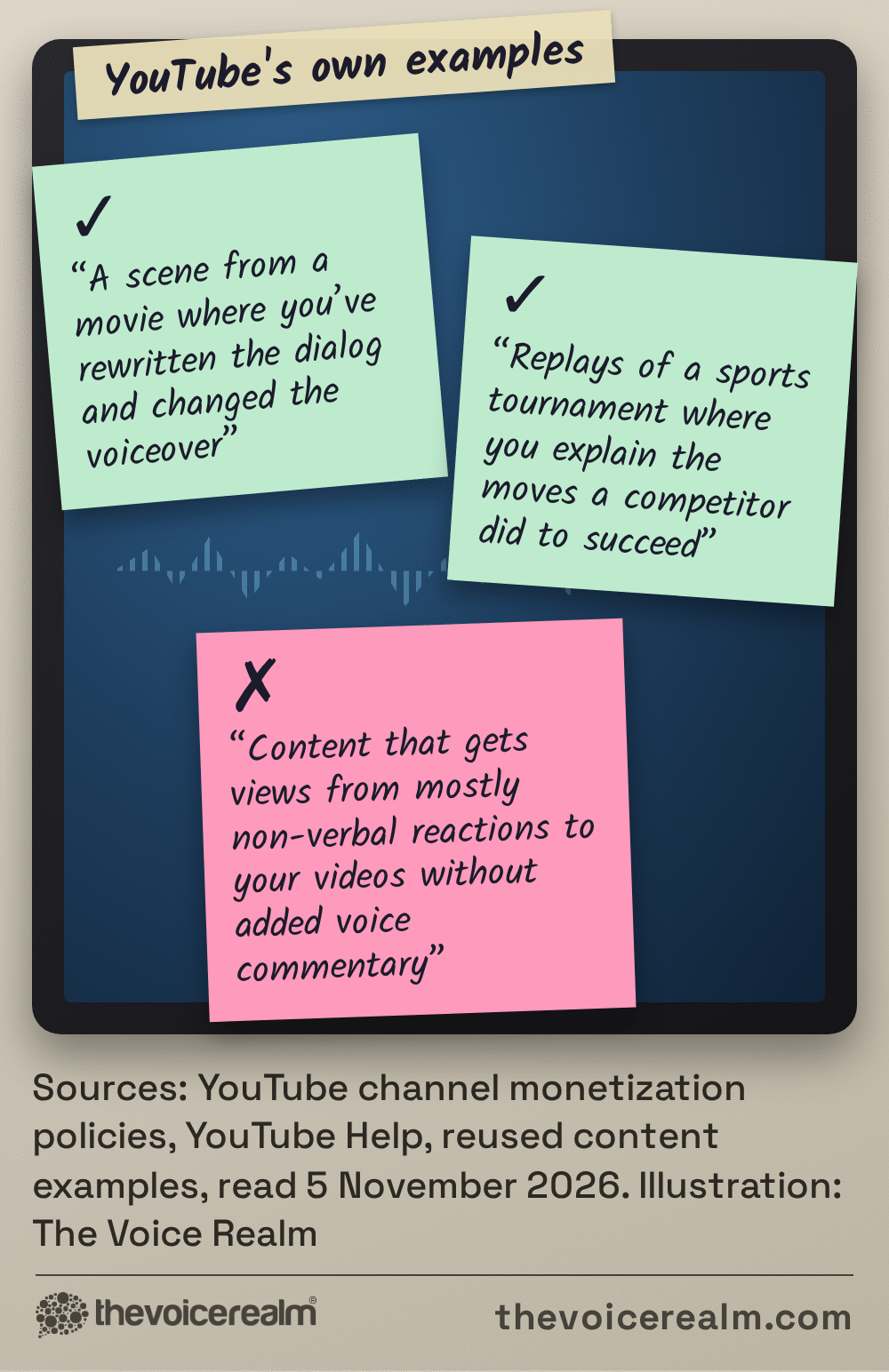
The same page has a separate section on reused content, which covers channels that repurpose material from elsewhere. One of its examples of what isn’t allowed: “Content that exclusively features readings of other materials you did not originally create, like text from websites or news feeds”.
Read that carefully, because it’s not a rule about human voices. A human reading someone else’s article out loud is in the same trouble as a machine doing it. What YouTube wants is original storytelling, commentary and teaching. That’s good news for you, because it means the serious channels, the ones building something that lasts, are investing in scripts with a point of view and a narrator who can sell it. Those are the clients worth chasing.
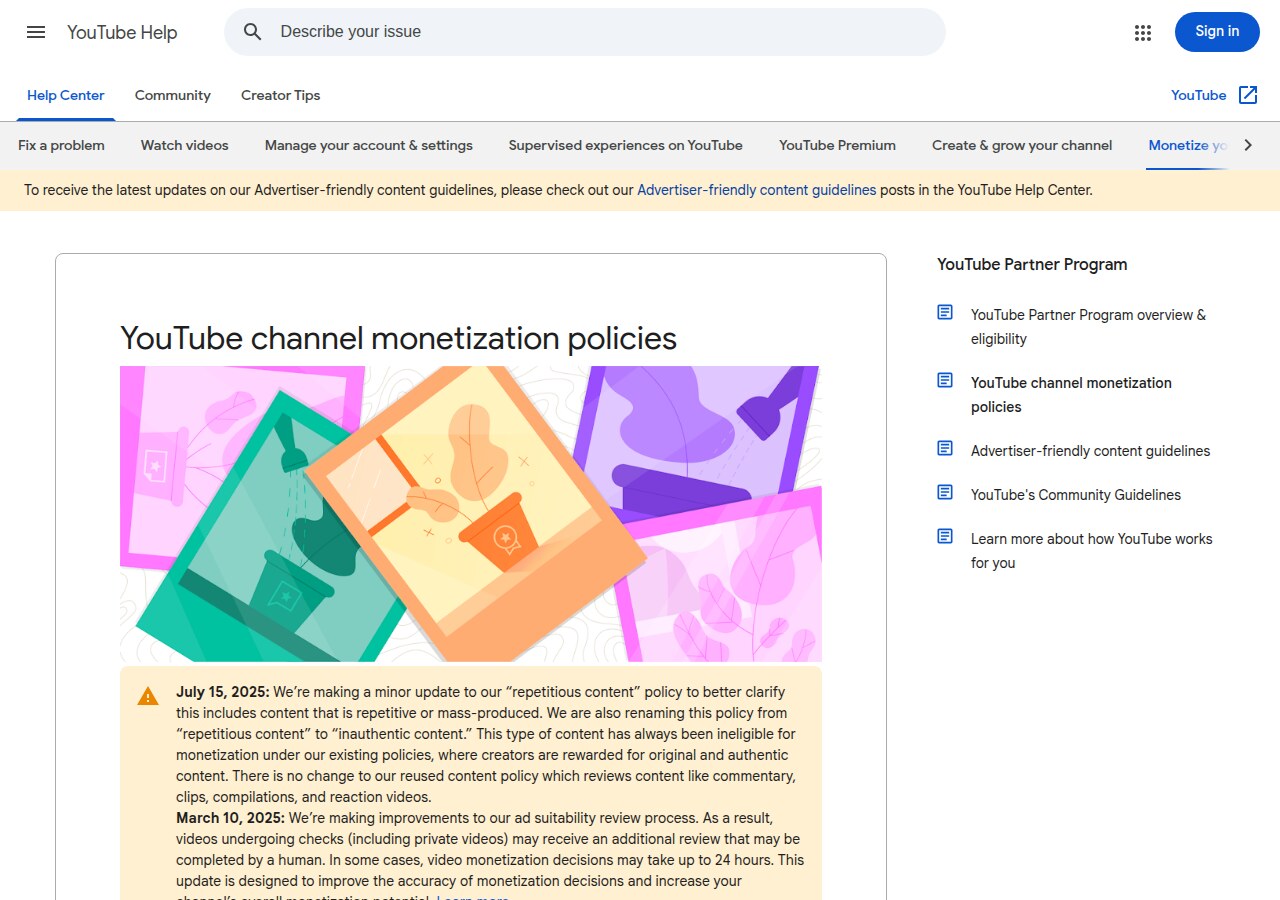
Screenshot: YouTube Help, 5 November 2026
The second door: dubbing a channel into other languages
If you speak more than one language, YouTube has opened a door you might not know about. Its multi-language audio feature lets a creator attach extra audio tracks in other languages to the same video, so a viewer in Mexico or Germany hears the channel in their own language without the creator running a second channel.
YouTube’s help page is explicit that this isn’t automatic: “It does not automatically create these tracks.” Creators can “either outsource your dubbing needs to a vendor or record yourself speaking in another language.” In other words, somebody has to perform them.
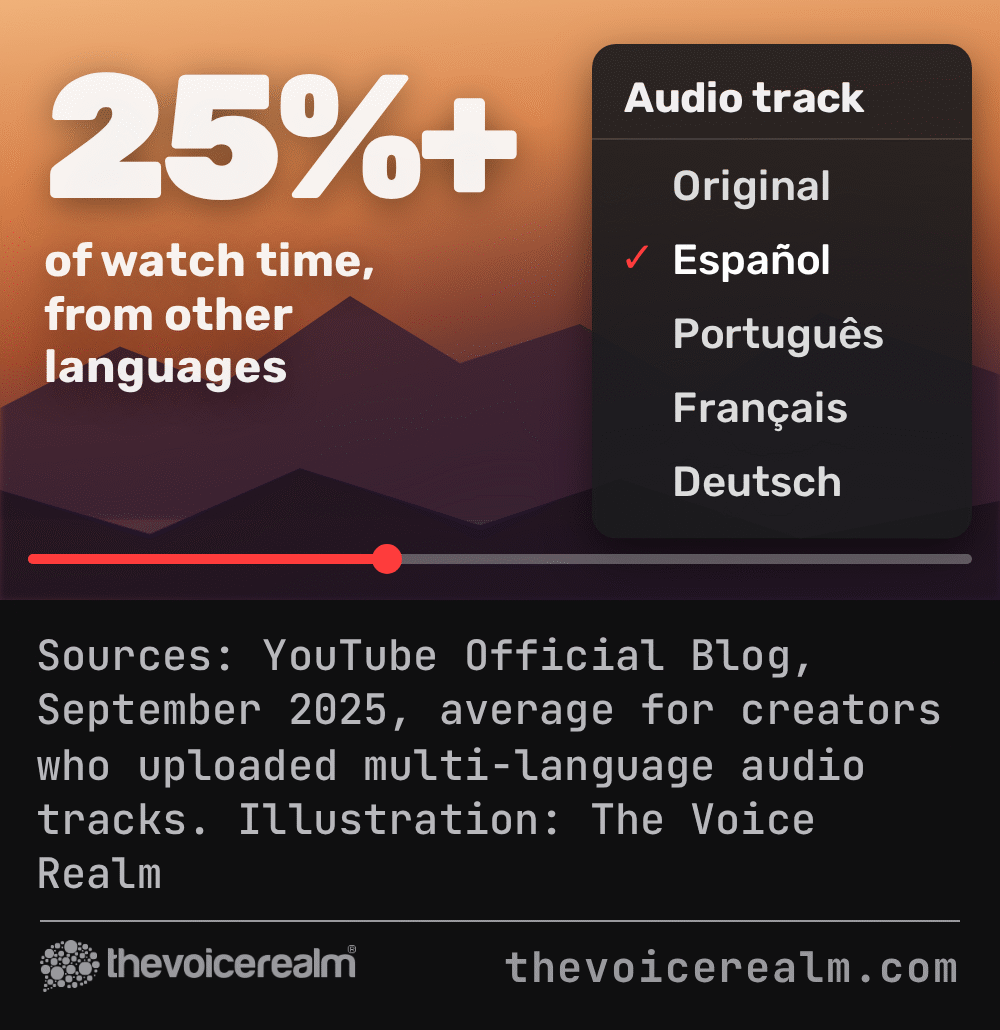
The numbers explain why creators bother. In a September 2025 post on the official YouTube blog announcing the feature for “millions of creators”, product manager Ritz Campbell wrote that creators who uploaded these tracks saw “over 25% of their watch time come from views in the video’s non-primary language.” The same post mentions that the science creator Mark Rober uploads dubs in an average of more than 30 languages per video.
For a bilingual voice actor, that’s a client with a back catalogue, a weekly upload schedule and a reason to keep the same voice on every episode. If you’ve done dubbing before, our guide to matching a performance to someone else’s mouth covers the craft side. YouTube dubbing is usually looser than film lip sync, because most channels cut to b-roll and graphics, but the timing still has to land.
You’ll hear that YouTube can dub videos by itself now, and it’s true that it offers an automatic dubbing feature. The help page draws a clear line between the two, though, and it’s worth knowing for your pitch: “If an automatic dub already exists for a language, you must delete it before uploading your own version.” A creator who cares how their channel sounds in Spanish or Portuguese can swap the machine track for a performed one at any time. Your job is to make that swap feel obvious. Offer to dub one popular video as a trial, then let the comments from viewers in that language do the selling.
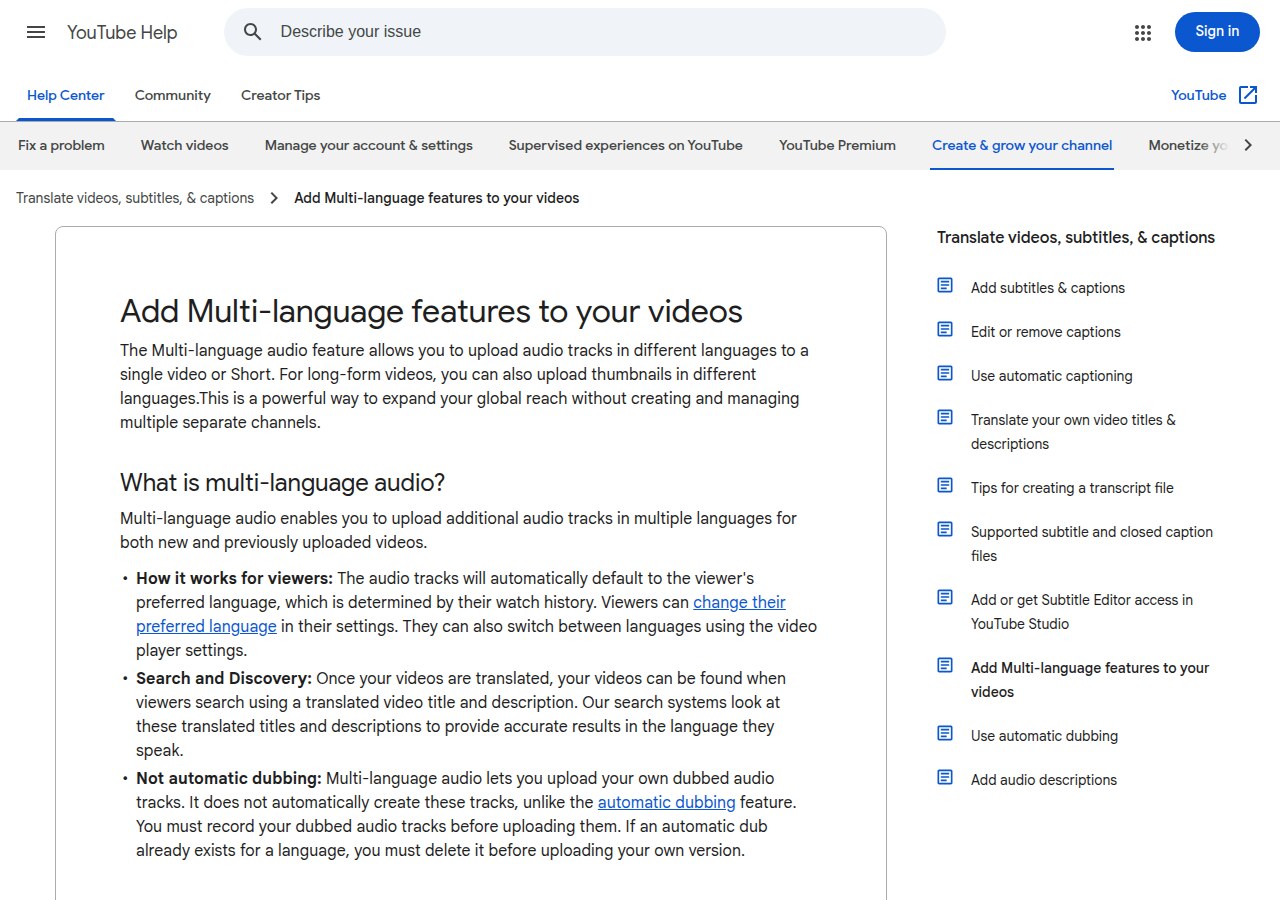
Screenshot: YouTube Help, 5 November 2026
What a YouTube narration job actually looks like
The brief is usually short and informal. A creator or their editor sends a script in a shared document, a reference video or two from the channel, and a deadline. A long form script can run to several thousand words, so ask for the word count before you quote. Our guide to how long a script takes to read will help you turn words into finished minutes.
The read itself is somewhere between documentary narration and a friend telling you a great story. Warm, curious, clear, with enough energy to hold someone through a twenty minute video on a phone. Many channels want a slightly faster pace than broadcast documentary, with room to land a joke or a twist. Ask what they liked about their last narrator, or what they didn’t.
Delivery tends to be one clean WAV per script, or one file per section if the editor builds the video in chapters. Leave a clear pause between paragraphs so the editor has room to cut. Name files the way the editor names the sections. Mistakes and pickups get fixed in your edit, not theirs, because a clean file is half the reason a channel keeps a narrator.
 VOICEMASTERACADEMYFirst read to first booking.Twenty modules. The first one is free.Start free
For dubbing, YouTube sets a few rules of its own. The help page says the files “must be in a supported audio-only file format and roughly the same length as your video.” That last part is your job: if the German version runs long, you trim pauses or tighten the read, because the track has to sit on the same picture.
© The Voice Realm
Price the channel, not the video
The mistake most new YouTube narrators make is quoting one video at a time and treating each one like a fresh job. A channel that likes you will send the next script next week, and the week after. Think about the series.
Start with what you’d charge for a single long narration based on finished minutes, then offer a series rate for a set number of episodes or a monthly arrangement. Be clear about what’s included: one round of pickups for errors in the script, a turnaround time, file format and naming. Extra rounds for script changes are billable, and it’s easier to say so at the start than halfway through episode six.
Usage matters too. A narration on the creator’s own channel is organic online use. If they want to cut your read into a paid ad, run it on another platform as a sponsored post, or license the video to a broadcaster, that’s a different use and a different fee. Our explainer on what clients are really buying when they buy usage walks through how to word it.
Get your sound right for a phone speaker
People watch YouTube on phones, laptops and TVs, not studio monitors. Your read needs to stay clear on a tiny phone speaker and still sound full on headphones. That means a clean, dry recording with no room echo, consistent levels across a long script, and no harsh esses or popping plosives, because the creator’s editor will add music under you and every flaw gets louder.
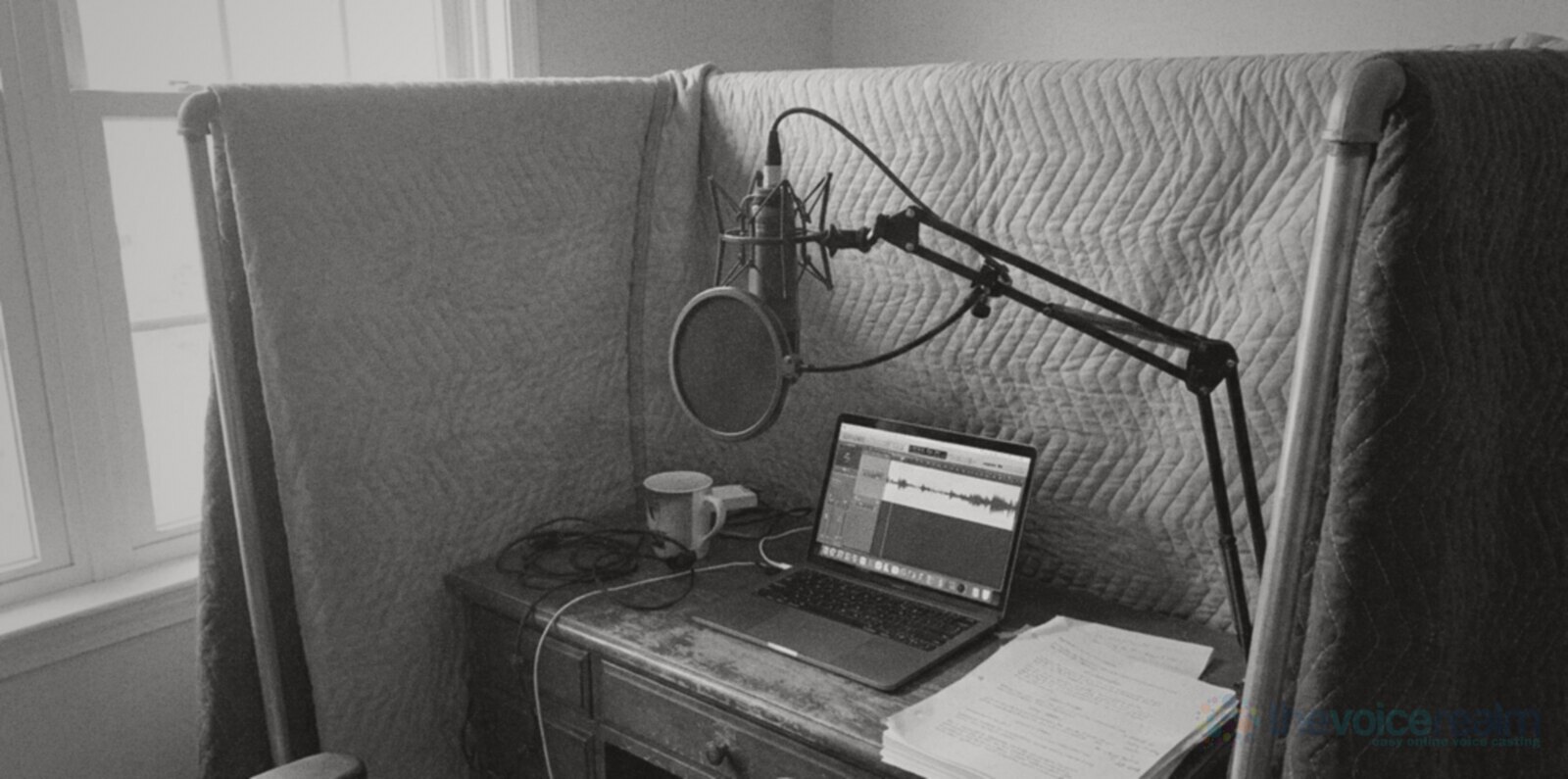
If you’re not sure how your room sounds, Voice Edit Suite’s free Home Studio Analysis will measure it for you. Measure before you treat, treat, then measure again. A blanket fort with a solid mic and a quiet laptop has started many a narration career.
Long scripts also test stamina. Break a five thousand word read into sections, record with water nearby, and listen back to the end of the session against the start. If you sound tired by section six, so will the video.
© The Voice Realm
How to find channels that need you
Channels that hire narrators are easy to spot once you know what to look for. Faceless formats, consistent upload schedules, high production value, and a narrator credit in the description or the end screen. Creators usually list a business email in their channel’s About section.
- Watch three videos. Know the channel’s tone, pace and the topics that do best.
- Record a custom sample. Thirty to sixty seconds from one of their own scripts, read your way.
- Keep it short. Who you are, the sample link, your turnaround and one line on why you fit.
- Offer the series. Mention you can work weekly and keep the same sound across every episode.
Your custom sample matters more than your general demo here, because creators can’t always imagine how a commercial read would sound on their channel. Show them. If you speak another language well enough to perform in it, pitch the dub too, and point to YouTube’s own figures on watch time from other languages.
Don’t rely only on cold pitches. Video producers, explainer studios and brands with YouTube channels post narration castings too, and you’ll find them on our voice over jobs board alongside commercial and e-learning work.
© The Voice Realm
The voice they keep coming back for
YouTube work rewards consistency more than almost any other kind of narration. A creator who finds a narrator who turns scripts around on time, sounds the same in episode forty as in episode one, and makes their writing sound better than it reads on the page will rarely look elsewhere. Be that narrator, and one channel can become a year of steady bookings.
Sources: “YouTube channel monetization policies”, YouTube Help; “Add Multi-language features to your videos”, YouTube Help; “Unlock a world of viewers with multi-language audio”, Ritz Campbell, YouTube Official Blog, 10 September 2025.
Ready to get booked?
See the jobs open right nowAbout Sarah Robbins
Sarah Robbins writes for The Voice Realm about finding voice over work, home studios, casting and the business side of voice acting.