Blog
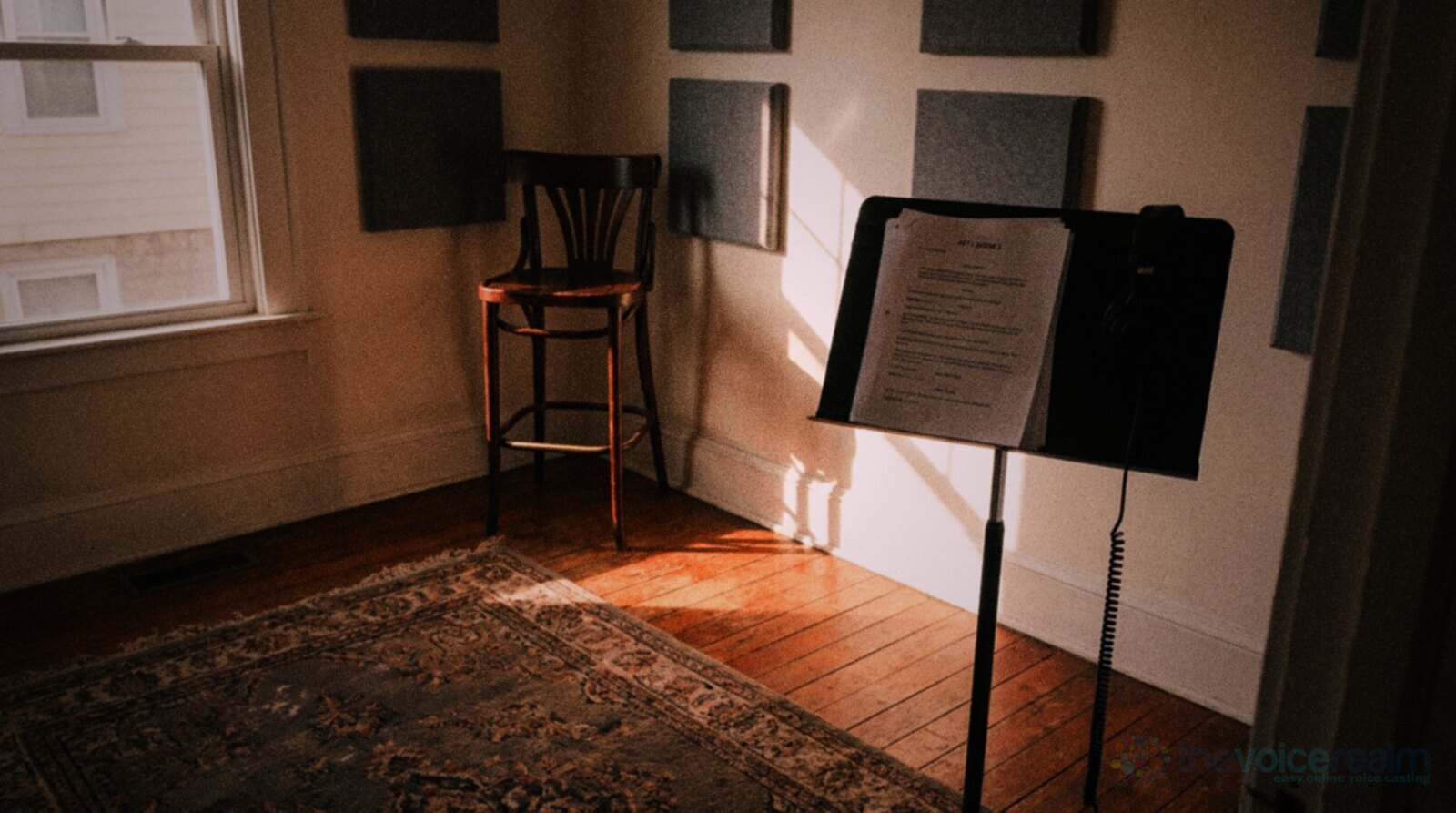
Walk into ten home studios and you’ll find ten different answers to the same question. Some voice actors stand at a music stand like they’re about to conduct. Some perch on a tall stool. Some record from the same desk chair they answer emails in. This guide is for anyone setting up a booth, or wondering why their voice feels tired by the second hour, who wants to know whether sitting or standing actually makes a difference.
The short answer: standing gives your breathing the most room, but sitting well beats standing badly, and where your head ends up matters more than where your feet are. Here’s what the research says and how to set up for both.
Standing gives your lungs the most room
Your voice runs on air. The more freely your ribs and belly can move, the easier it is to take a full breath and let it out steadily through a long line. Posture changes how much room they have.
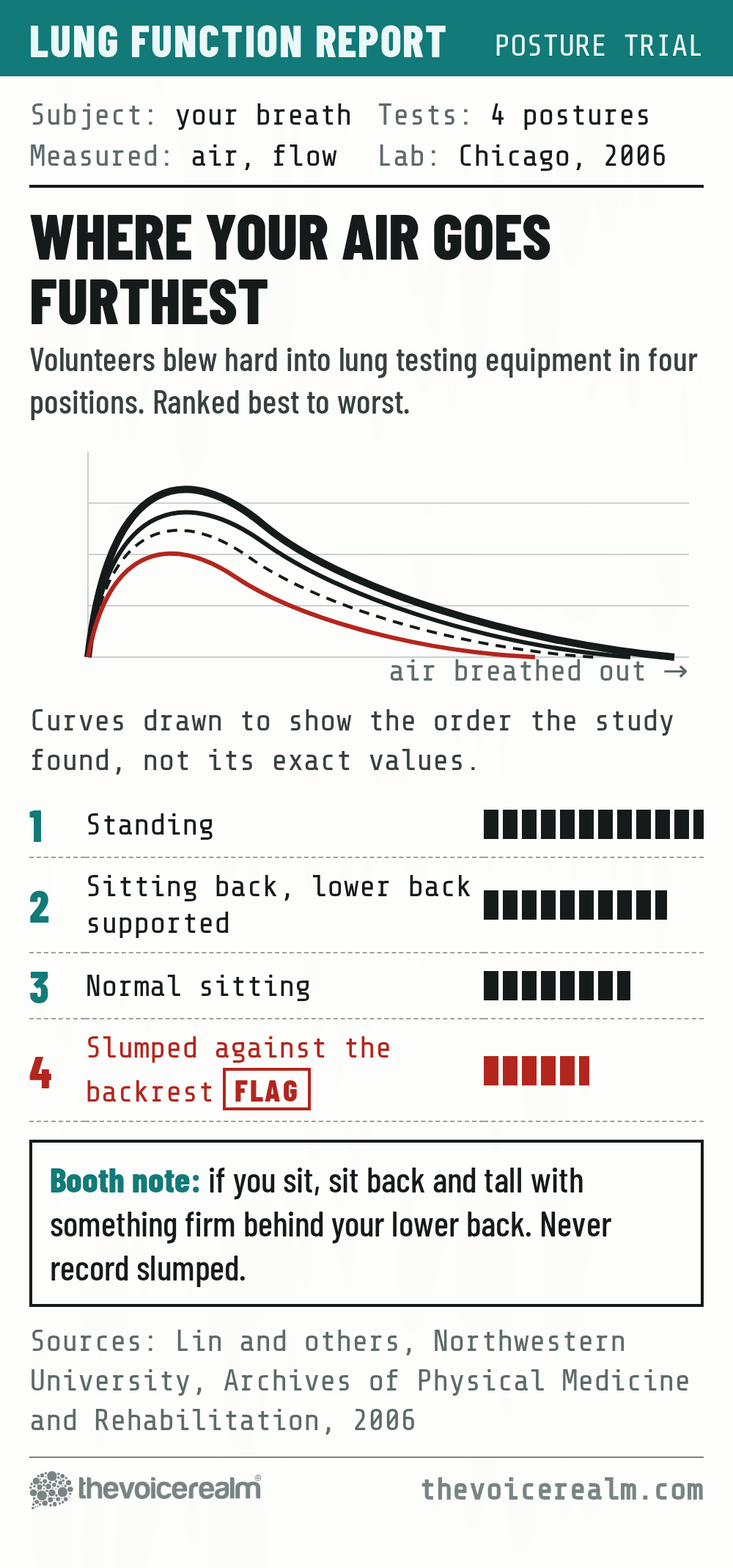
A team from Northwestern University in Chicago measured exactly that. They had volunteers breathe as hard and fast as they could into lung testing equipment in four positions: standing, sitting normally, slumped against the backrest, and sitting with good lower back support. Standing came out on top: “All LC-EF measures in standing were significantly superior to those in slumped and normal sitting.” LC-EF is their shorthand for lung capacity and expiratory flow, which is to say how much air you can move and how fast you can push it out.
Slumping did the most damage. In the study’s words, “Slumped sitting significantly decreased LC-EF and lumbar lordosis.” That second part, lumbar lordosis, is the natural inward curve of your lower back. When it collapses, your chest drops toward your belly and your diaphragm has less space to work.
For a voice actor that shows up as shorter phrases, sneaky catch breaths in the middle of sentences and a voice that runs out of support at the end of a line. If that sounds familiar, our guide to where the air goes before the words pairs well with this one.
© The Voice Realm
Your head matters more than your feet
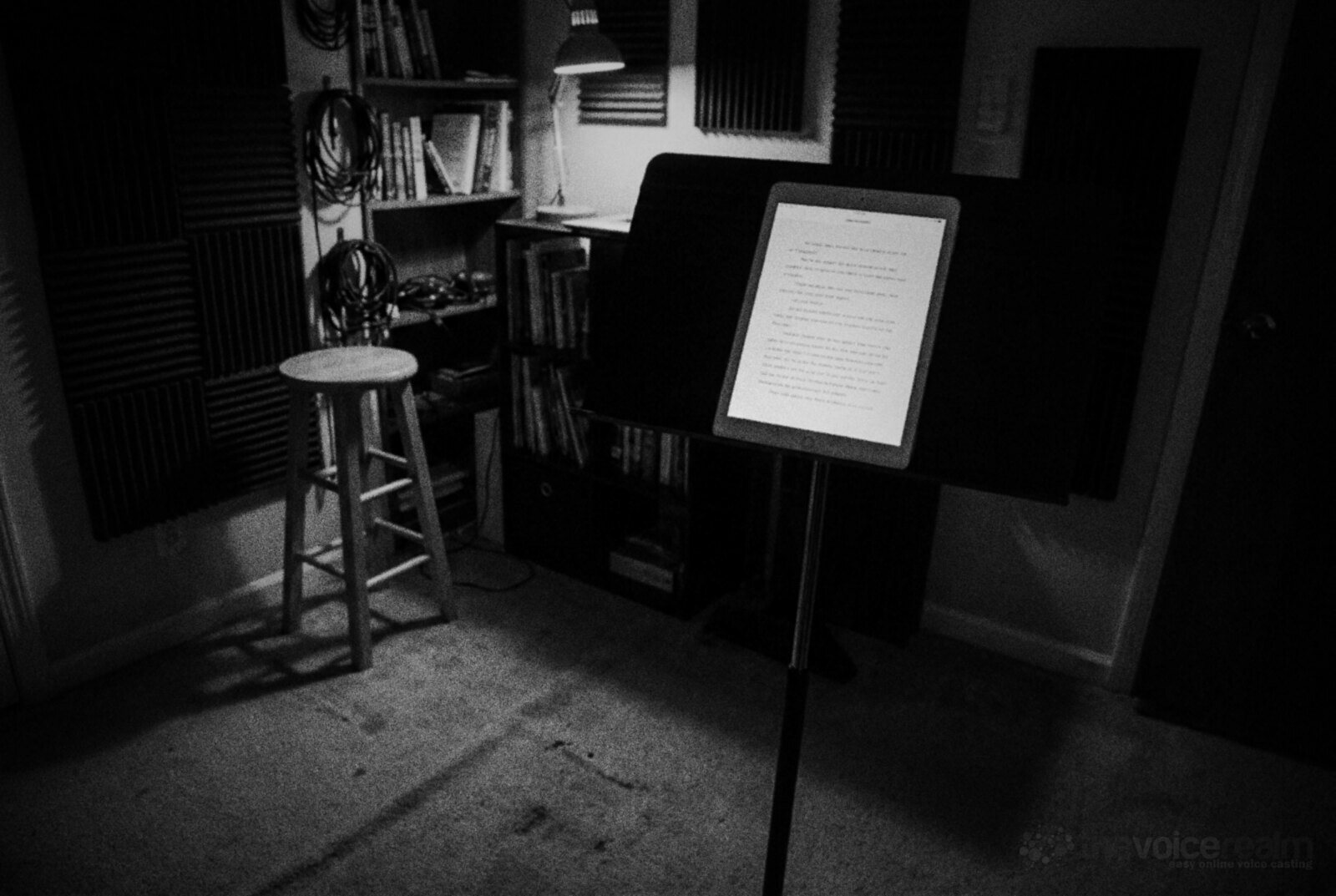
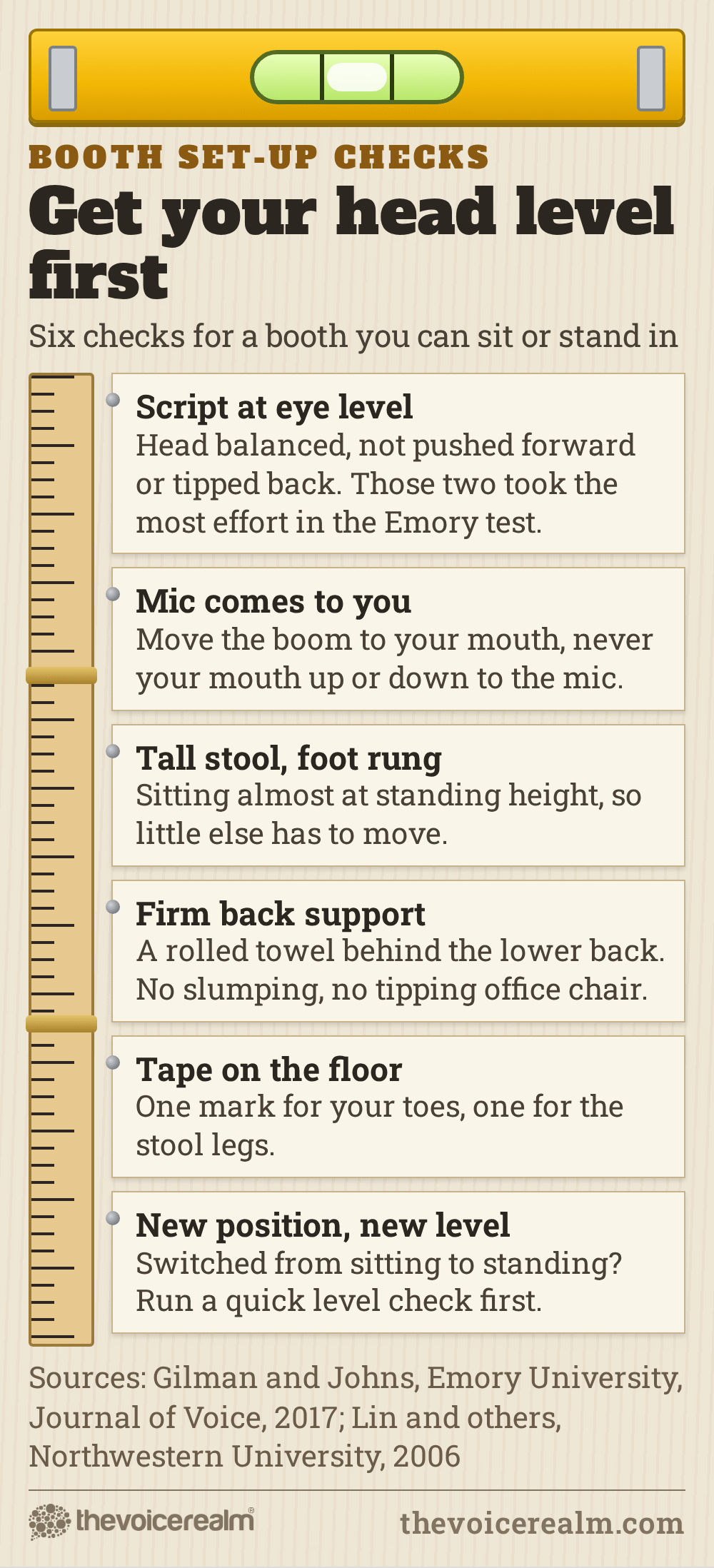
Here’s the part most booth set-ups get wrong. People spend ages choosing between a stool and a standing mat, then put their script so low that they read the whole session with their chin tucked toward their chest.
Marina Gilman and Michael Johns at Emory University asked healthy adults to hold a simple “ah” in six positions: their normal sitting and standing posture, head pushed forward, head tipped back, and standing with knees locked and with knees soft. After each one, people rated how much effort the sound took. The exaggerated head positions, forward and back, stood out most, whether people were sitting or standing. The researchers concluded that “posture may play a more important role in vocal fatigue than previously thought.”
Think about what pulls your head out of line in a booth:
- A script on the desk or a laptop screen below eye level drags your chin down and forward.
- A microphone set too high makes you lift your chin to reach it.
- Leaning in to read small print on a phone pushes your whole head ahead of your shoulders.
Fix those and you’ve done more for your voice than any chair upgrade. Raise the script to eye level, then bring the mic to your mouth rather than your mouth to the mic. Our piece on a hand’s width and a slight angle covers where the mic itself should sit once your head is level.
© The Voice Realm
Sitting well isn’t a crime
If standing wins on lung capacity, should everyone stand? Not necessarily. Another study, from Michigan State University with colleagues in Chile and Canada, measured muscle activity and airflow in experienced singers across four common postures. They found no real differences. The postures “did not generate voice aerodynamic modifications of the voice nor in the levels of activation of muscles involved in the phonation-breathing process in individuals with experience in singing voice.”
Two things are worth noticing there. It was a small pilot study, and the people in it were trained singers who already knew how to keep their breath working whatever they were doing. The authors themselves say people without voice training might respond differently. So if you’re newer to this, posture probably matters more for you, not less.
 VoiceEditSuiteAuto Clean Up now learns you.Your breath, your pace and every fix you make, so each file comes back sounding like you edited it yourself.See how it worksLearns from numbers, never your audio. Never used to train AI.
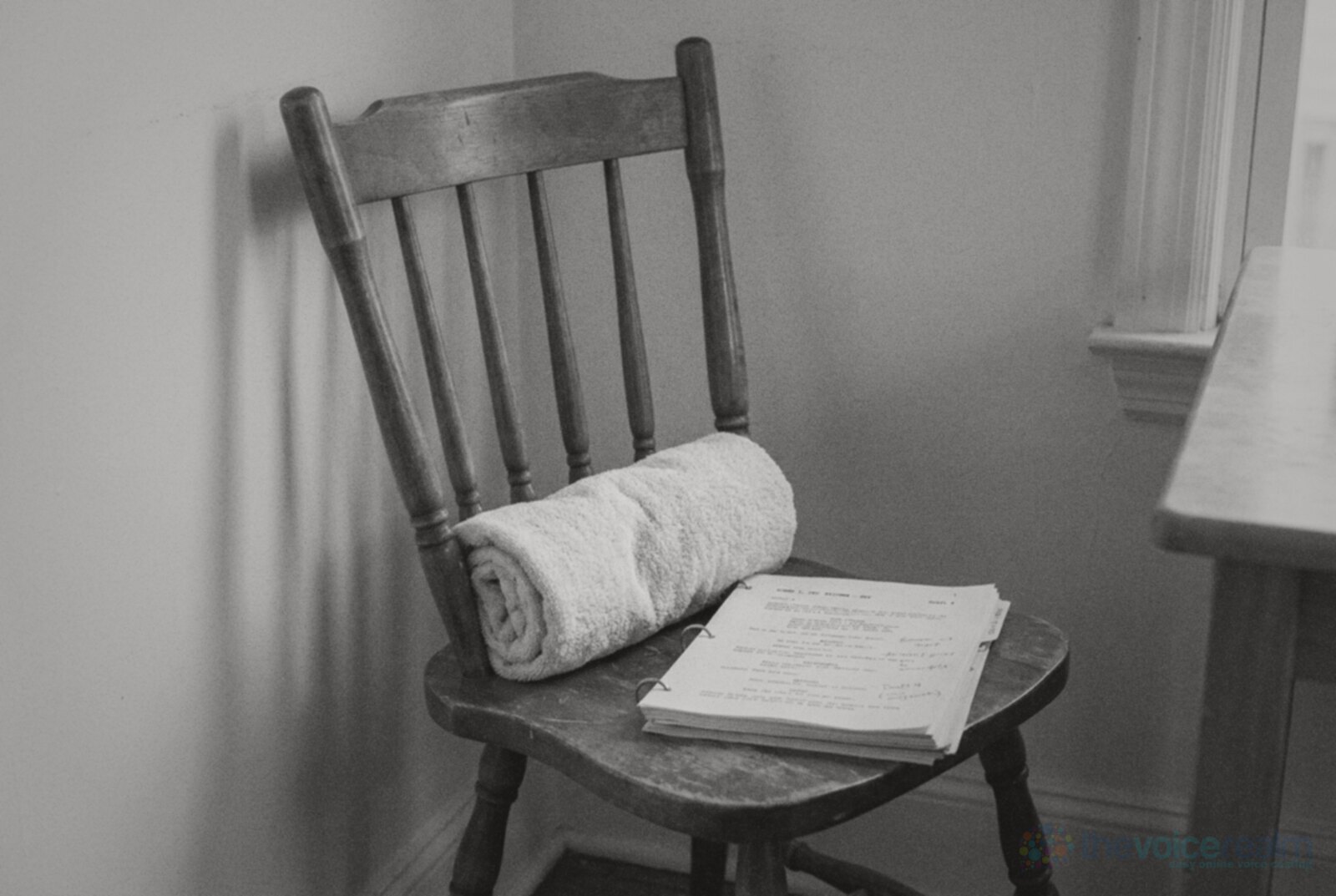
The good news is that the Northwestern team found a sitting position that narrowed the gap. Sitting toward the back of the seat with firm support in the lower back raised lung measures compared with ordinary sitting, and the authors suggested it “may be a better seating option for people sitting for a prolonged time.” Their version also took some support away from under the sitting bones, but the part you can copy at home is simple: sit back on a firm, upright chair with a small rolled towel or cushion tucked behind your lower back so the curve can’t collapse.
What you want to avoid is the soft office chair that tips back, the sofa, and anything with arms that lets you lean to one side. If you can’t sit tall in it without trying, it’s the wrong seat for the booth.
© The Voice Realm
How to stand for a three hour session
Standing sounds simple until you’ve done it for a whole afternoon. A few things make it sustainable.
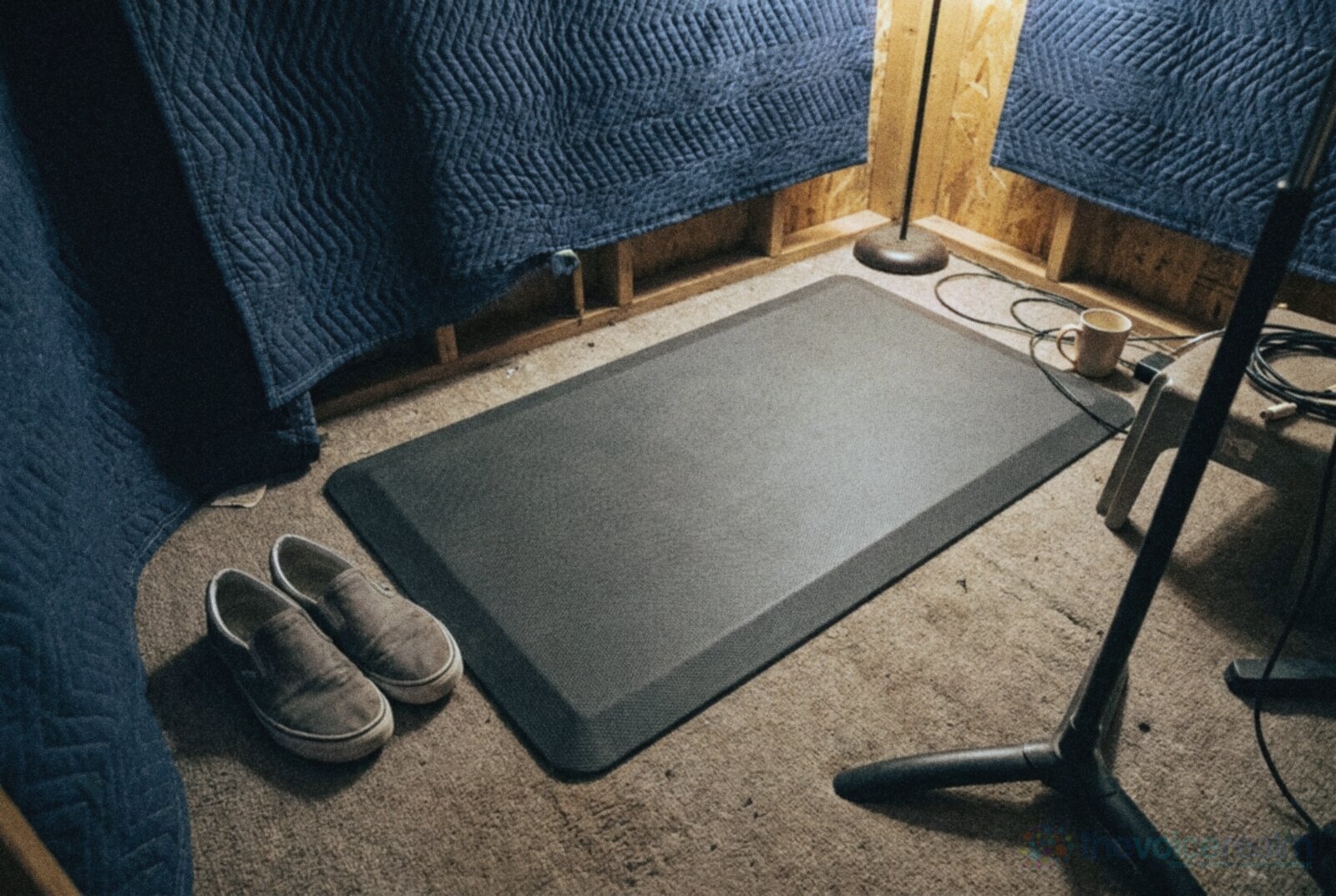
Feet about hip width apart, weight spread across both, one foot slightly ahead if that feels steadier. Knees soft, not locked; locking them makes you sway and tighten up over time. Something under your feet: a cushioned standing mat helps on hard floors and stops your heels aching by hour two.
Shoes are a sound issue as much as a comfort one. Hard soles tap and squeak when you shift your weight. Socks, soft canvas shoes or bare feet on a mat are all quieter.
© The Voice Realm
Let yourself move, a little. One of the reasons people stand is that their body joins in, and that energy reaches the read. We’ve looked at how moving while you act can lift a recording. Just keep your mouth in the same spot relative to the mic, or your levels will wander.
Reset before every take. A long session slowly pulls you out of shape: shoulders creep up, your weight drifts onto one hip, your head edges toward the script. Before you hit record again, take two seconds to check from the ground up. Feet even, knees unlocked, shoulders down and back without forcing them, head balanced on top rather than poking forward. Then breathe in low and start. It sounds fussy written down, but after a week it takes no time at all, and it’s the difference between a voice that’s still fresh at four o’clock and one that’s fading by lunch.
Which jobs suit which position
There’s no rule that says you must pick one for life. Most working voice actors switch depending on the job.
Energy and attitude
Commercials, promos, animation, video game combat and anything with shouting, laughing or big emotion. Standing lets the whole body push the read and keeps the breath free for big lines.
Long, even reads
Audiobooks, long e-learning courses and medical or corporate narration. The read is calm, sessions run for hours, and a steady seated position keeps the sound consistent from chapter one to chapter twenty.
Plenty of narrators do sit for audiobooks, and plenty of commercial actors sit too. The best position is the one you can hold without your voice or your back complaining, and that keeps you in the same spot in front of the mic.
One practical tip: if you switch between the two, check your recording level each time. Your mouth moves several centimetres when you go from stool to standing, and a different distance means a different level and a different tone. Our guide to setting gain for voice over walks through a quick test.
Set up your booth for both
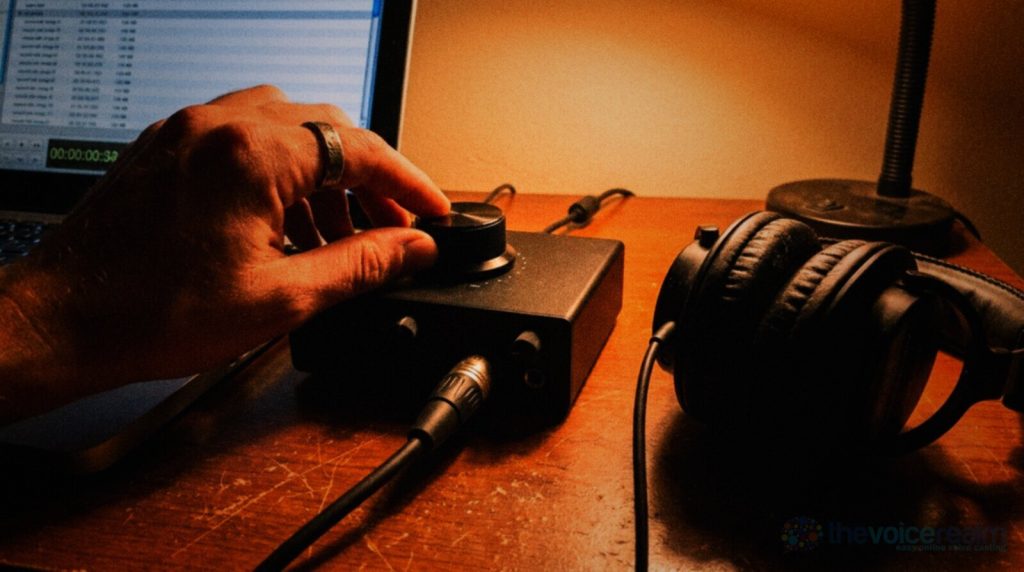
The easiest booth to live with is one where you can change position in a few seconds without rebuilding anything. If switching means moving a desk, re-angling a laptop and hunting for a chair, you’ll stop switching, and you’ll end up doing a three hour audiobook standing because that’s how the room happened to be set up that morning.
Paper or tablet? Both work if they sit at eye level. Paper is lighter on the eyes but rustles when you turn a page, so many actors read from a tablet and scroll silently. Whatever you use, put it on something that stands on the floor rather than the desk, because the desk is always too low.
Then listen to your furniture. Put your headphones on, hit record and shift your weight, sit down, stand up, lean back. Stools creak, mats squeak and floorboards groan, and quiet narration hears every one of them. Better to find out on a test file than on a client’s.
© The Voice Realm
Signs your posture is costing you
Your body usually tells you before your client does. Watch for a tight neck or jaw by the end of a session, a voice that goes thin or scratchy in the second hour, catch breaths you didn’t plan, and a sore lower back or aching feet. Any of those is a reason to look at your set-up before you look at your voice.
Take a short break every half hour or so: stand up if you’ve been sitting, sit if you’ve been standing, roll your shoulders and drink some water. And if hoarseness hangs around for more than a couple of weeks, see a doctor who specialises in voice rather than adjusting your chair one more time.
Sit or stand, the goal is the same: a long spine, a level head, free breathing and a mouth that stays put in front of the mic. Get those right and the chair stops mattering much at all.
Sources: Lin F. and others, Northwestern University, “Effect of different sitting postures on lung capacity, expiratory flow, and lumbar lordosis”, Archives of Physical Medicine and Rehabilitation, 2006; Gilman M. and Johns M.M., Emory University, “The Effect of Head Position and/or Stance on the Self-perception of Phonatory Effort”, Journal of Voice, 2017; Castillo-Allendes A. and others, Michigan State University, “Muscle Activity and Aerodynamic Voice Changes at Different Body Postures: A Pilot Study”, Journal of Voice, 2025.
Ready to get booked?
See the jobs open right nowAbout Sarah Robbins
Sarah Robbins writes for The Voice Realm about finding voice over work, home studios, casting and the business side of voice acting.