Blog
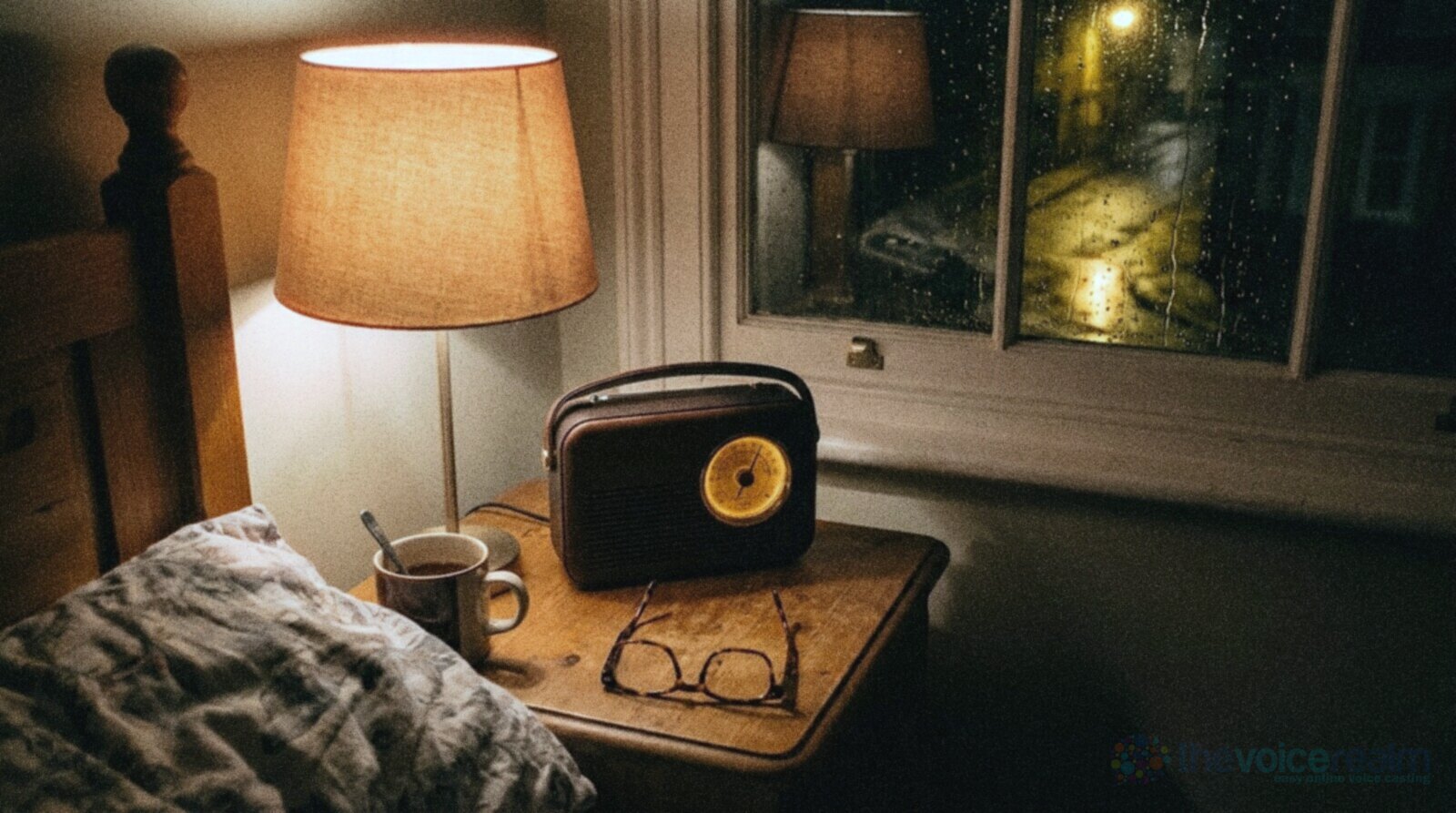
Bob Mortimer is going to read the Shipping Forecast until you fall asleep. The BBC has handed the comedian a two-hour Sleeping Forecast for Christmas, weather read over gentle music, and it lands on BBC Sounds from 25 November. This piece is for UK voiceover artists, and for anyone who writes or books a script, because there’s no better masterclass in this country than a page of weather read well.
Think about what’s on that page. No jokes, no story, no characters, hardly any verbs. It’s a list of places and some numbers. And people who’ve never set foot on a boat have been lying in the dark listening to it for a hundred years. Something’s going on there, and it isn’t the script.
What’s on, and when
PodcastingToday reports that the special mixes Mortimer’s narration with calming music to help people relax and drift off. It follows an edition in 2025 with Jarvis Cocker. After its arrival on BBC Sounds it airs on 6 Music on Thursday 24 December, from 11pm to 1am, which is to say exactly when a lot of parents will be sitting on the stairs waiting for a house to go quiet.
Mortimer announced it on Lauren Laverne’s 6 Music show with a note on the performance that any director would frame: “I’ve done a big, long reading of The Shipping Forecast in as creamy-of-toffee style voice as I could!” On the forecast itself: “The Shipping Forecast is a quiet little refuge amongst the bluster of everyday life. One of those weirdly familiar British institutions like potholes and poppadoms.”
It sits inside a big Christmas for the spoken word. RadioToday’s round-up of the BBC schedule includes a new Radio 4 Peter Pan with Ncuti Gatwa playing both Peter and Captain Hook, and Richard Curtis’s first audio sitcom, Greatest Living Writer, starring Bill Nighy. BBC Chief Content Officer Kate Phillips said: “Christmas on BBC Radio and BBC Sounds is all about the moments that bring us together.” One actor playing both sides of a sword fight is a story for another day. We keep coming back to the weather.
© The Voice Realm
A hundred years of saying Dogger
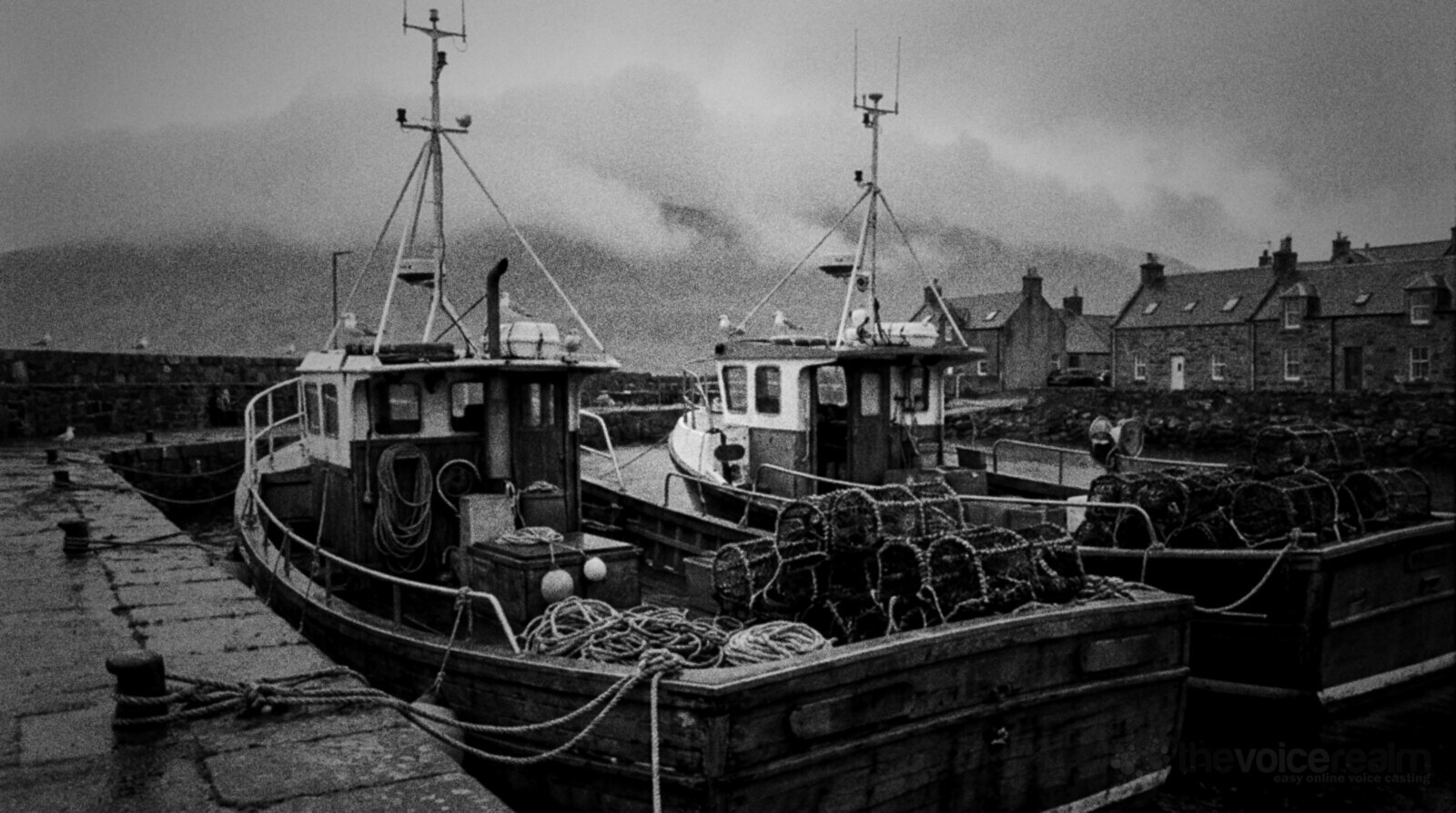
The forecast wasn’t written to be lovely. Royal Museums Greenwich tells the story plainly. Some 450 people were lost when the Royal Charter went down in a storm in 1859, and Robert FitzRoy, who ran the young Met Office, proposed a service to warn ships. The BBC broadcast its first version for farming and shipping on 4 July 1925, and a dedicated shipping forecast followed that October. The museum says “the format has remained largely unchanged ever since”.
There are 31 sea areas, always in the same order, starting with Viking and working clockwise round the islands. Wind first, then rain, then how far you can see. Anyone listening for Lundy knows roughly when Lundy will come.
And then there’s the line that ought to be pinned up in every booth in Britain. From the museum: “The Shipping Forecast is read at a deliberate, measured pace, as a clear delivery is crucial.” Somebody out on the water might be writing it down. The calm came second. It was a side effect of being careful.
© The Voice Realm
Small words doing proper work
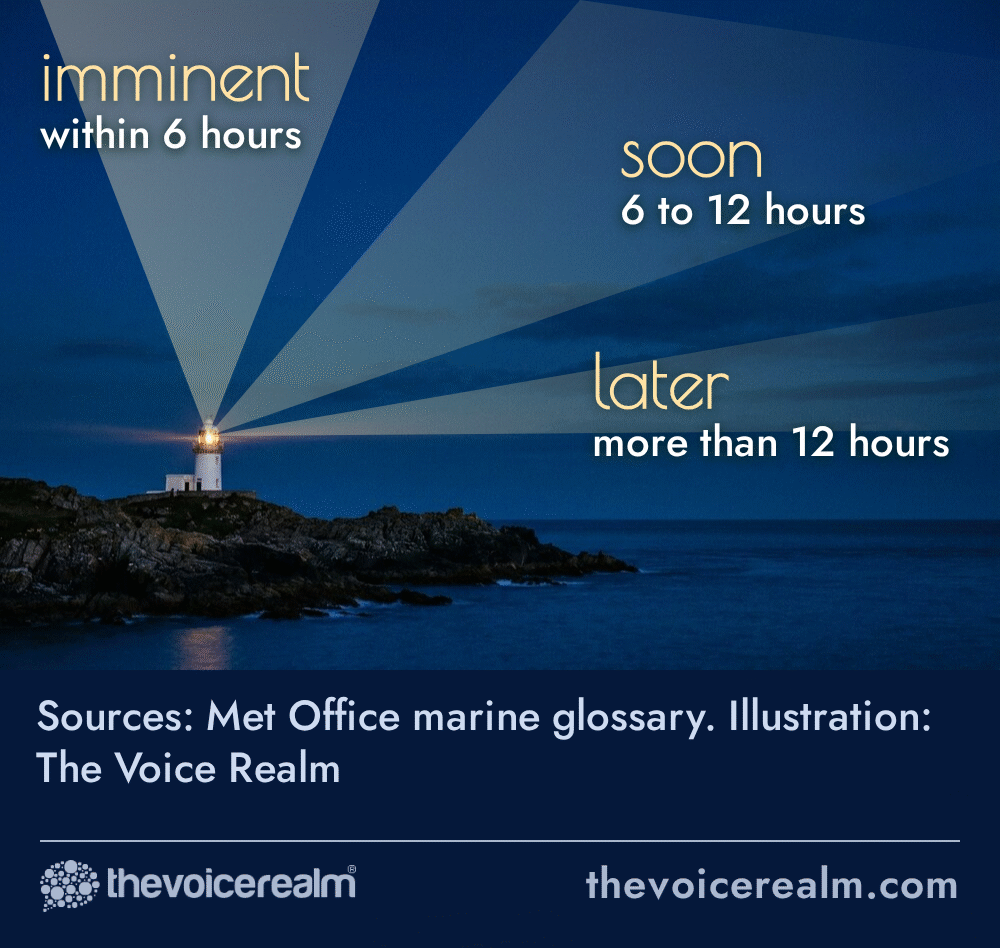
Here’s what most of us miss from under the duvet. The vague-sounding words aren’t vague. The Met Office glossary pins them down, and the timing ones are as exact as a train timetable. “Good” is a distance too: visibility of more than five nautical miles. So is “poor”, which means between 1,000 metres and two nautical miles. Even “slowly” is a speed. A weather system that’s moving slowly is doing less than 15 knots.
A reader who knows that says the words differently. They don’t float “later” off the end of a sentence like a sigh, because for someone deciding whether to leave harbour it’s the whole sentence. You can hear when a voice knows what the word is for.
That’s true of every dull-looking script you’ll ever be sent. Excess. Eligible. Within fourteen days. Somebody chose that word, and to the right listener it matters a great deal. Find out what it means before you read it. Our guide to reading figures and web addresses out loud is a decent place to start if lists of numbers make you speed up, as they do most people.
- Same order, every time. A listener who knows what’s coming next can relax, so give a list one shape and stick to it.
- Finish the word. Place names with soft endings vanish on small speakers. Land the last consonant without punching it.
- Leave a gap between areas. The silence is where somebody writes it down.
- Don’t decorate. If the words are doing the job, get out of their way.
The pace dial most people don’t touch
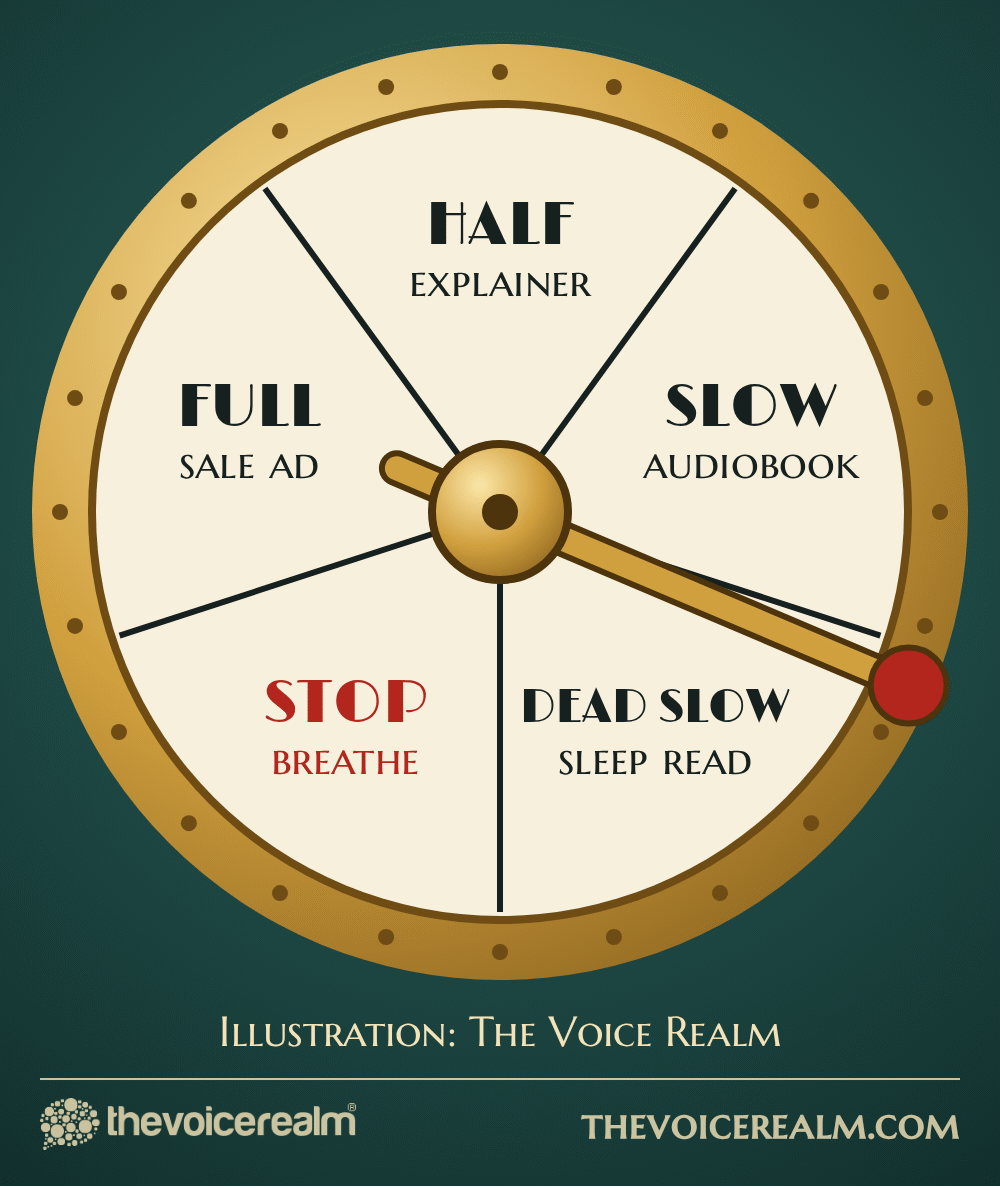
Ask a new voiceover artist to slow down and they’ll usually do one of two things. They’ll stretch the vowels, which sounds like a tired vicar, or they’ll drop the energy, which sounds like someone reading a menu they don’t fancy. Slow is neither of those. Slow means the same attention spread over more time.
The forecast manages it by keeping the phrases whole and putting the time into the joins. “Humber, Thames” goes by at a natural walk. Then there’s a beat. Then the wind. If you try a page of it tonight, record it twice: once stretching the words, once leaving the words alone and lengthening the gaps. Play them back in bed with the light off. You’ll know which is which.
 VoiceEditSuiteIt edits like you would, and it gets better every file.Every fix you make in the editor teaches Auto Clean Up more, so each file comes back sounding like you edited it yourself.See how it worksLearns from numbers, never your audio. Never used to train AI.
There’s also the tune to think about. A list read on one note will put people to sleep for the wrong reason, and a list that swoops up at every comma will keep them awake. Good forecast readers use a small range and use all of it, with a tiny lift at the start of each area and a proper landing at the end. If your own lists come out flat, our piece on voicing a guided meditation goes through how to keep a quiet read alive.
© The Voice Realm
Our take
It’s tempting to look at a sleep special from a famous comedian and file it under novelty. We’d file it under demand. People are asking voices to keep them company at the end of the day, and they’re fussy about which ones. It has to be warm without being sticky and calm without being dull. It has to sound as if there’s a person there who isn’t in any hurry to leave.
Plenty of that work never gets near a celebrity. Meditation apps need it, as do hotel chains, hospices, children’s charities, museums with a late opening. A producer starting a sleep or wellbeing podcast doesn’t need a household name. They need someone who can stay interesting at a whisper’s distance for forty minutes and turn up sounding the same next week.
We’d add that the accent is a gift here. Mortimer’s is Teesside, and nobody’s suggesting that it needs sanding down for Christmas Eve. Regional voices carry comfort because they sound like somebody’s house. If your brand lives by cold water and wants that Scottish coastal steadiness, listen to voiceover artists around Edinburgh before you settle for something smoother and further away.
And there’s a wider point about what clients think they’re paying for. A page of weather has no selling line. Nothing in it is trying to be memorable. Read badly, it’s data. Read by someone who cares whether you get home, it’s one of the best-loved bits of radio we’ve got. The difference between those two is one human being with a microphone.
© The Voice Realm
How to make a slow read pay its way
Put a quiet sample on your demo page. Most demos are all bounce. Add thirty seconds at a low level with long gaps, recorded close, with no music at all. If it holds up bare, it’ll hold up anywhere.
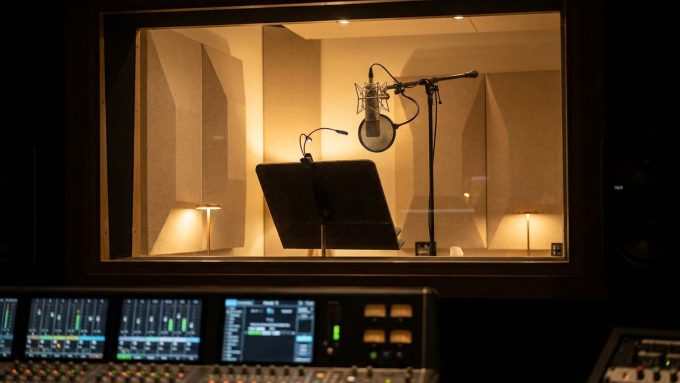
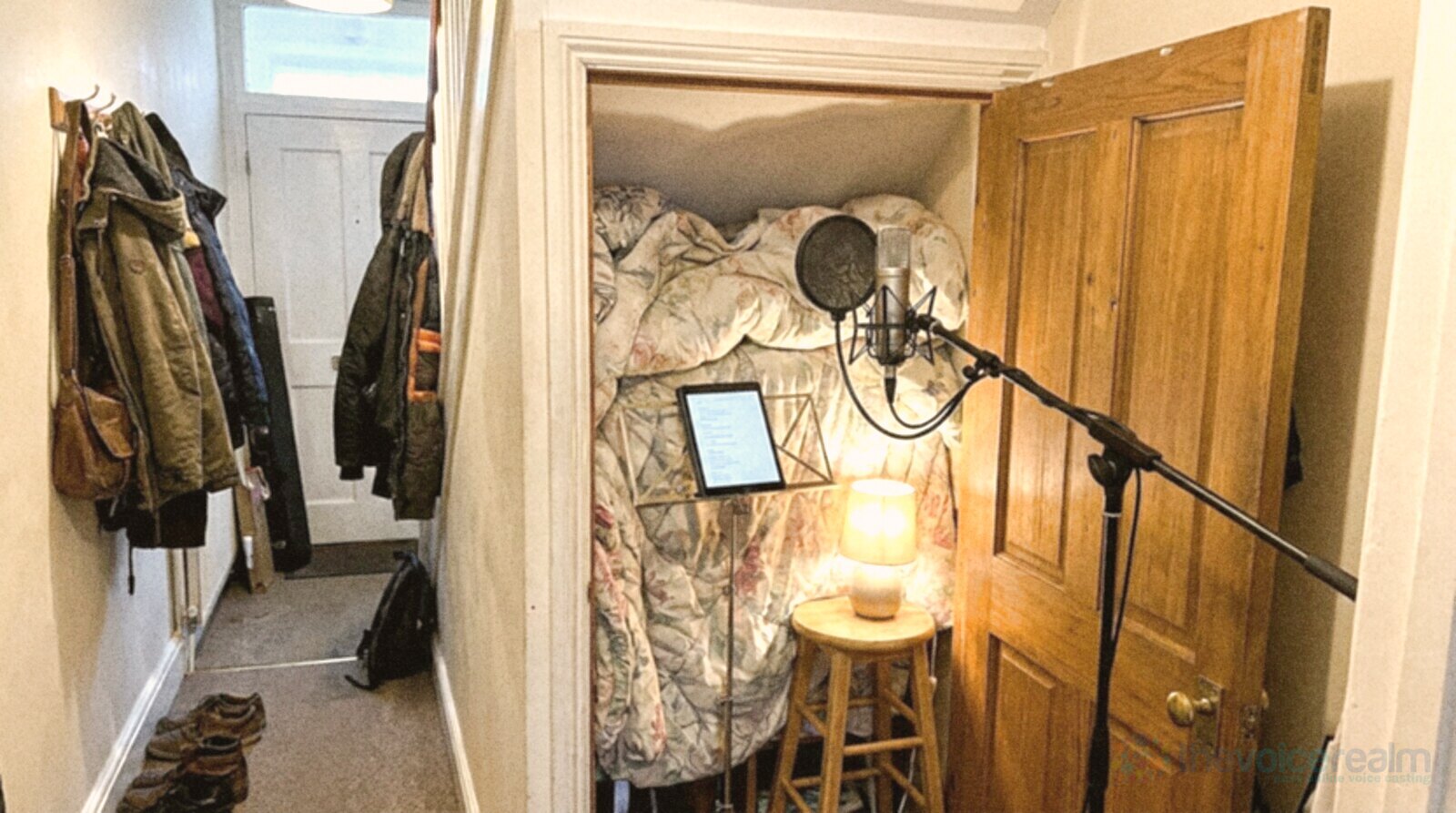
Fix the room before the voice. Slow reads have more silence in them, and silence shows everything: the fridge, the boiler, a bus at the lights. A cupboard under the stairs full of duvets still beats a handsome room with a hum in it. Record ten seconds of nothing and listen to that first.
Watch your mouth noise. Closer and quieter means clicks. Sip water, have a bite of green apple, take your breaths early and leave them in if they sound like a person breathing. Take out the ones that sound like a swimmer.
Book the session for your slow hours. If you’re lively at nine in the morning, that’s your advert voice. Try the sleep read after lunch, or late in the evening when your body already believes you.
Mark up the gaps. Draw a line on the script wherever you want a full beat and don’t move until you’ve counted it. It’ll feel absurdly long in the booth. It won’t feel long at midnight.

© The Voice Realm
If you write or book the script
Slow reads need fewer words than you think. Take the script you’d hand over for a brisk charity explainer video and cut a third before you send it to someone with the note “gentle, unhurried”. Otherwise you’re asking for calm and giving them a train to catch.
Then brief the listener before you brief the voice. “Soothing” is a mood. “She’s just got the baby down and she’s too tired to read” is something an actor can play. Tell them where the person is, what time it is and whether the light’s on. Mortimer’s creamy toffee was a better direction than most briefs we’ve seen, and it came from the bloke doing the reading.
On Christmas Eve, somewhere between Viking and Southeast Iceland, a good part of the country will nod off to a list. It’s a funny sort of compliment to a performer, sending the audience to sleep on purpose. It also takes real craft, and it’s one of the kindest jobs a voice can do.
Sources: PodcastingToday, “Bob Mortimer brings Sleeping Forecast to BBC Sounds”; RadioToday, “BBC reveals Christmas radio schedules and festive specials”; Royal Museums Greenwich, “Shipping Forecast”; Met Office, “Marine forecasts glossary” and “Shipping forecast key”.
Ready to get booked?
See the jobs open right nowAbout Sarah Robbins
Sarah Robbins writes for The Voice Realm about finding voice over work, home studios, casting and the business side of voice acting.