Blog
Blog
The voice over industry is a sleeping giant, reported to rake in about $4 billion annually. The market for voice over talents and professionals is not limited to the entertainment industry or the usual fare of advertisements. Again and again, technology has pushed industries to be more competitive and to gain a marketing advantage over their competitors. Content and marketing strategists have become more creative in promoting their clients’ brands, and this could relate to evolving styles and platforms for the voice over industry.
ADR and looping
Automated Dialogue Replacement (ADR), also known as Additional Dialogue Recording and commonly referred to as “looping”, is the replacement of dialog in the post-production of a film or video. This is done because the “sync” sound recorded on the set is often sub-par because of ambient noise, set acoustics or talent deficiency. This voice over work is common in film and documentaries, but it has since evolved to include translations of audiobooks, advertisements, anime and cartoons as a result of global distribution.
Investing in good software is the key component for doing ADR or looping. Start-up voice over businesses on a low budget would use GarageBand 3. Any sound engineer and voice over entrepreneur knows that in ADR looping, one would need a program that can play the video while recording the “dubbed over” dialogue. Some use a music program that already includes Digital Audio Workstation (DAW) functionality. Some of these professional software programs are: Gallery’s ADRStudio, Steinberg’s Nuendo, Digidesign’s Pro Tools, Apple Inc.’s Soundtrack Pro 3, Voice Q ADR, and ZIO Audio’s Dialog ADR and Dialog Spotting. Gallery’s VoicePro software is used for recording video game dialog.
Commercials, infomercials and ads
Commercials/Infomercials/Advertisements. Changing lifestyles and norms of living have influenced the current style and trends of doing commercials. What do clients look for from voice artists other than voice quality? Here they are:
- Voice artists with a “more real” sound. Companies are shifting to a “personalized” branding of their image. The image and feel of being approachable, trusted and relatable are what they look for in a voice over artist for their marketing promotions.
- Your own website. Other than making you accessible to online searches for voice over artists, having your own website also enables producers and casting directors to view your profile. So, branding your website (colors, layout and content) along the niche of your demos, which should also be available on your website, is highly recommended.
- Voice acting. The rise of video and role-playing games, as well as animation and cartoon series, requires voice over artists to have the ability to “voice-act” into the persona of the character they’re being cast as.
Instructional and e-learning voice overs
Instructional voice overs. These are no longer just instructional or how-to videos. The rise of virtual assistants for mobile applications, guides for smartphones, laptops and tablets, and videos on how to create your own social media profile calls for voice over artists to do them.
Now the market includes eLearning videos and whiteboard videos, which require voice overs that sound knowledgeable, engaging and dynamic.
Radio dramas, IVR and web voice overs
Radio Dramas. This is a specialised area of voice work and often requires voice over artists who have a background in theatrical acting.
 VoiceEditSuiteEleven tools. One browser tab.Auto Clean UpACX PrepStudio RescueSee the toolsBuilt for working voice actors.
A current trend in the radio drama genre is the serial dramatisation of acclaimed novels, like those by Neil Gaiman recently heard on BBC Radio.
Telephone and IVR. Companies and telcos look for voice over artists who sound professional and engaging for better customer relations, rather than relying on their own employee pool to record their business messaging.
Internet voice over. The majority of Internet voice overs involve introductions to web pages, as well as narration for the videos found on those pages. The industries using Internet voice overs vary, although many tend to fall within the realm of technology and education.
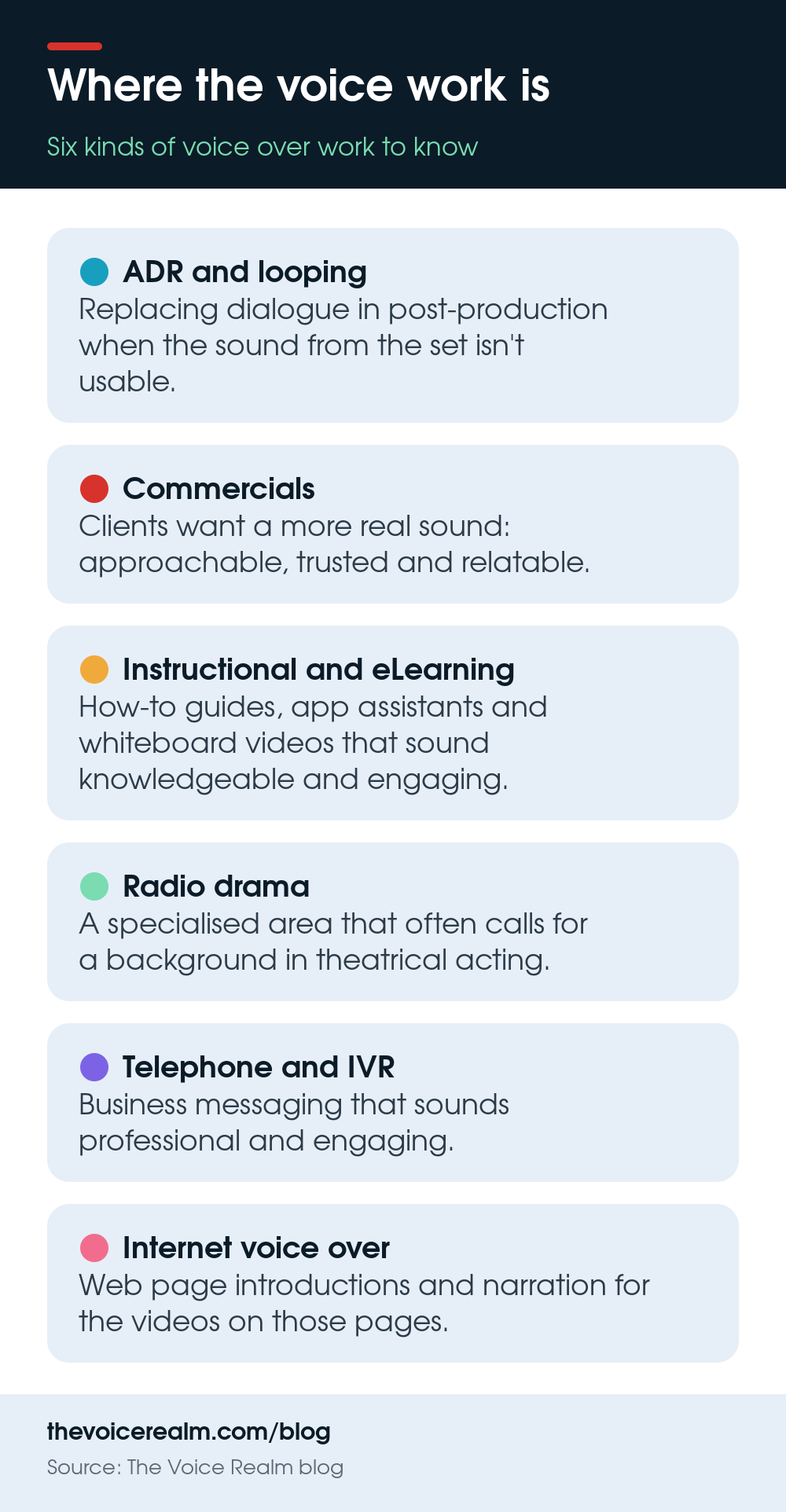
Six places a voice can earn its keep © The Voice Realm
Whether or not the style, genre or category has been around since the start of the voice over industry, a true professional voice over artist will always be learning and evolving with the changes in the genre to maximize the opportunities available.
What type of voice over work are you currently focused on? What changes have you noticed over the past years in your niche?
Ready to get booked?
See the jobs open right now