Blog
Going it alone in voice over sounds brave, and plenty of people try it. They buy a microphone, record a few reads in the spare room, send out a demo and wait. Most of them are still waiting a year later, not because their voice is wrong but because nobody showed them how the work actually gets done.
Even voice actors with years of bookings keep working with coaches, so for a beginner a coach is the shortest route from “people say I have a nice voice” to getting paid to use it. Here’s why, and how to start with The Voice Realm’s own coaching without spending a cent.
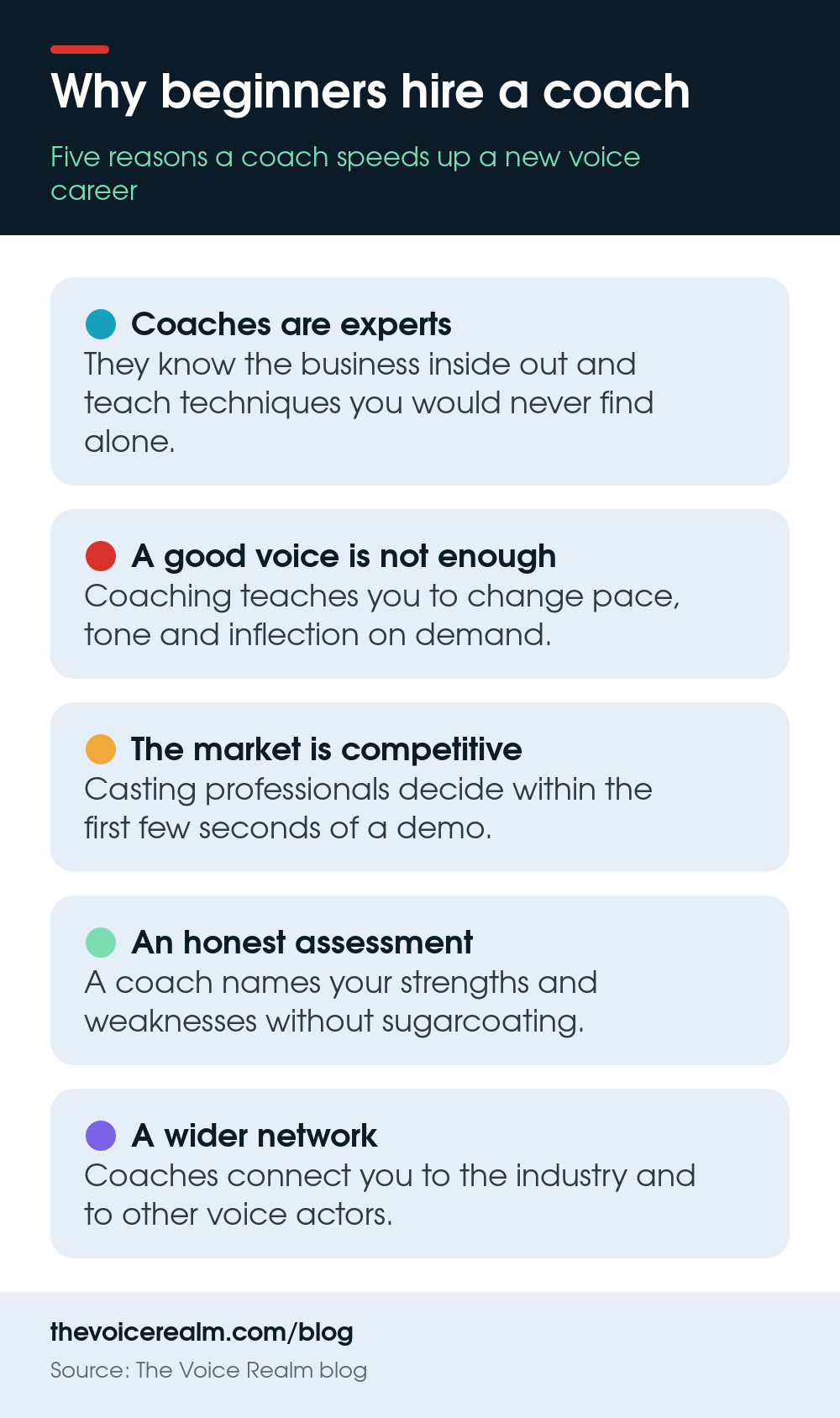
Five reasons a coach speeds up a new voice career © The Voice Realm
A coach knows the parts of the job you can’t see yet
From the outside, voice over looks like reading into a microphone. From the inside it’s script analysis, microphone technique, taking direction, home studio sound, auditions, rates and marketing, all at once. A good coach has done every one of those for years and can tell you which ones matter first, which saves you learning them the expensive way.
A good voice isn’t enough on its own
Clients don’t hire a nice voice, they hire control. A director will ask you to go faster here, warmer there, land on a different word, sound less like you’re reading. If you can’t change pace, pitch and tone on request, you lose the job to someone who can. A coach drills exactly that: breaking down a script, finding what’s underneath the words, and giving a second take that’s genuinely different from the first.
The first few seconds of your demo decide everything
The most common beginner mistake is recording a demo before any training, then wondering why no auditions come back. Casting people decide within seconds whether a demo is worth finishing. A coach tells you honestly whether you’re ready, and what to fix before you spend money on a demo you can’t take back.
Honest feedback, not compliments
Friends tell you your voice sounds great. A mentor is your toughest critic and your strongest ally at the same time. A coach points out the habits you can’t hear yourself, the reading tone, the dropped endings, the breath in the wrong place, and tells you what to keep and what to change.
A way into the industry, not just the booth
Coaches know how the business fits together: casting sites, agents, direct clients, demos and rates. Working with one also puts you in a room with other new voice actors, which is where a lot of early advice, and early confidence, comes from.
Coaching at The Voice Realm, with Ryan Drean
The Voice Realm runs its own coaching for people starting out, taught by Ryan Drean. Ryan has more than 20 years in radio, voice acting and professional audio production, from local campaigns to major international tech brands. He has also designed and built recording spaces of every size, from a single laptop in a closet to commercial studios, so he teaches the performance and the technical side together: how a casting director, a producer and an audio engineer will hear your read, not just how it feels to say it.
He is refreshingly honest about the work involved. The whole point of the first session is to give you a clear go or no-go on whether voice over is right for you, before you spend anything.
Start with the free introductory session
The first step is a free live online session with Ryan, about an hour long, held most Saturdays. It’s a presentation rather than one-to-one coaching, with time for questions at the end, and it covers:
- How the industry fits together: coaches, agents, managers and casting sites.
- What you actually need at home: the essential gear and software, and what not to buy first.
- The business side: marketing yourself, auditioning consistently and running a working career.
- The path to paid work: why training and a professional demo come before anything else.
- Honest expectations: income, timelines, and what separates people who make it from people who don’t.
Save a seat at the next free session. You only need your name, your email and your timezone.
Then two small-group workshops, when you’re ready
If the free session tells you to go for it, Ryan runs two interactive workshops for groups of 5 to 15 people, at US$50 each:
- The Deep Dive: a live evaluation of your delivery and range, breaking down copy and direction, microphone technique for a home setup, finding the genres where your voice is most competitive, and a group breakdown of real job postings so you learn how to audition for them.
- The Voiceover Business Blueprint: choosing gear worth the money, finding paid work through casting sites and direct clients, how agents and managers work, building your online presence, and the invoicing, bookkeeping and demo planning that turn a hobby into a business.
Is a coach worth it when you’re just starting?
For most beginners, yes, because a coach saves more than it costs. One honest session can stop you buying the wrong microphone, recording a demo too early or chasing the wrong kind of work. What you get out of it still depends on you: turning up, practising between sessions and taking notes without taking them personally.
 VOICEMASTERACADEMYTwenty modules, one at a time.Breath controlHome studioCommercial techniqueAuditionsStart module oneNo experience needed.
The easiest way to find out if voice over is for you is to hear it from someone who does it for a living. Join Ryan’s free introductory session and decide from there.
Ready to get booked?
See the jobs open right now